


Bruno Pougault։ D-Dimer in Infection and Suspected VTE
Bruno Pougault, Global Marketing Hemostasis Product Manager at HORIBA ABX SAS, shared a post on LinkedIn:
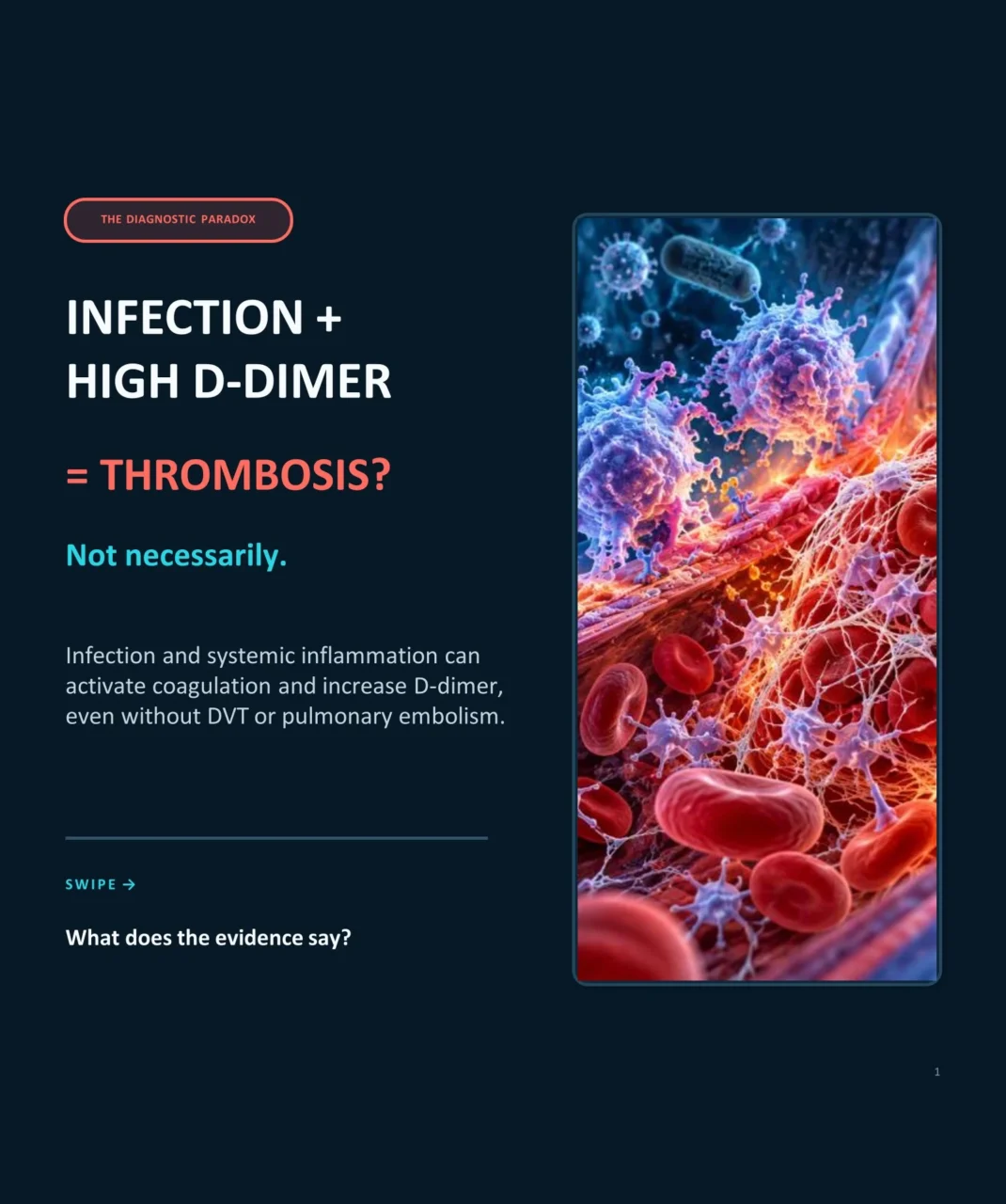
“Infection plus high D-dimer equals thrombosis?
Not necessarily.
Infection and systemic inflammation can activate coagulation and increase D-dimer, even in the absence of DVT or pulmonary embolism.
And this creates a real diagnostic challenge.
So, what is the right biomarker when VTE is suspected in an infected patient?
After reviewing the literature and recommendations/scientific guidance from ISTH, BSH, SFH and ESC, my key takeaway is:
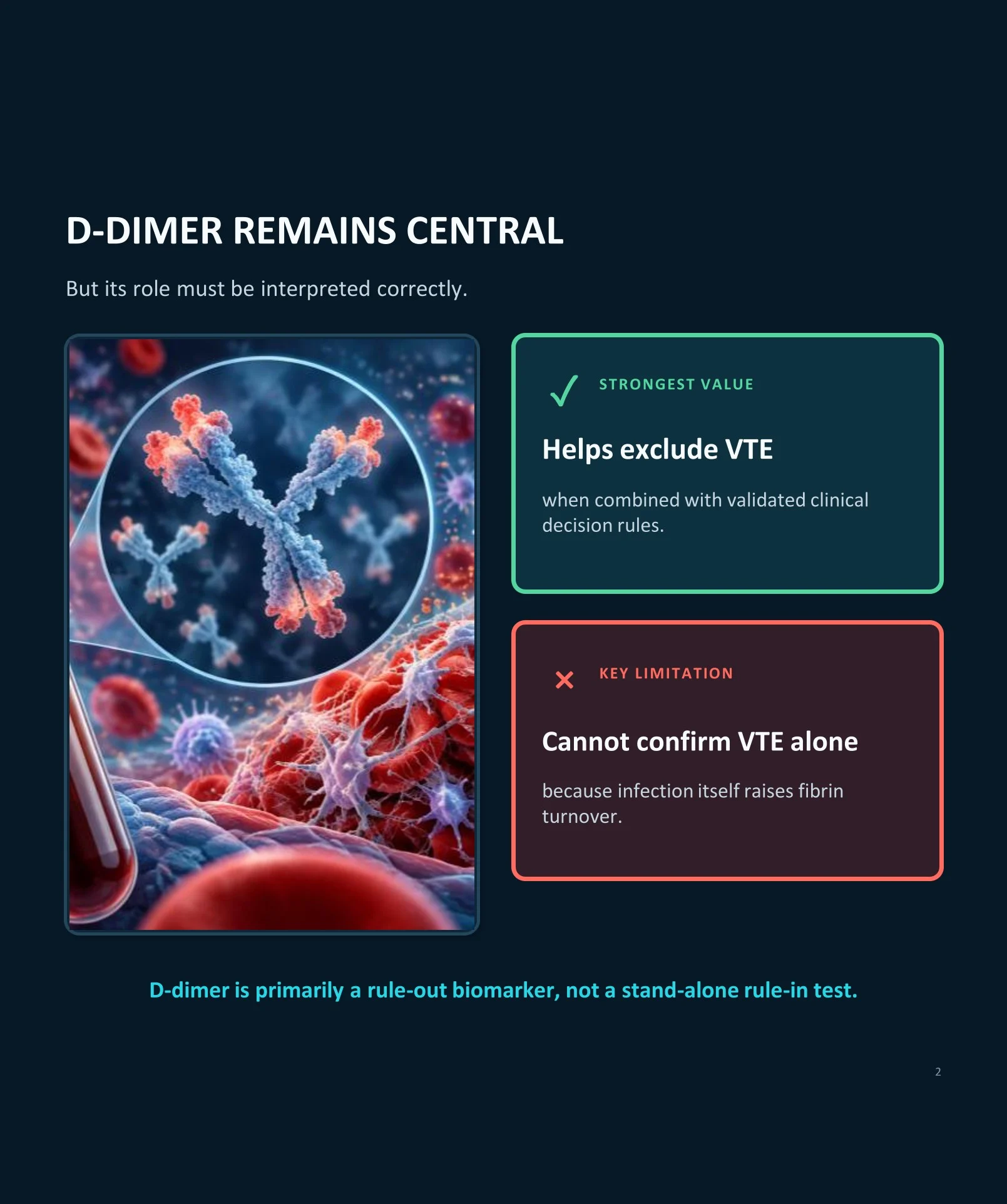
- D-dimer remains the established biomarker, but its role needs to be understood correctly.
- Excellent contribution to VTE exclusion within validated diagnostic algorithms.
- Insufficient specificity to confirm thrombosis, particularly when inflammation or infection is already increasing fibrin turnover.
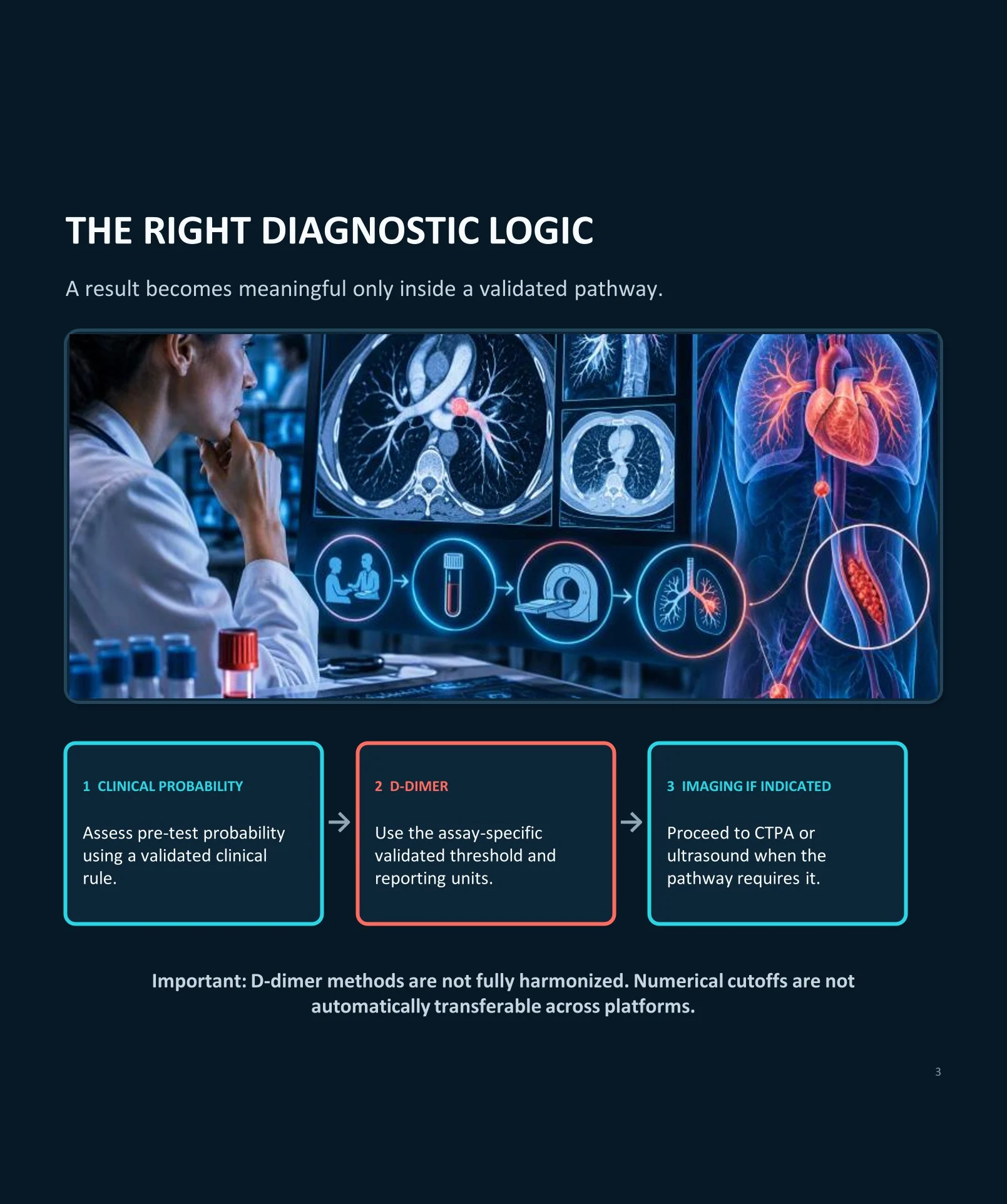
The ESC pulmonary embolism guidance, for example, integrates clinical pre-test probability plus D-dimer plus imaging when indicated, rather than using D-dimer as a stand-alone diagnostic test.
And there is another challenge:
D-dimer assays are not fully harmonized.
Significant inter-assay variability remains, particularly around VTE exclusion thresholds.
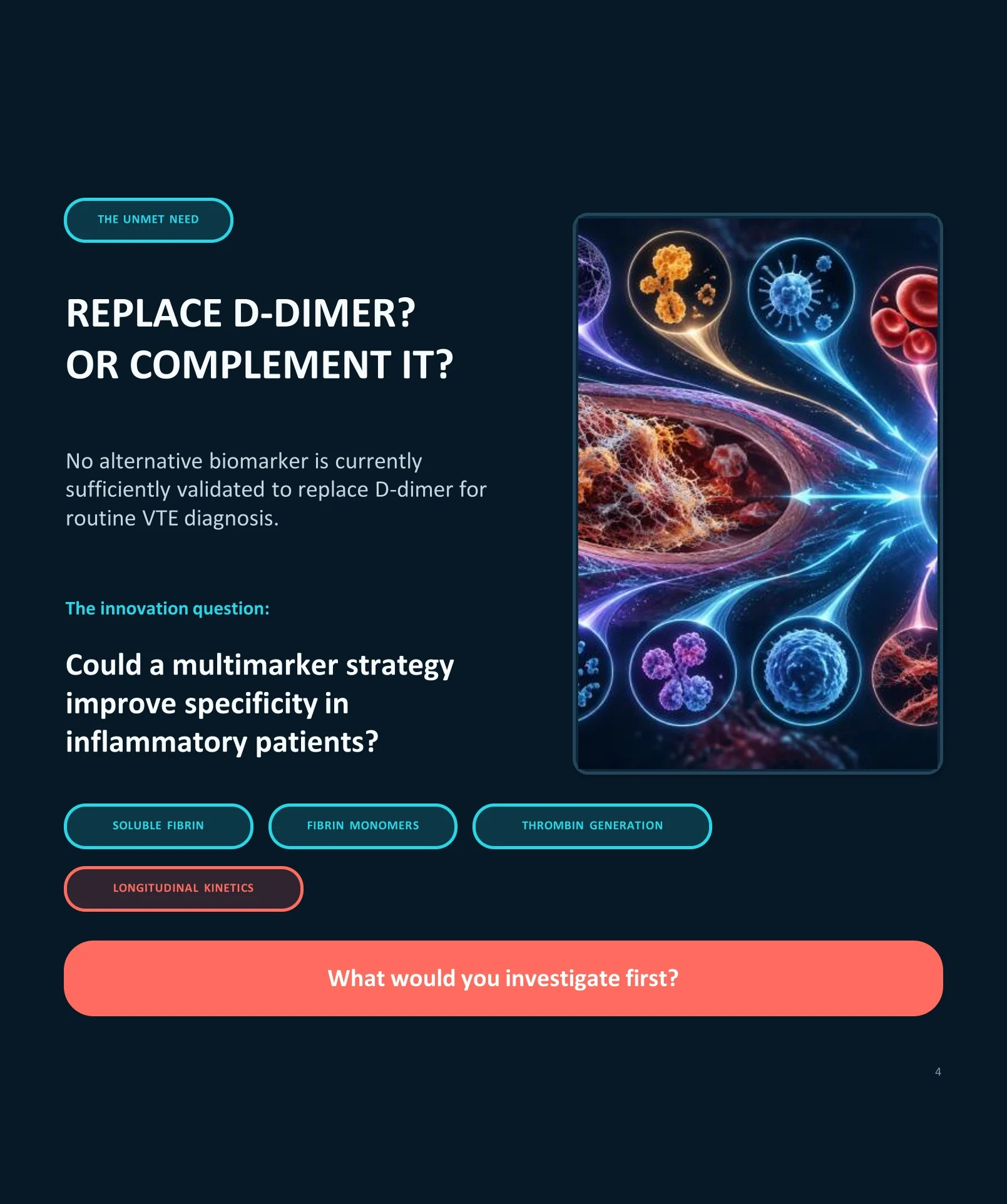
This leads to an interesting question:
Instead of searching for a replacement for D-dimer, should we search for the best biomarker to complement it in patients with infection?
Soluble fibrin?
Fibrin monomers?
Markers of thrombin generation?
A multimarker algorithm?
What would you investigate first?
Based on a review of the scientific literature and analysis of available guidance and recommendations from ISTH, BSH, SFH, ESC and other relevant scientific organizations. For scientific discussion only.”
Stay updated with Hemostasis Today.
-
Nov 5, 2026, 13:42Hélène Gleitz-Broeders: How MPNs Reshape the Bone Marrow Microenvironment
-
Nov 5, 2026, 13:40Augustina Isioma Ikusemoro: The Role of Blood Conservation in PBM
-
Nov 5, 2026, 13:36Vera Ignjatović: Paediatric Thrombosis and Haemostasis Takes Centre Stage in Serbia
-
Nov 5, 2026, 13:31Mahinour Oraby: Hemophilia Awareness – The First Step Toward Better Care
-
Nov 5, 2026, 13:25Mukhtar Buhlaiga: Advancing Laboratory and Transfusion Medicine Through Innovation
-
Nov 5, 2026, 13:22Duane Day: A Novel Assay for Measuring Active Factor XIa
-
Nov 5, 2026, 13:07Five-Year Outcomes of Hemophilia Gene Therapy – Global Hemophilia Report
-
Nov 5, 2026, 12:59Marius Tanase։ Building Stronger Partnerships for Better Bleeding Disorders Care
-
Nov 5, 2026, 12:43George Giannakoulas: NLR as a Predictor of Outcomes in Acute Coronary Syndromes