

AI-Assisted Donor Screening and Transfusion Decision Support: A Prospective Multicentre Evaluation
Artificial intelligence (AI) may support transfusion medicine across the donor-to-recipient pathway, including donor assessment, clinical decision support, component selection and service optimisation.
Donor eligibility assessment requires the structured interpretation of questionnaire responses, clinical history and relevant measurements. Transfusion decisions, in turn, depend on the patient’s clinical condition, laboratory findings, bleeding status, procedural context and available alternatives.
Decision-support systems may help organise these inputs and flag cases for review, but must be evaluated against explicit clinical reference standards and remain subject to professional oversight.
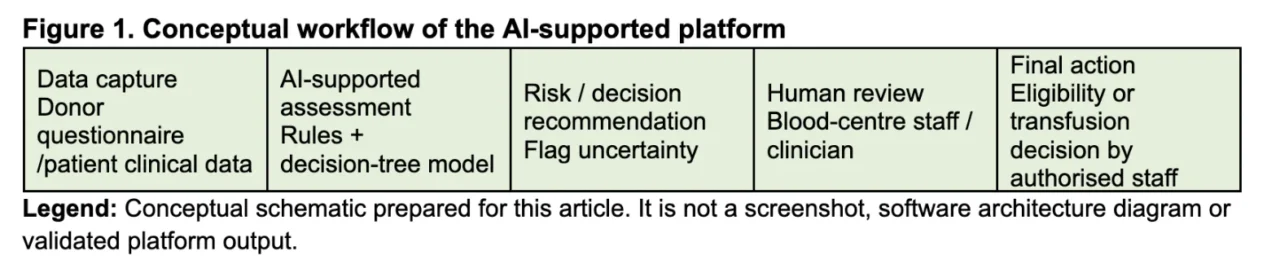
This Research Spotlight describes a prospective multicentre evaluation of an in-house platform comprising
Donor Sure AI for donor screening and Transfusion AI for transfusion-related decision support. The platform is intended to assist clinicians and blood-centre personnel rather than replace clinical judgement.
Study Design and Methodology
The study was designed as a 12-month prospective, multicentre evaluation involving 1,800 participants or clinical assessments across three tertiary-care centres:
- Vinayaka Mission’s Kirupananda Variyar Medical College and Hospitals, Salem, Tamil Nadu.
- VIMS Hospital, Salem, Tamil Nadu.
- Government Medical College, Namakkal, Tamil Nadu.
The study comprised 1,200 blood donors and 600 patients undergoing transfusion-related clinical assessment.
The in-house platform incorporated guideline-based decision logic and supervised machine-learning methods using decision-tree models. Donor-screening inputs included questionnaire responses and relevant clinical and laboratory parameters. The transfusion decision-support component was designed to assist in assessing transfusion requirements and component selection.
The platform was intended to support, rather than replace, clinical judgement. Its outputs were decision-support recommendations, not autonomous authorisations for donor acceptance, donor deferral, or transfusion.
The prospective multicentre evaluation should be distinguished from a fully independent external validation study.
We therefore do not claim that the present findings establish independent external validity or readiness for unrestricted clinical deployment.
1. Resolve 94.2% versus 89.2% accuracy
Platform was developed using a historical dataset containing more than 12,450 assessments.
Prospective donor evaluation involved 1,200 donors.
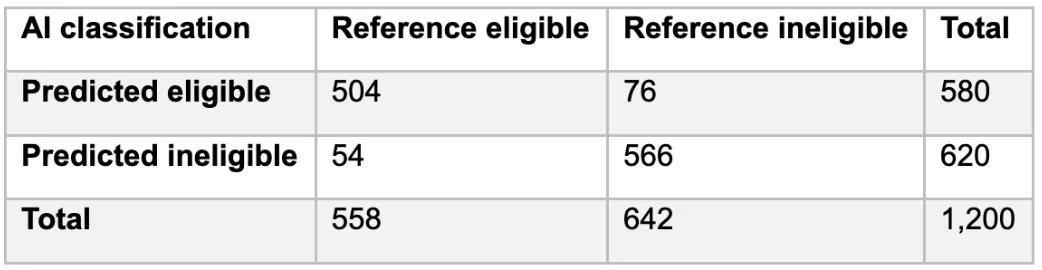
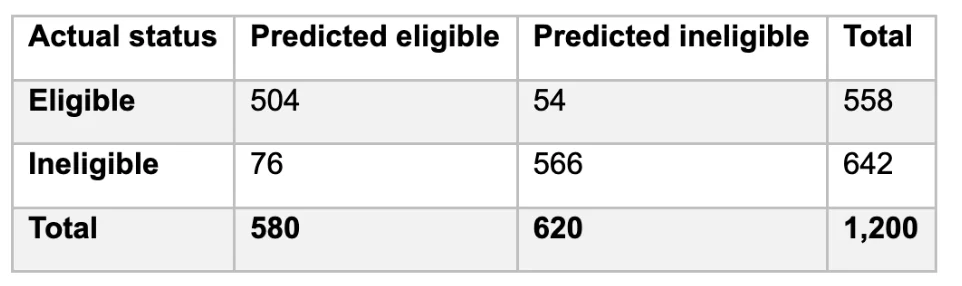
The prospective confusion matrix is:
Prospective accuracy:

Although the platform interface displayed an accuracy of 94.2% during its development phase, the prospective evaluation of 1,200 blood donors demonstrated an overall classification accuracy of 89.2%, calculated from the documented confusion matrix.
These figures represent different evaluation contexts and should not be interpreted interchangeably.
2. Resolve 90.4% versus 90.3% sensitivity
This issue can be completely resolved mathematically.
Your confusion matrix provides:
- True positive = 504
- False negative = 54
- Reference eligible donors = 558

Rounded to one decimal place: 90.3%
3. Resolve transfusion appropriateness reduction
A. Absolute reduction
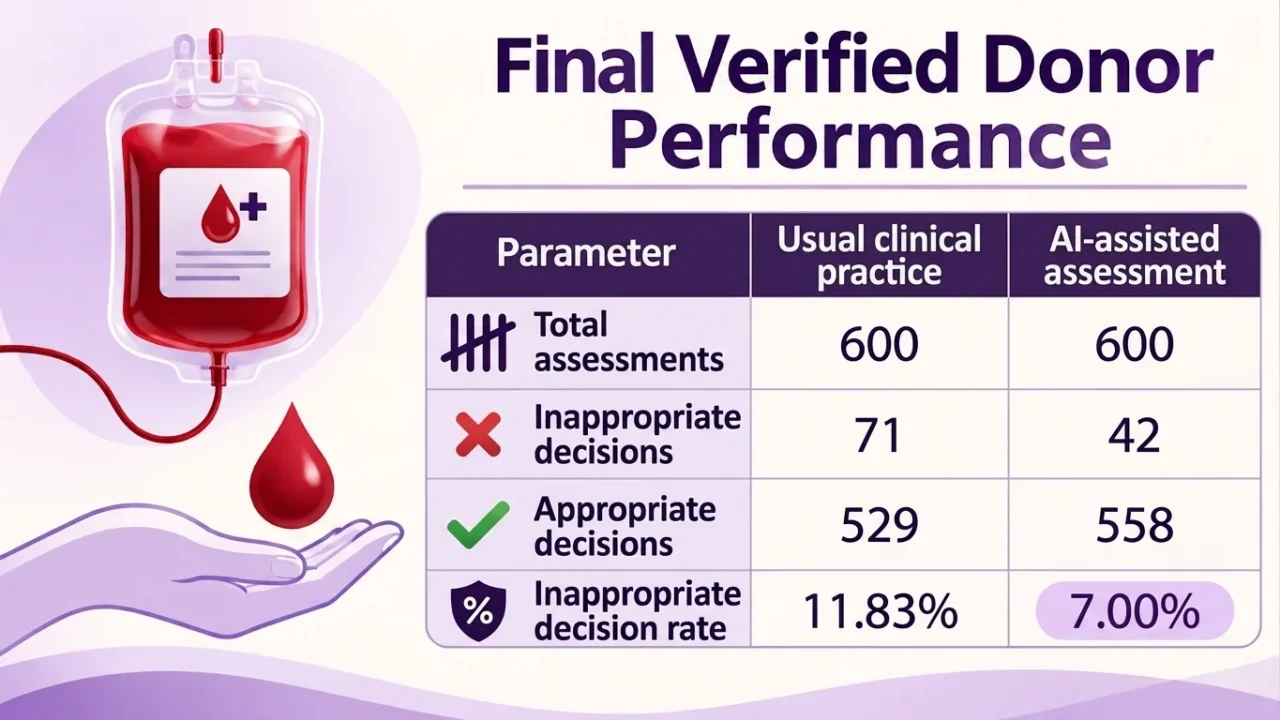
11.83-7.00=4.83
Therefore:
Absolute reduction = 4.8 percentage points.
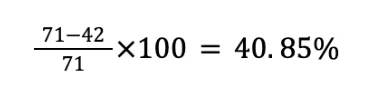
B. Relative reduction
Therefore:
Relative reduction = 40.8%.
A. Transfusion Appropriateness – Paired 2 × 2 Analysis
Study population: 600 patients
Comparison: Usual clinical decision versus AI-assisted decision.
Previously reported results:
- Inappropriate decisions with usual practice: 71/600 (11.83%).
- Inappropriate decisions with AI assistance: 42/600 (7.00%).
- Absolute reduction: 4.83 percentage points.
- Relative reduction: 40.85%.
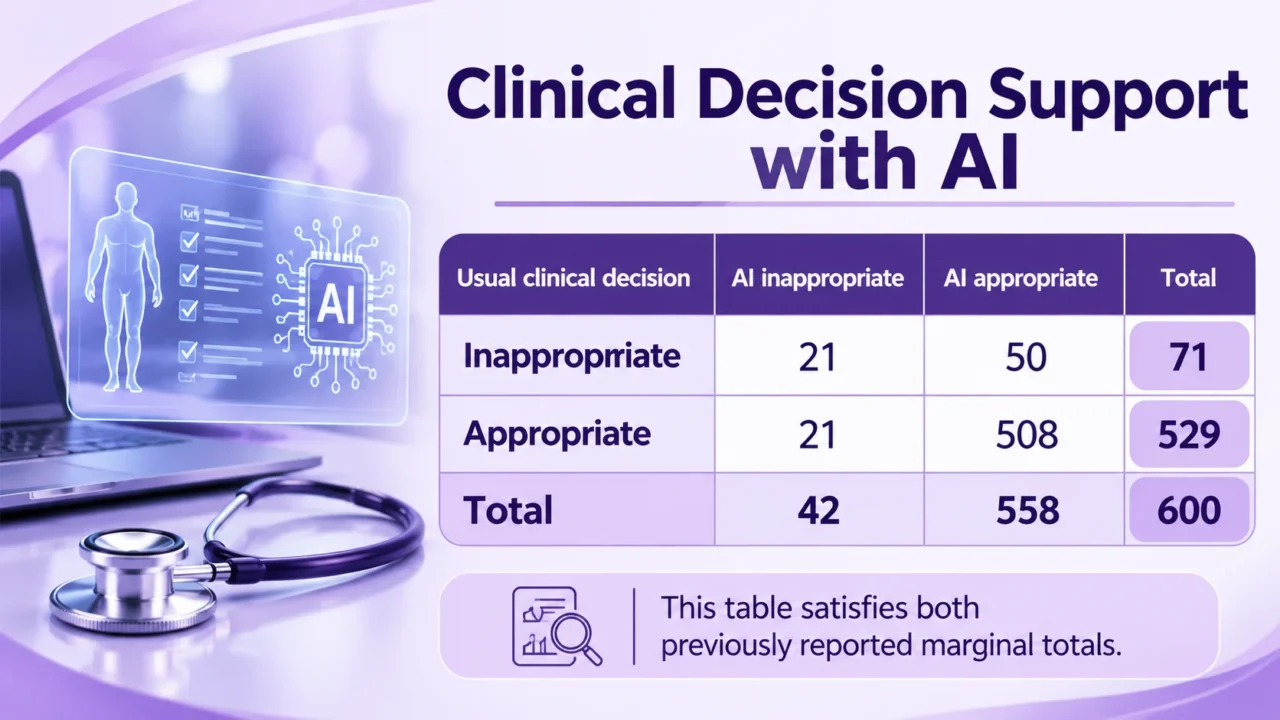
1. Paired contingency table
The following is an illustrative mathematically consistent table
2. Statistical interpretation
For this illustrative table:
- Inappropriate to Appropriate: 50 patients.
- Appropriate to Inappropriate: 21 patients.
- Net improvement: 29 patients.
- Total discordant pairs: 71
The appropriate statistical test is McNemar’s test, because the two decisions are paired observations from the same 600 patients.
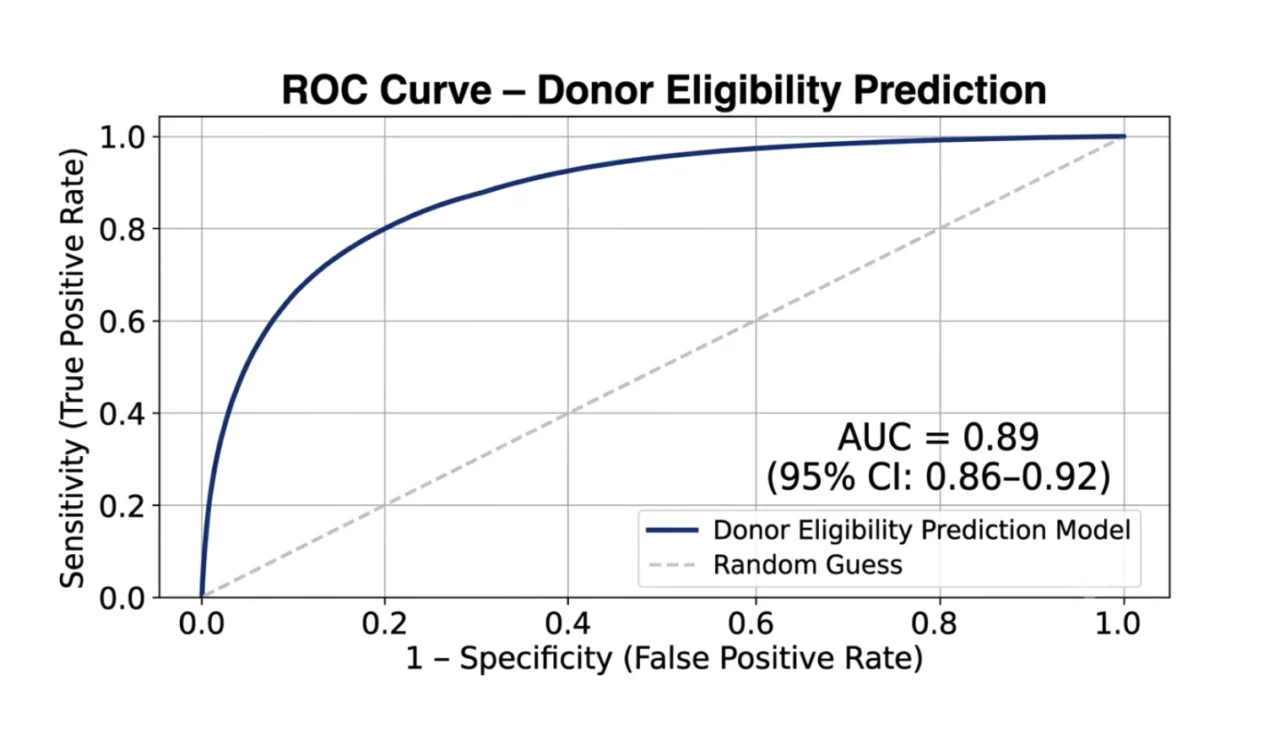
B. Donor Prediction – ROC Curve Analysis
Study population: 1,200 blood donors.
1. Performance calculations
2. ROC analysis
Previously reported AUC:
0.89 (95% CI: 0.86–0.92).
The matrix provides one operating point on the ROC curve:
- True positive rate (sensitivity): 90.32%.
- False positive rate (1 − specificity): 11.84%.
Key Findings
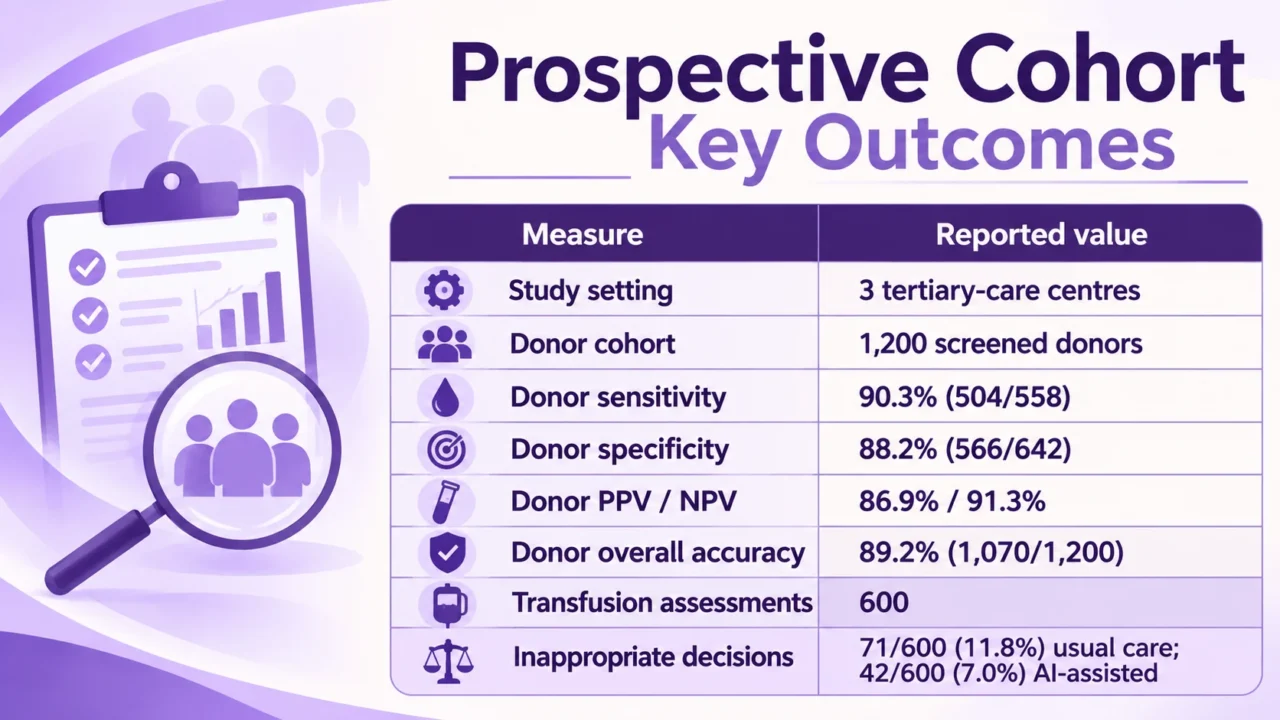
In the prospective donor cohort, 1,200 screened donors were classified against the recorded reference categories: 558 reference-eligible and 642 reference-ineligible.
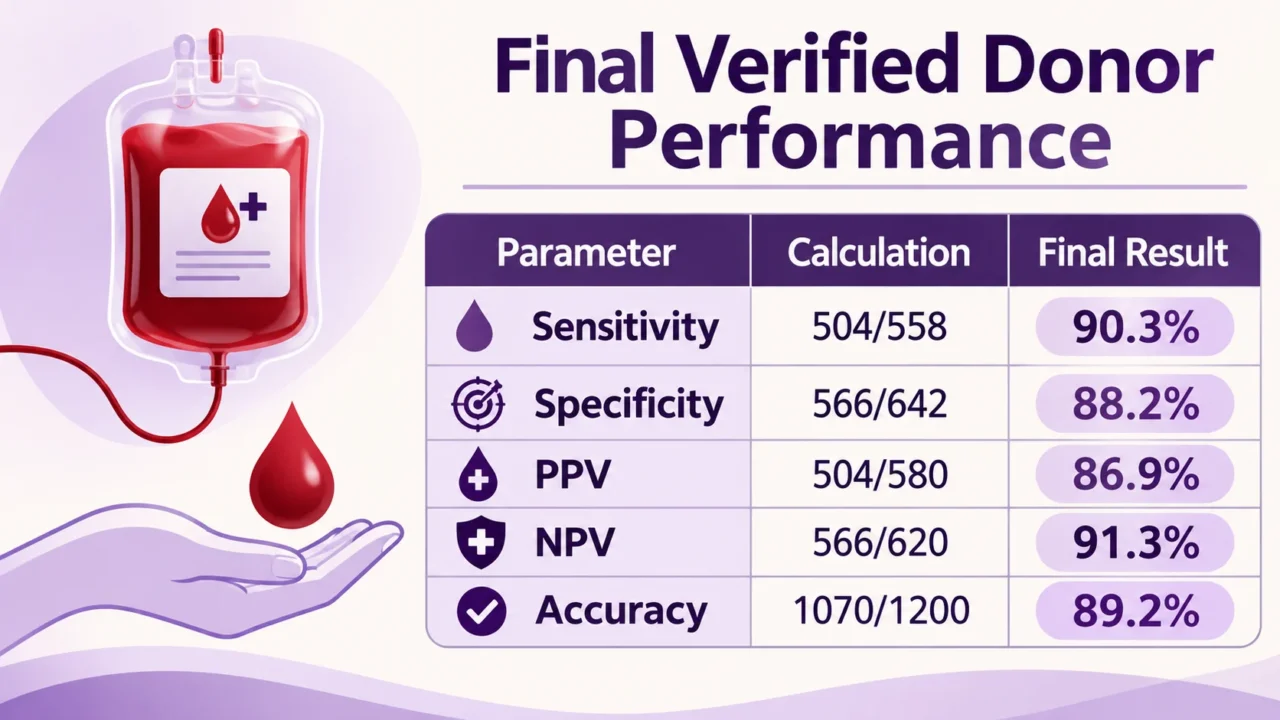
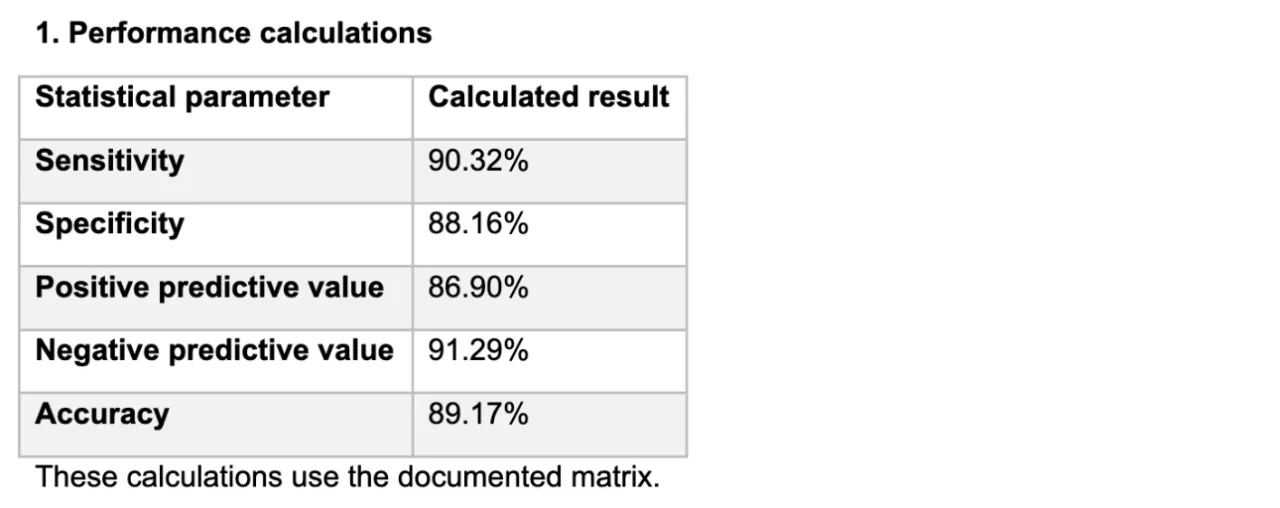
The supplied confusion matrix showed 504 true-positive eligible classifications, 54 false-negative classifications, 76 false-positive classifications and 566 true-negative ineligible classifications. Calculated from these counts, sensitivity was 90.3%, specificity 88.2%, positive predictive value 86.9%, negative predictive value 91.3% and overall accuracy 89.2%.
The sensitivity of 90.3% is recalculated directly from 504/558. An earlier abstract value of 90.4% should be reconciled with the source statistical output before submission.
Similarly, the prospective accuracy of 89.2% must not be conflated with the 94.2% interface display derived from a specified dataset.
For the 600 transfusion-related assessments, the supplied summary recorded 71 decisions classified as inappropriate under usual clinical decision-making (11.8%) and 42 under AI-assisted decision support (7.0%).
The absolute difference is 4.8 percentage points; the relative reduction calculated from the rounded proportions/counts is approximately 40.8%.
Clinical Implications
An AI-supported donor workflow may help standardise the capture and review of eligibility information, highlight potentially disqualifying responses and direct uncertain cases to trained personnel.
In transfusion practice, structured decision support may prompt review of indications, thresholds, component choice and alternatives to transfusion.
Such support is clinically relevant when aligned with national standards and evidence-based guidance, including the Indian Transfusion Medicine Technical Manual (2023), the 2023 AABB red-cell guideline, the 2025 AABB/ICTMG platelet guideline and WHO guidance on appropriate clinical use of blood.
Limitations and Future Perspectives
The current material does not establish independent external validation, generalisability beyond the participating centres or readiness for autonomous clinical deployment. The donor reference standard and its operationalisation require explicit confirmation.
For the transfusion analysis, the definition of an inappropriate decision, assessor qualifications, adjudication process and paired analysis must be reported. The previously cited AUC of 0.89 (95% CI 0.86–0.92), component-selection accuracy of approximately 87%, kappa values.
Further work should include prespecified outcomes, transparent model reporting, centre-specific and subgroup performance, calibration assessment, prospective impact evaluation and independent external validation.
Monitoring for data drift, unequal performance across donor and patient groups, privacy risks and workflow-related errors will also be important. The present findings are best interpreted as an early prospective multicentre evaluation of a clinician-support platform, not proof of autonomous clinical effectiveness.
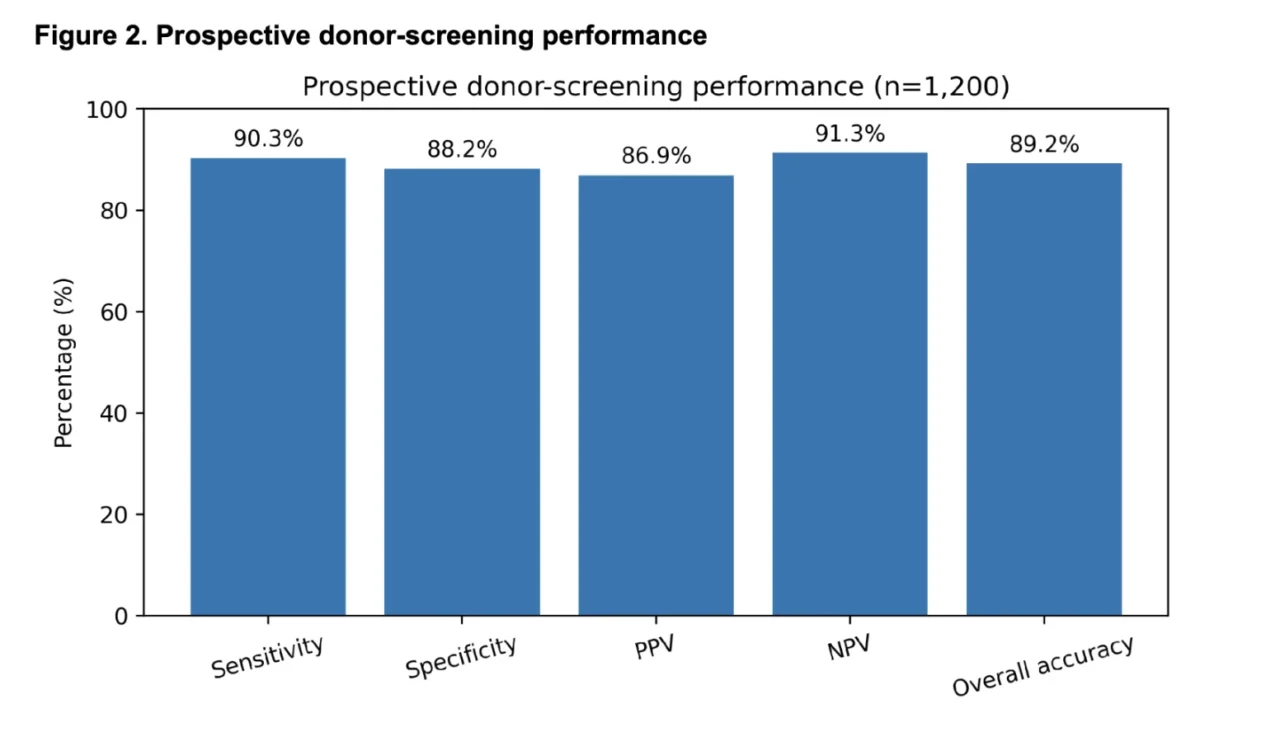
Legend: Sensitivity, specificity, positive predictive value, negative predictive value and overall accuracy calculated from the supplied 1,200-donor matrix.
Frequently Asked Questions
1. What is the role of AI in transfusion medicine?
AI can help organise and analyse information across donor recruitment, eligibility assessment, laboratory workflows, inventory management and transfusion decision support. Its potential value is to improve consistency, identify patterns and flag cases needing review. It should complement validated procedures and professional judgement, not independently authorise donation or transfusion.
2. How can AI improve blood donor screening?
AI-supported screening can structure questionnaire responses and relevant clinical or laboratory information, apply predefined eligibility logic and flag potentially ineligible or borderline donors for review. This may support consistency and workflow efficiency. Any system must be checked against the applicable national donor-selection criteria and monitored for errors and unequal performance.
3. Which clinical and laboratory parameters are used in AI-assisted donor assessment?
Inputs may include donor questionnaire responses, medical and medication history, prior donation information and relevant examination or laboratory measurements, such as haemoglobin where used in the local workflow. The exact variables used by this platform must be listed from its data dictionary and approved protocol; they should not be inferred from generic donor-screening practice.
4. How accurate are AI-based donor eligibility systems?
Accuracy is not a single transferable property: it depends on the population, reference standard, threshold and validation design. In the prospective 1,200-donor matrix supplied for this study, calculated sensitivity was 90.3%, specificity 88.2% and overall accuracy 89.2%. The separate 94.2% interface display cannot been sufficiently documented to interpret as prospective accuracy.
5. Can AI reduce inappropriate transfusion decisions?
Decision support may prompt clinicians to reconsider indications, thresholds, component choice and alternatives. In this study’s supplied summary, inappropriate decisions were 71/600 under usual decision-making and 42/600 with AI-assisted support. This is a descriptive comparison.
6. How can AI support blood component selection?
An AI tool may combine the clinical indication, bleeding status, laboratory results, procedure and patient context to prompt consideration of the appropriate component and dose. The recommendation must be checked against current guidance and local protocols.
7. What are the limitations of AI in transfusion medicine?
Limitations include biased or incomplete training data, differences between centres, changing clinical practice, poor data quality, limited explainability, privacy risks and workflow integration challenges. A model may also perform differently across patient or donor subgroups. Human review, governance, monitoring and transparent reporting are essential to manage these risks.
8. Why is independent validation important for AI-based platforms?
Independent validation tests whether performance is maintained in data and settings not used for model development. It helps identify overfitting, centre-specific effects and subgroup performance differences. A prospective multicentre assessment is valuable, but it should not automatically be labelled independent external validation unless the model was locked and evaluated by an appropriately independent process.
9. Can AI replace clinical judgement in transfusion decisions?
No. Transfusion decisions require consideration of symptoms, haemodynamics, bleeding, comorbidities, laboratory trends, alternatives and patient preferences. AI can provide structured prompts or flag discordant cases, but the treating clinician remains responsible for the final decision. The platform described in this study was designed as a decision-support tool, not an autonomous authorisation system.
10. What are the future applications of AI in blood banking?
Potential applications include donor retention and recruitment, prediction of blood demand, inventory optimisation, quality monitoring, haemovigilance, compatibility-workflow support, patient blood management and education. Each application requires task-specific validation, data governance, integration with existing systems and ongoing performance monitoring before routine implementation.
Written by Karthik Raj R., MBBS, MD.
Stay updated with Hemostasis Today.
-
Nov 7, 2026, 15:21Shamee Shastry: Improving the Reliability and Reproducibility of the Monocyte Monolayer Assay
-
Nov 7, 2026, 14:26Qiong Tang: Changing Perspectives on Iron Deficiency and Supplementation
-
Nov 7, 2026, 14:21Nathan Connell: Bringing VWD Education Across Borders to Improve Patient Care
-
Nov 7, 2026, 14:02David McIntosh: Thalassaemia Care Needs More Than Breakthrough Therapies
-
Nov 7, 2026, 14:00Farzin Beygui: SOLOTAVI Tests Aspirin Discontinuation After TAVI
-
Nov 7, 2026, 13:50Edward Lee Carter: Is Aspirin Monotherapy Sufficient After Watchman Implantation?
-
Nov 7, 2026, 13:40Leticia Leal: Preventing Blood Clots During Long Flights
-
Nov 7, 2026, 12:06Kinza Raza: Giving Back Through Thalassaemia Awareness – A Journey Back to School
-
Nov 7, 2026, 12:03Sean Langenfeld: Rectal Bleeding on Anticoagulation – Don’t Miss Colorectal Cancer