


Todd C. Villines: PARAMOUNT Shows Benefits of Coronary Plaque-Based Care in Stable Symptomatic Patients
Todd C. Villines, Professor of Cardiology and Vice-Chief of CV Division at the University of Virginia (UVA), Executive Editor: JACC Advances at American College of Cardiology, shared a post on X:
“I am pleased to share with you the top-line results from the PARAMOUNT trial of coronary plaque-based care that were presented this morning at AHA 26!
The trial was supported by Cleerly, to which I am a consultant.
Here are the essentials:
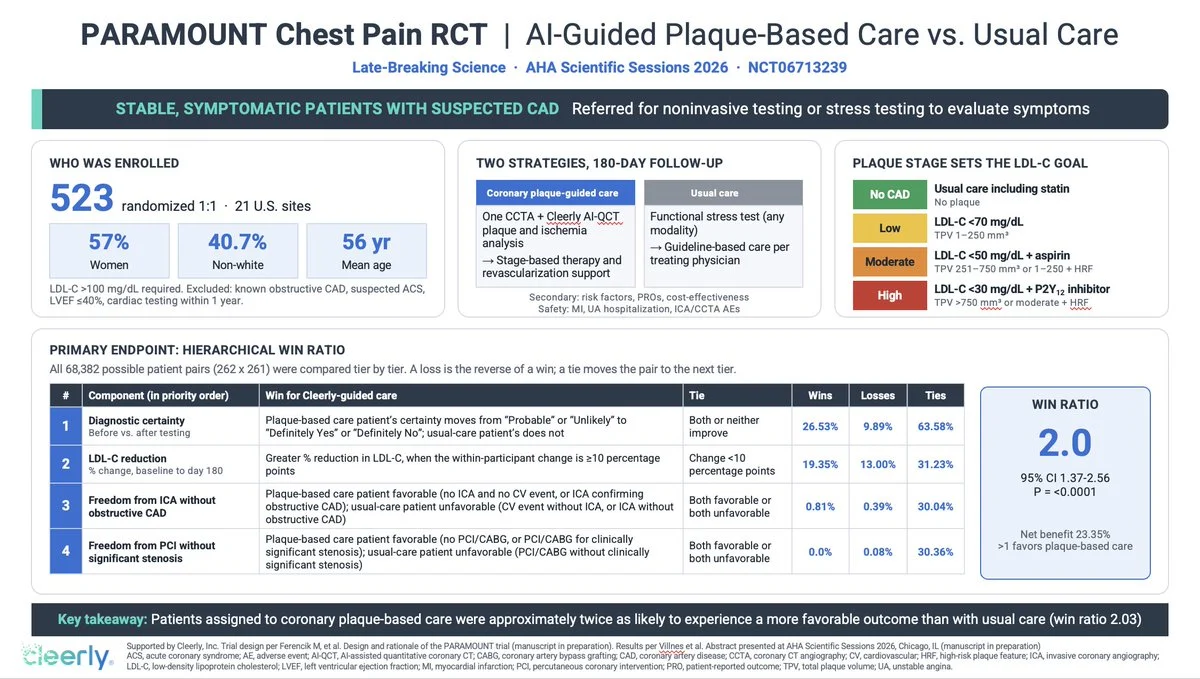
CCTA with AI-QCT plaque and ischemia analysis was compared 1:1 to usual care (functional stress test) in stable symptomatic patients with suspected CAD.
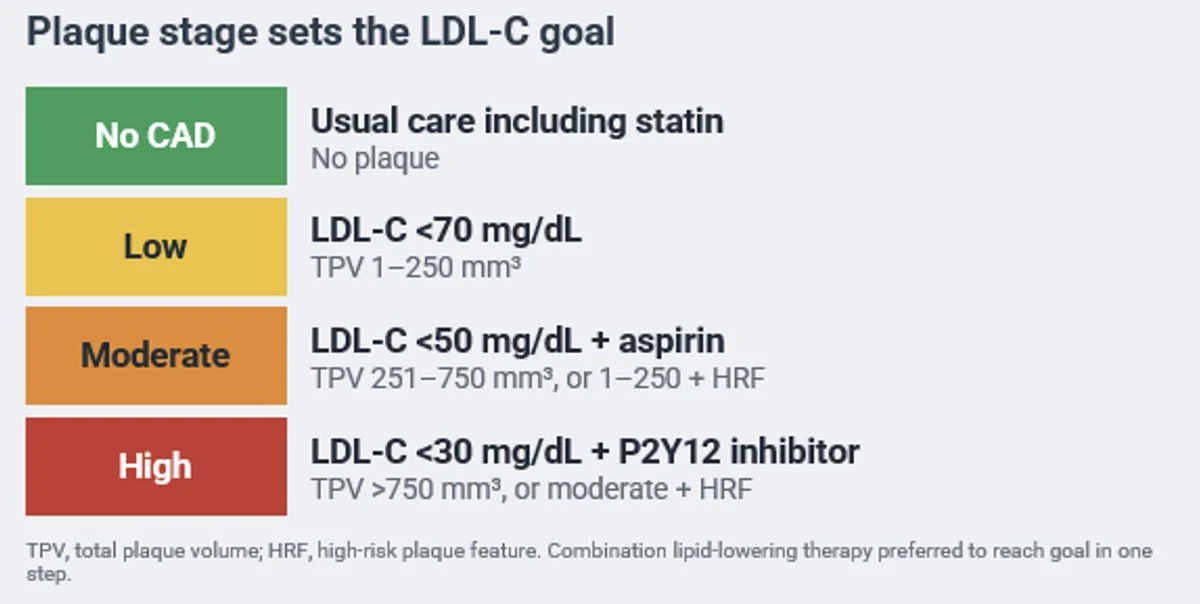
Image guidance informed stage-based medical therapy and revascularization decisions; usual care was guideline-based per treating physician.
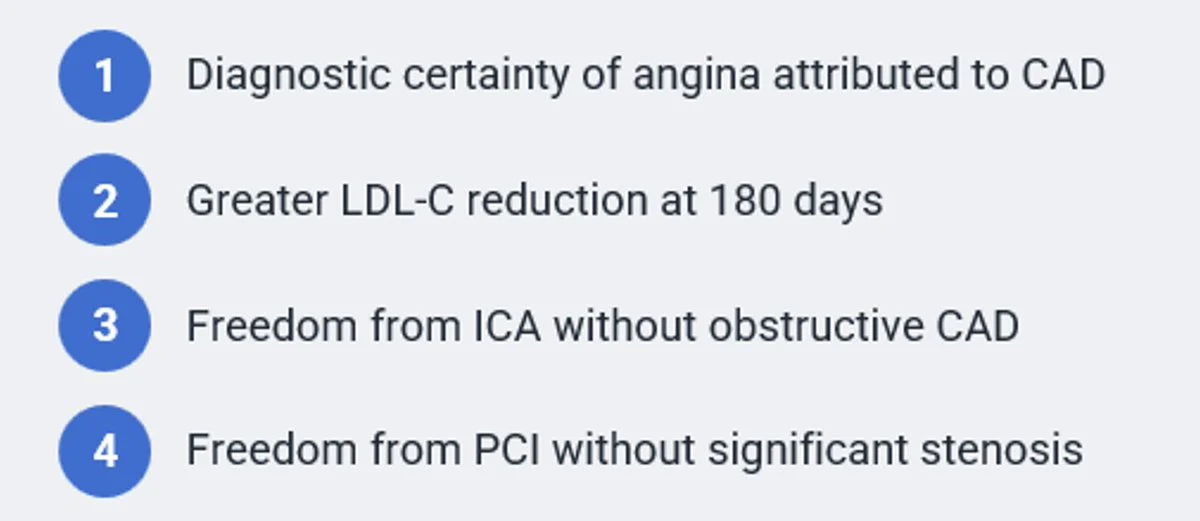
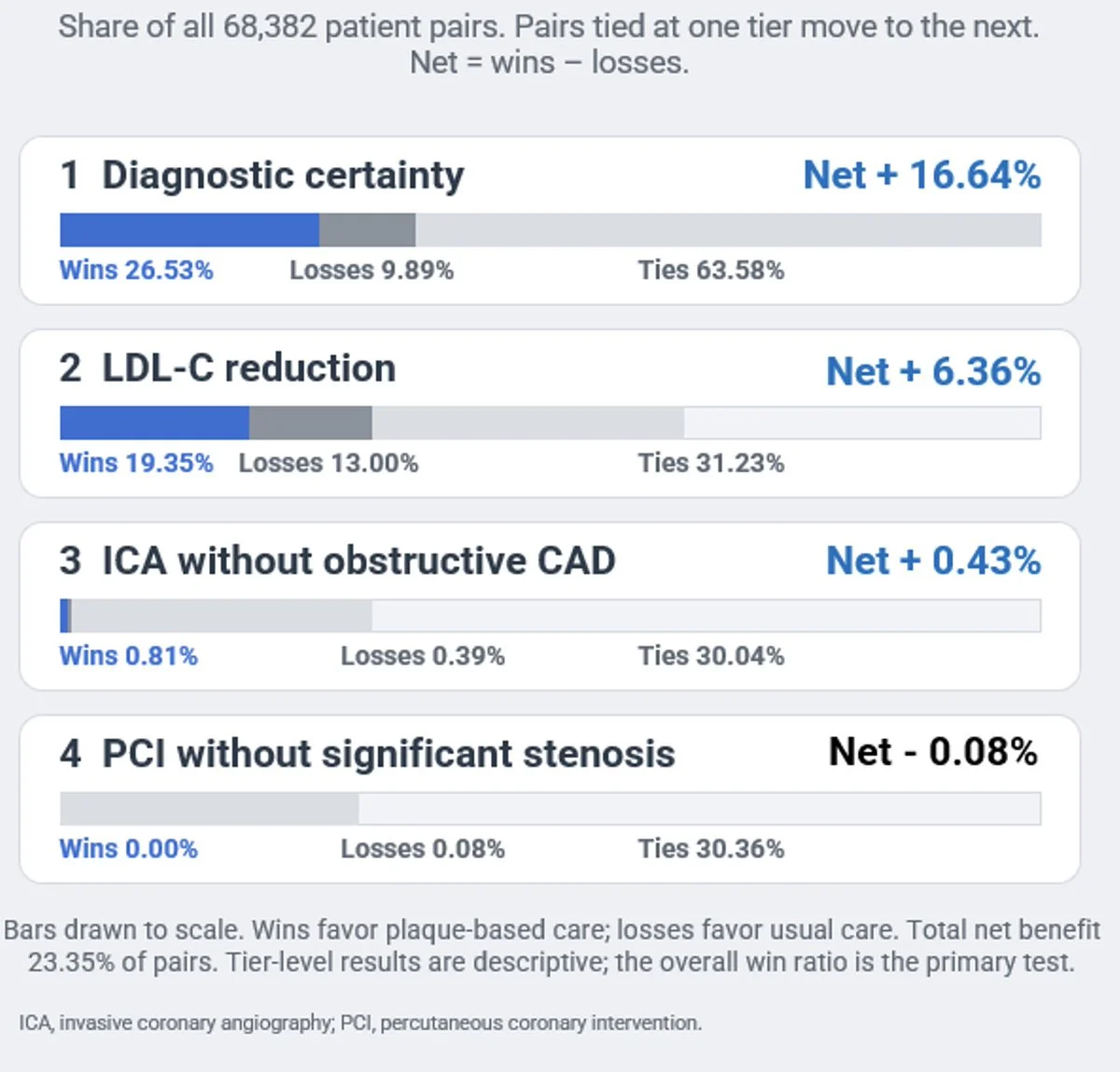
A hierarchical Win Ratio was calculated for each plaque-based care patient vs each usual care patient for 4 outcomes, ranked by clinical priority:
Win Ratio allows a clinical trial to assess several different measures of treatment benefit simultaneously, without treating all outcomes as equally important.
The win ratio is the number of comparisons won by the experimental treatment divided by the number lost.
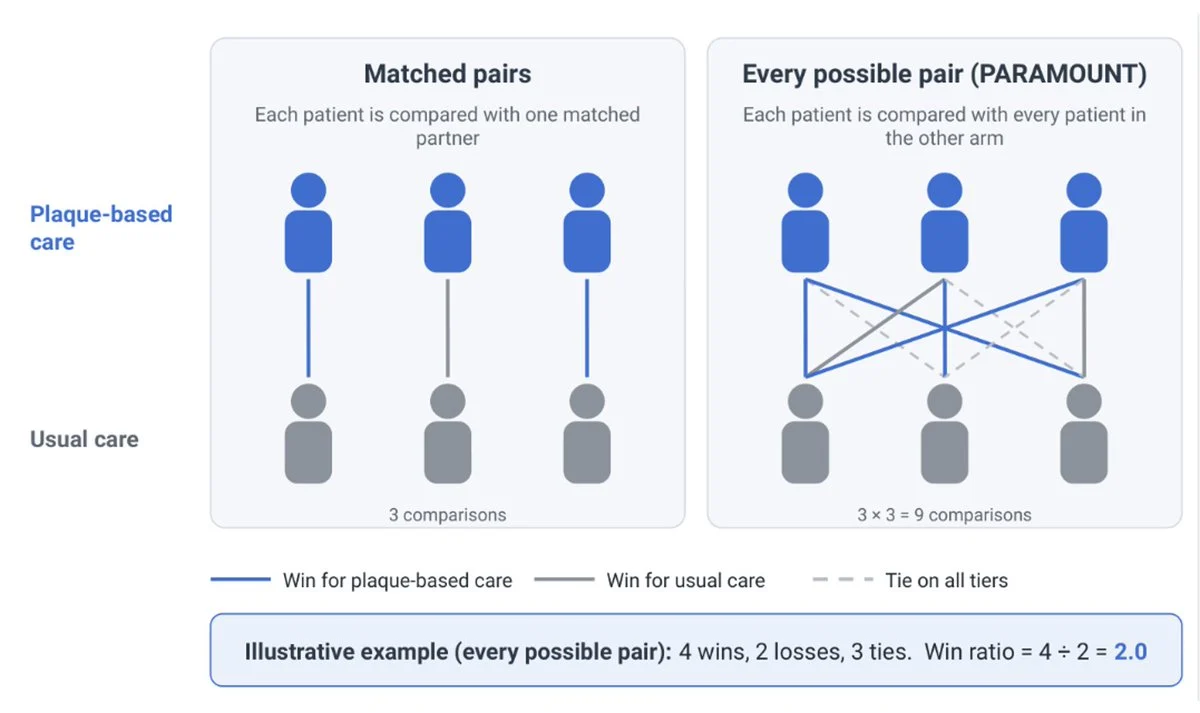
A Win Ratio of
- 1.0 – no advantage for either arm.
- 1.2 – test treatment has 20% more wins than losses;
- 1.5 – test treatment has 50% more wins than losses;
- 2.0 – test treatment has twice as many wins as losses.
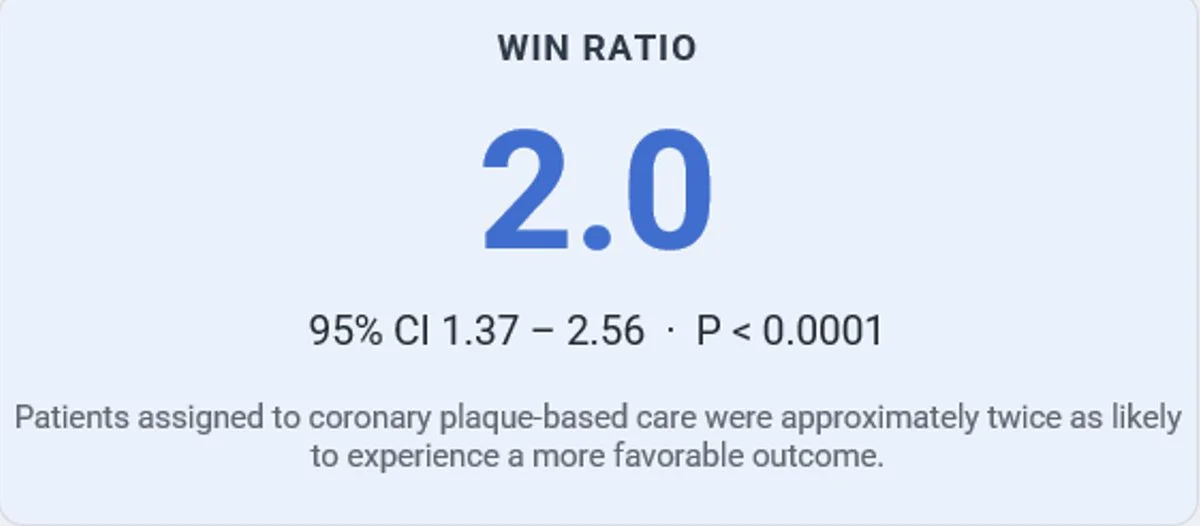
In PARAMOUNT, WR is 2.0.
Two tiers drove this result: diagnostic certainty and plaque image-guided LDL-C.
In addition, plaque-based care did not increase the percentage of patients referred for angiography nor were invasive procedures .
But . . . can unnecessary procedures (cath without finding CAD):
So what did we learn?
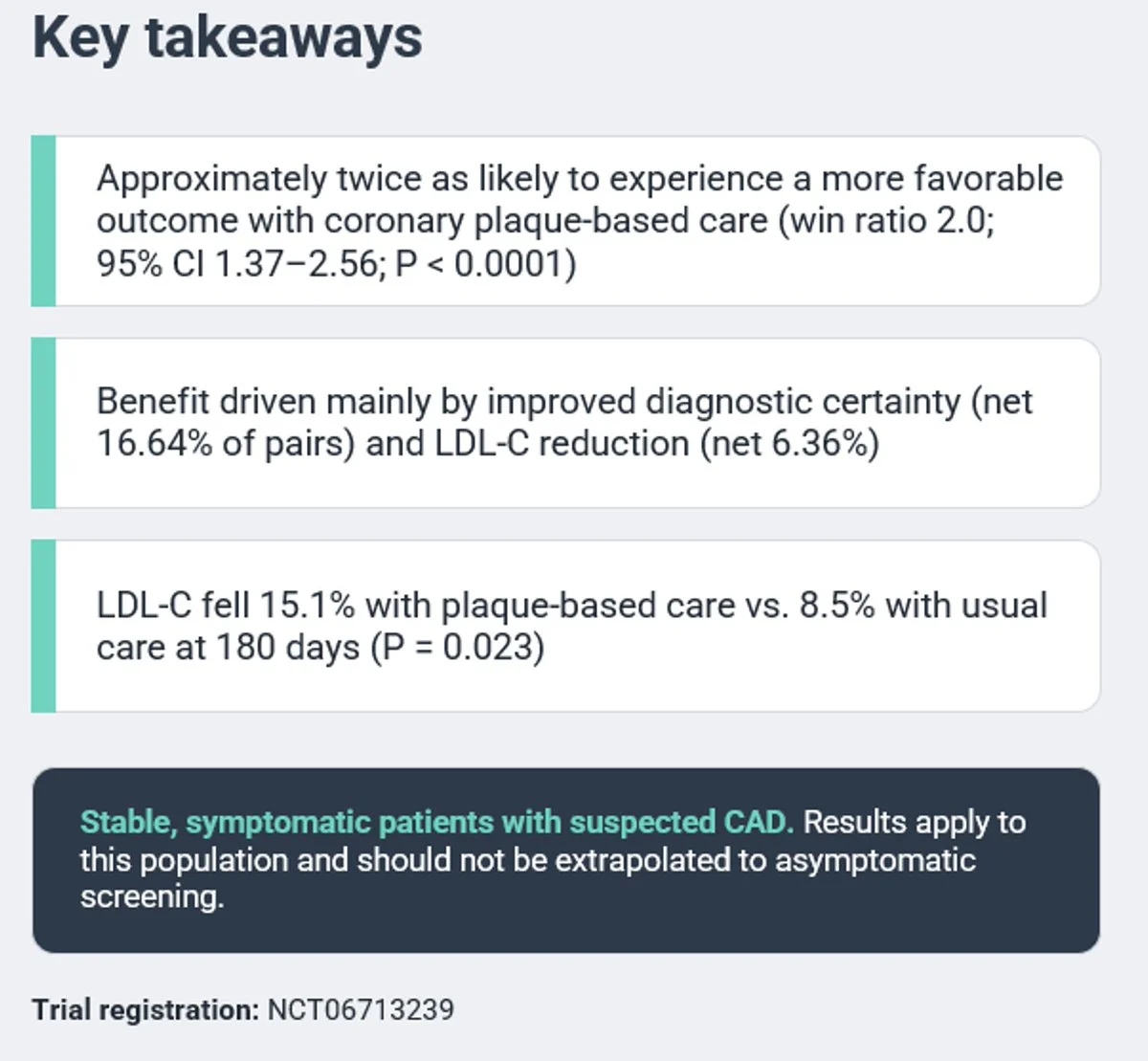
In stable symptomatic patients with suspected CAD, coronary plaque-based care was twice as likely to result in favorable outcomes than usual guidelines-based care, driven mostly by greater diagnostic certainty and lower LDL-C levels.”
Proceed to the video attached to the post.
Stay updated with Hemostasis Today.
-
Nov 10, 2026, 16:28Can the VWF to ADAMTS-13 Ratio Predict Mortality in Sepsis-Induced Coagulopathy? – RPTH Journal
-
Nov 10, 2026, 16:28Ruth Willems: PhD Defence at Maastricht University on Thrombosis and Bleeding in HPB Disease
-
Nov 10, 2026, 16:09Edward Lee Carter: Factor XIa Inhibition Enters Clinical Practice
-
Nov 10, 2026, 16:08Edward C.C. Wong: Deriving Ferritin Cutoffs for Iron Deficiency Using RBC Parameters
-
Nov 10, 2026, 16:07Milad Abdalla: Decoding Hemoglobin Electrophoresis – A Practical Diagnostic Reference
-
Nov 10, 2026, 15:13Wolfgang Miesbach: Nonviral Gene Therapy for Haemophilia A Using Lipid Nanoparticles
-
Nov 10, 2026, 15:06Dahra Teles: First Speaking Experience at HEMO 2026 on First-Line Multiple Myeloma Treatment
-
Nov 10, 2026, 14:55Yazan Abou-Ismail: First FDA-Approved Factor XIa Inhibitor for Stroke Prevention
-
Nov 10, 2026, 14:49Ifeanyichukwu Ifechidere: The Role of Coagulation in Anaesthesia and Surgery