


John Fanikos Shares Greg Piazza’s Presentation On The Results of The HI-Pro Trial
John Fanikos, Director of Strategic Initiatives at North American Thrombosis Forum, shared on LinkedIn:
”The best part of my pharmacist career was spending time with the Thrombosis Research Group.
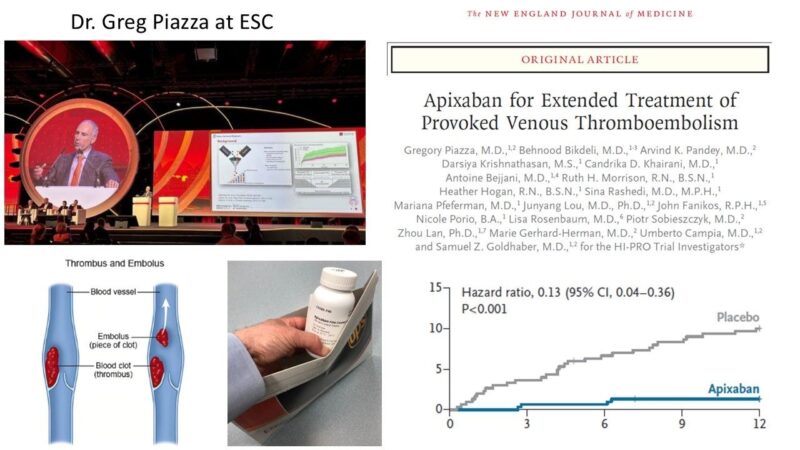
Dr. Greg Piazza presented the results of the HI-Pro Trial at the European Society Meeting over the Labor Day weekend in Madrid, Spain.
There are often reasons (surgery, infection, injury) patients developed blood clots (deep vein thrombosis and pulmonary embolism) in their legs and lungs.
These events were called “provoked” and treated with medicines (anticoagulants) for 3-6 months.
Dr. Piazza’s research suggests treating longer, and with a lower dose, may prevent repeat events and be better for patients.
Kudos to the research group. Kudos to the Investigational Drug Service Pharmacy (IDS) that delivered the drugs by foot, by FedEx, and by UPS in the peri-pandemic period to keep patients on their medications.
I was honored to be included.”
Stay updated on the latest news in the field of thrombosis with Hemostasis Today.
-
Oct 3, 2026, 06:11Ana Cespedes: Maternal Anemia in Pregnancy Linked to Differences in Infant Brain Structure
-
Oct 3, 2026, 05:52Kemal Karaagac: When Vitamin K Antagonists Remain Essential in Cardiac Care
-
Oct 3, 2026, 05:32Shiavax J. Rao: PERT 2026 Session Explores Long-Term Anticoagulation and DOAC Management
-
Oct 3, 2026, 05:13Parveen Yograj: Iron Deficiency and Anaemia – Diagnosis, Causes, and Treatment Guidelines
-
Oct 3, 2026, 00:25Antiplatelets May Be a Strong Option After Ischemic Stroke in Active Cancer – International Journal of Stroke
-
Oct 3, 2026, 00:24Mavis Agnes Kisakye: Honored to Join UNHLS Leadership in Advancing HIV Diagnostics in Uganda
-
Oct 3, 2026, 00:23Phil Spinella: Blood is for Bleeding, Salt Water is for Cooking pasta, Keeping it simple
-
Oct 3, 2026, 00:21Pablo Corral: The ANGPTL Axis in Dyslipidemia and Cardiovascular Risk
-
Oct 3, 2026, 00:20Raghavendra Rao: The Link Between Chronic Venous Disease and VTE May Be Less Robust Than Previously Thought