

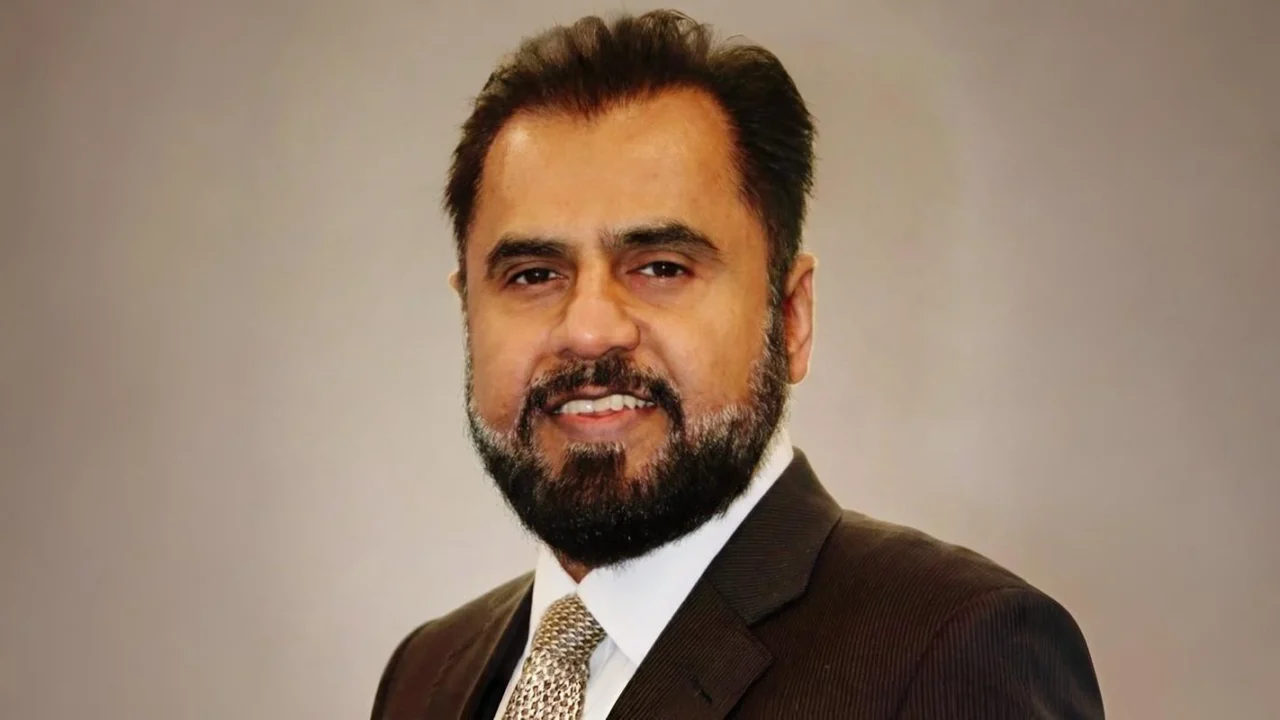
Abdul Mannan: A Red Eye, a Blood Clot, and Ibrutinib – The Clinical Tightrope
Abdul Mannan, Consultant Hematologist at Betsi Cadwaladr University Health Board, shared a post on LinkedIn:
“A red eye. A blood clot. And ibrutinib. This is the clinical tightrope.
My SLL patient was on ibrutinib 420 mg for her disease and therapeutic anticoagulation for a massive PE.
Then her eye turned red. Spontaneous subconjunctival haemorrhage. No major bleeding anywhere.
The question every haematologist dreads: Do I stop something? And if so, what?
Here is the answer the evidence gives us.
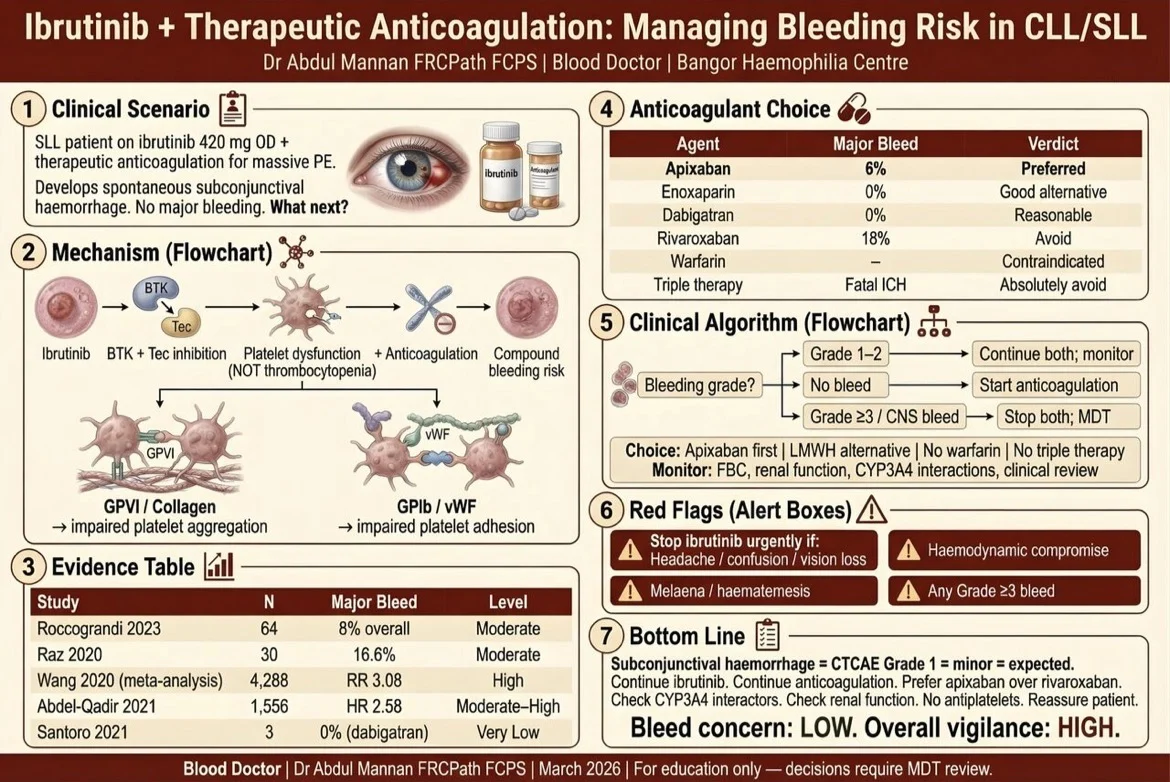
The red eye is Grade 1. It is minor. It is expected. Ibrutinib knocks out BTK and Tec kinase together, crippling platelet adhesion via GPVI/collagen and GPIb/vWF pathways.
The result is platelet dysfunction, not thrombocytopenia. Mucocutaneous bleeding happens in up to 67% of patients on ibrutinib. A subconjunctival bleed is part of that story.
But stacking anticoagulation on top? That is where the real risk lives.
What the numbers tell us (Roccograndi et al., Leukemia & Lymphoma 2023, n=64 CLL/SLL patients):
- Apixaban used with ibrutinib: 6% major bleeding
- Rivaroxaban used with ibrutinib: 18% major bleeding
- Enoxaparin used with ibrutinib: 0% (small numbers, but reassuring)
Warfarin: contraindicated, full stop
Ibrutinib combined with DOAC and clopidogrel:
one fatal intracranial haemorrhage
Wang et al. meta-analysis (Frontiers in Pharmacology 2020, 11 RCTs, 4,288 patients) showed ibrutinib triples overall bleeding risk in CLL patients.
So what did I do?
Continued ibrutinib. Continued anticoagulation. The PE does not forgive you for stopping. Checked she was on apixaban not rivaroxaban. Checked renal function. Removed every antiplatelet from her list. Educated her on CNS and GI red flag symptoms.
The infographic below tells the whole story in one page. Save it. Share it with your trainees.
- Bleed concern: LOW.
- Overall vigilance: HIGH.
Have you faced this combination in practice? What anticoagulant did you go with?”
Other posts featuring Abdul Mannan on Hemostasis Today.
-
Sep 18, 2026, 06:48Gopal Patidar: Honoured to Contribute to the ASFA 2026 Guidelines for Therapeutic Apheresis
-
Sep 18, 2026, 05:48Julie Taylor: Navigating Tech Glitches to Deliver Engaging BBTS Presentation
-
Sep 18, 2026, 05:42Emma Copperwaite: BBTS Conference Presentation Highlights Power of Peer Support and Pushing Past Fear
-
Sep 18, 2026, 05:34Suhasini Sil: RGSSH Joins Mega Blood Donation Camp at Thyagaraj Stadium
-
Sep 18, 2026, 05:25Lisa Laun: Spleen Clears Activated Platelets to Limit Thrombosis and Inflammation
-
Sep 18, 2026, 05:16Louise St. Germain Bannon: ISTH Advocates for Enhanced Patient Safety in Blood Disorder Care
-
Sep 18, 2026, 05:08Vikas Veer: Exploring Sickle Cell Anemia at the Molecular Level
-
Sep 18, 2026, 01:35Matthew Hazell: From Platelet Refractoriness to Protecting Transplanted Organs
-
Sep 18, 2026, 01:23Apple Joy A. Valenzuela: Exploring How Neutrophil Develops from the Myeloblast to the Mature Segmented Neutrophil