

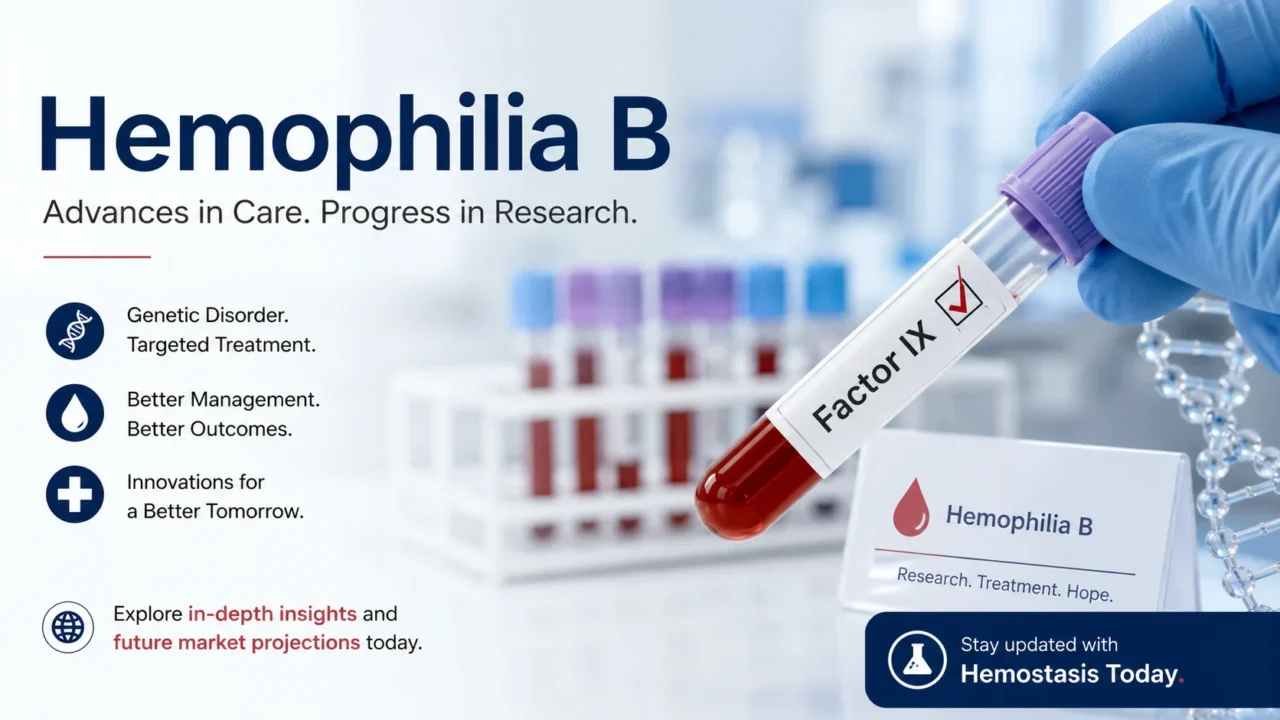
Abhishek Kumar: New Horizons in Hemophilia B Treatment and Prevention
Abhishek Kumar, Lead Analyst at DelveInsight Business Research LLP, shared a post on LinkedIn:
“Hemophilia B: Genetics, Clotting Challenges, and Modern Treatment Advances
Hemophilia B is a rare inherited bleeding disorder caused by factor IX deficiency due to F9 gene mutations.
It follows an X linked recessive pattern, affecting mostly males while females are carriers.
Reduced factor IX disrupts the intrinsic coagulation pathway, leading to unstable clots and prolonged bleeding after injury.
Severity depends on factor levels.
Management focuses on replacing factor IX through recombinant or plasma derived concentrates, used on demand or prophylactically.
Newer options like extended half life therapies and gene therapy aim to improve long term control and quality of life.
Early diagnosis and care are essential for preventing complications.
Recent Developments in Hemophilia B Clinical Research
In March 2025, Sanofi announced that the U.S. Food and Drug Administration (FDA) approved Qfitlia, the first antithrombin-lowering (AT) therapy for routine prophylaxis to prevent or reduce the frequency of bleeding episodes in adult and pediatric patients (aged 12 or older) with Hemophilia A or B, with or without factor VIII or IX inhibitors.
The approval was based on data from the ATLAS phase 3 studies, which demonstrated clinically meaningful bleed protection as measured by annualized bleeding rates (ABR) across Hemophilia A and B patients, regardless of inhibitor status.
Key Hemophilia B Companies shaping the competitive landscape include: BIOCAD, Gyre Therapeutics, Be Biopharma, Regeneron Pharmaceuticals, Inc., Intellia Therapeutics, Inc., Suzhou Alphamab Co., Ltd., Equilibra Bioscience, UBI Pharma Inc., Staidson (Beijing) Biopharmaceuticals Co., Ltd, and others.
Explore in-depth insights and future market projections today.”
Stay updated with Hemostasis Today.
-
Sep 25, 2026, 07:25Varun Capoor: How Therapeutic Apheresis and Transfusion Medicine Can Complement Clinical Management in SCD
-
Sep 25, 2026, 07:14Manshi Kesharwani: SAK-GQDs Modulate Thrombus Burden and Endothelial Function in Deep Vein Thrombosis
-
Sep 25, 2026, 06:20Farjah Hassan Algahtani: How Can We Better Identify Patients at Risk of Blood Clots after Metabolic and Bariatric Surgery?
-
Sep 25, 2026, 05:59Carla Lewis: Kids Conquering Sickle Disease Joins Nemours Children’s Hospital for 2nd Annual Awareness Event
-
Sep 25, 2026, 05:47Omid Seidizadeh: Evolutionary Constraint and Population Variation Across Coagulation Genes
-
Sep 25, 2026, 05:40Gerald Bertrand: Presenting UMi-NGS Non-Invasive Foetal HPA Genotyping at DGTI 2026
-
Sep 25, 2026, 05:33Urge Congress to support the Sickle Cell Disease Comprehensive Care Act – ASH
-
Sep 25, 2026, 05:24Isabelle Mahé: Reduced-Dose Apixaban in Extended CAT Treatment
-
Sep 25, 2026, 05:15Maria Cherska: High Cholesterol Isn’t Always Diet or Lifestyle – Sometimes It’s Genetic