


AbQader Bedil: A Practical Diagnostic Workflow for Von Willebrand Disease
AbQader Bedil, Medical Laboratory Technologist at French Medical Institute for Mothers and Children- FMIC, Laboratory Incharge at Stanikza Diagnostic clinic, shared a post on LinkedIn:
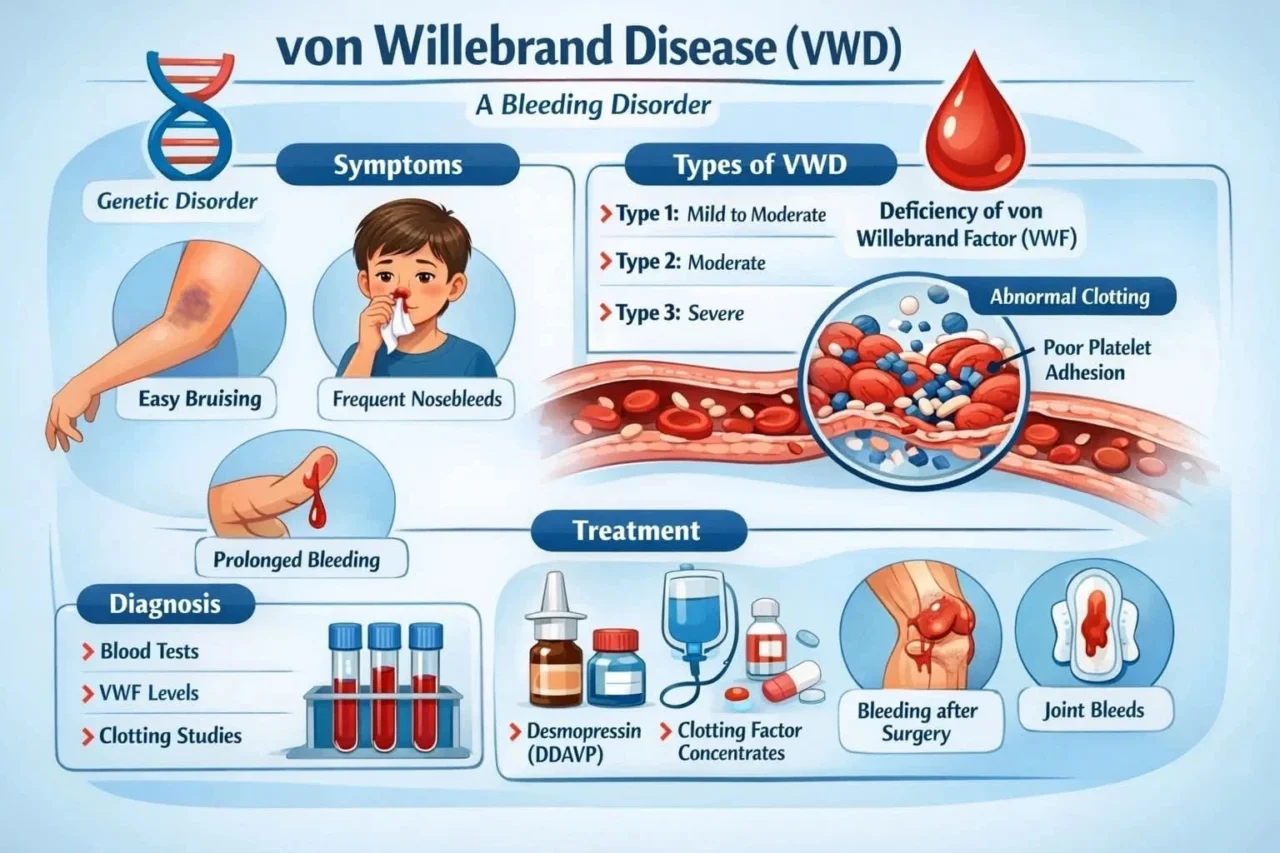
“Von Willebrand disease (VWD)
VWD is the most common inherited bleeding disorder — and also the one that most often gets misdiagnosed because people order the wrong single test and trust the result.
Here’s a fast, practical workflow you can use.
1․ Who to test:
Test when there’s a bleeding history (mucosal bleeding, heavy menstrual bleeding, excessive bleeding after procedures) or a first-degree relative with VWD.
Use a bleeding assessment tool (BAT) when possible to document severity.
2․ First-line lab panel
Run VWF antigen (VWF:Ag), a platelet-dependent VWF activity assay (modern: VWF:GPIbM or equivalent; legacy: VWF:RCo) and factor VIII activity (FVIII:C) together as the initial screen.
Don’t rely on a single isolated number.
3․ Interpretation quick rules
Per the guideline cutoffs, VWF level(s) less than0.30 IU/mL (VWF:Ag or activity) support type 1 VWD; in patients with bleeding, levels less than 0.50 IU/mL are also clinically important.
Repeat testing off acute illness and outside of pregnancy/estrogen exposure when feasible.
4․ Which activity assay
Newer assays that measure VWF binding to recombinant GPIb (eg VWF:GPIbM) are generally preferred over the old ristocetin cofactor (VWF:RCo) because they are more reproducible and less operator-dependent.
If your lab still uses VWF:RCo, flag the limitations in the report.
5․ When to send extra tests
If activity less than antigen (low ratio) or abnormal multimer pattern, then consider VWF multimer analysis, VWF collagen binding (VWF:CB) and targeted genetic testing for suspected type 2 variants.
For suspected type 2B, targeted genetic testing is preferred over low-dose RIPA where available.
6․ Common pitfalls labs must call out
Blood type O reduces baseline VWF by approximately 25% — say that in the comment. Acute-phase reactions, pregnancy, estrogen therapy and recent desmopressin can raise VWF and mask mild deficiency.
Repeat testing when the patient is clinically stable.”
Stay updated with Hemostasis Today.
-
Sep 30, 2026, 11:36Basit Ali: A Closer Look at CT Venography
-
Sep 30, 2026, 11:16Christina Pohlman: Could aPL Levels Help Predict Stroke Recurrence?
-
Sep 30, 2026, 10:55Rana Al Hrout: Diagnostic Approach to Hypochromic Microcytic Anemia
-
Sep 30, 2026, 01:52Javed Anees: DADA2 – When a Young Stroke Is More Than a Stroke
-
Sep 30, 2026, 01:51How a Venous Thrombus Becomes Revascularized – ISTH
-
Sep 29, 2026, 22:45Victor Agunyego: Paracetamol – The Most Common Drug We Underestimate
-
Sep 29, 2026, 22:42Nova Sinclair: Advancing the Future of Hematology – Meet Our 2027 Organizing Committee
-
Sep 29, 2026, 22:41Lorenz Räber: Intracoronary Imaging in PCI – Why, When, How, and Which Modality?
-
Sep 29, 2026, 22:31Selma Turkovic: Pleased to Deliver the Opening Presentation at Kingston Hospital