


Andreas Tridimas: The Diagnostic Traps of Lipaemic Blood – Why a Normal Amylase Can Mislead You
Andreas Tridimas, Consultant in Chemical Pathology and Metabolic Medicine at Wirral University Teaching Hospital NHS Foundation Trust, shared a post on LinkedIn:
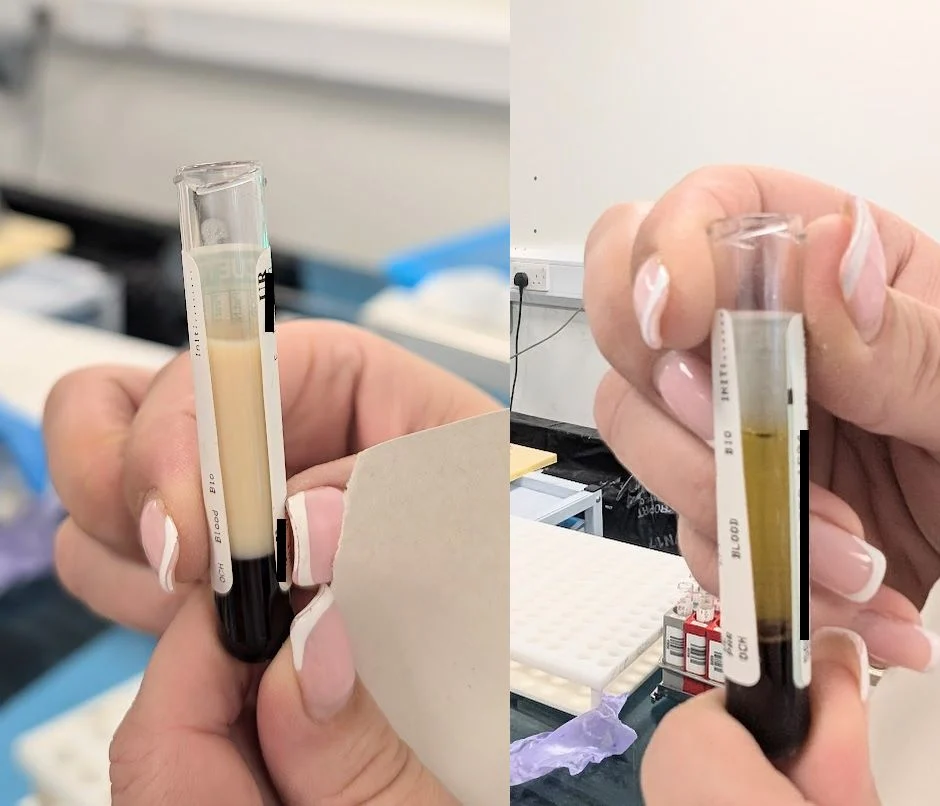
“Two tubes. Same centrifuge. Same morning.
Left is a recent patient.
Right is what serum is meant to look like.
That milky layer is fat, in quantities the body can no longer clear.
Serum turns hazy above about 4 to 5 mmol/L. It looks like that well north of 20 mmol/L.
Why it matters
Pancreatitis risk climbs above 10 mmol/L and steeply above 20.
Severe hypertriglyceridaemia causes up to 1 in 10 cases of acute pancreatitis.
The damage is not from the triglyceride.
Pancreatic lipase releases free fatty acids in the pancreatic microcirculation that are directly toxic to acinar cells, with capillary sludging on top. Hence the severity and the necrosis rate.
The trap
Lipaemia interferes with assays.
Amylase can read normal in a pancreas that is inflamed.
Sodium reads falsely low on indirect ISE (i.e. main lab analyser).
Calculated LDL is meaningless.
Milky sample plus abdominal pain. A normal amylase is not reassurance. Ask for lipase or a diluted sample.
It is rarely one cause
Usually a quiet genetic susceptibility plus a trigger.
Poorly controlled diabetes, alcohol, weight gain, pregnancy, oestrogens, retinoids, steroids, olanzapine, untreated hypothyroidism.
Familial chylomicronaemia syndrome is the rare one, around 1 in a million.
Childhood onset, recurrent pancreatitis, eruptive xanthomas, triglycerides that will not drop below 10. That patient needs genetic testing and a lipid clinic.
Management
Acutely: nil by mouth, fluids, insulin if hyperglycaemic, stop the drug, treat the trigger. Apheresis gets asked about, the evidence stays thin.
Then: fibrate first line at these levels, omega-3, alcohol cessation, normoglycaemia, weight. Statin is for the atherosclerotic risk, not the acute number.
Below 10 the conversation changes.
Remnant cholesterol becomes the issue (i.e. long term ASCVD risk) and non-HDL is the measure to follow.
What is coming
ApoC-III is now a treatable target.
Plozasiran and olezarsen both lower triglycerides substantially, and both have now shown fewer acute pancreatitis events, plozasiran most recently at ESC.
Not just a lower number, fewer attacks. Routes exist here for FCS.
Beyond that, access is not clear yet…..”
Stay updated with Hemostasis Today.
-
Sep 21, 2026, 15:33Arsene Mekinian: Exploring Cardiac Involvement in Behçet’s Disease
-
Sep 21, 2026, 15:23Anis Mahjoubi: MRI Findings of Krukenberg Tumors
-
Sep 21, 2026, 15:08Fikreab Tesfaye Tefera: 10 Practical Take-Home Points for Diagnosing Iron Deficiency Anemia
-
Sep 21, 2026, 14:10Aswin K Mohan: Lessons from TRANSCON 2026 – Building Resilient Blood Supply Systems Before Crisis Hits
-
Sep 21, 2026, 14:00Vincent Lu: Beyond PT and aPTT – How Hemostasis Evolves Across a Lifetime
-
Sep 21, 2026, 13:56Alex Knapp: Emerging Technologies and Advances in Hemophilia Care
-
Sep 21, 2026, 13:51Abdalhakim Shubietah: pLAAO Fails Noninferiority to OAC in Landmark Meta-Analysis of 7 RCTs
-
Sep 21, 2026, 13:21In His Last UNGA, António Guterres Delivers a Urgent Call for Global Unity
-
Sep 21, 2026, 13:14Fatih Mehmet Gul: Are We Moving Faster Than Our Ability to Ask ‘Should We?’