


Fikreab Tesfaye Tefera/LinkedIn
Sep 21, 2026, 15:08
Fikreab Tesfaye Tefera: 10 Practical Take-Home Points for Diagnosing Iron Deficiency Anemia
Fikreab Tesfaye Tefera, Internal Medicine Resident at Adama Hospital Medical College, shared a post on LinkedIn:
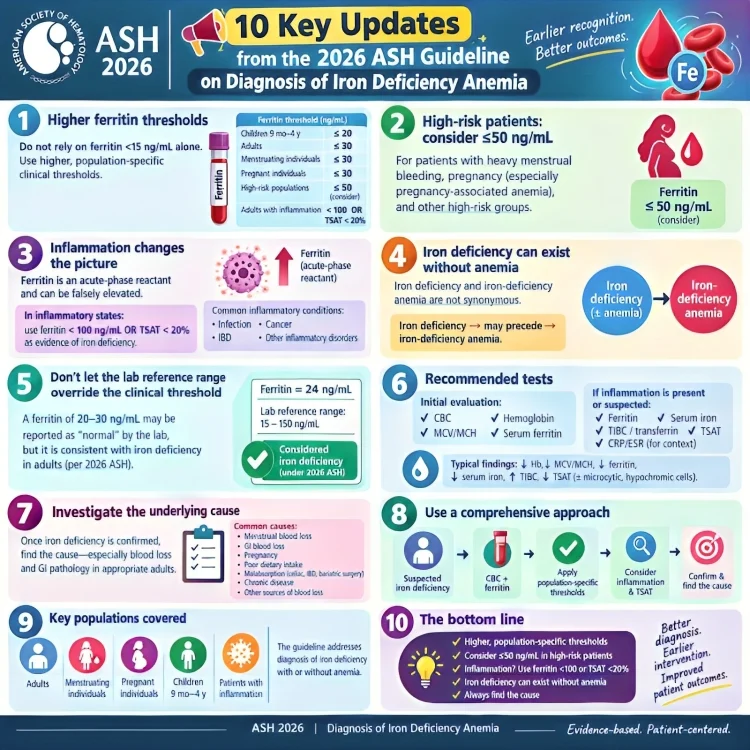
”10 Practical Take-home points from the 2026 ASH Guideline on Diagnosing Iron Deficiency Anemia
1. Ferritin ≤30 ng/mL matters in adults
- The traditional <15 ng/mL cutoff can miss iron deficiency. A ferritin ≤30 ng/mL supports iron deficiency in adults.
2. Children have a different threshold
- For children 9 months–4 years, ferritin ≤20 ng/mL supports iron deficiency.
3. Pregnancy and menstruation need attention
- In pregnant and menstruating individuals, ferritin ≤30 ng/mL indicates iron deficiency.
4. Think about ≤50 ng/mL in high risk settings
- A higher threshold may be appropriate in situations such as heavymenstrual bleeding or pregnancy associated anemia.
5. Inflammation can hide iron deficiency
- Ferritin rises with infection, inflammation, malignancy, and other inflammatory states—so a “normal” ferritin doesn’t always mean adequate iron stores.
6. Add TSAT when inflammation is present
- When inflammation is suspected, interpret ferritin together with transferrin saturation (TSAT) rather than relying on ferritin alone.
7. In inflammatory states, ferritin <100 OR TSAT <20 percent can support deficiency
- In adults with inflammation, either finding can indicate iron deficiency and should prompt clinical consideration.
8. Iron deficiency can exist without anemia
- A patient can have normal hemoglobin but depleted iron stores. Iron deficiency often develops before anemia becomes apparent.
9. Don’t be reassured by the laboratory ‘normal range’
- A ferritin of 20–30 ng/mL may be flagged as normal by some laboratories, but that does not necessarily mean the patient’s iron stores are adequate.
10. Finding iron deficiency is only the beginning
- Once iron deficiency is identified, the next question is: ‘Why?’ Look for blood loss, inadequate intake, pregnancy, malabsorption, gastrointestinal disease, and other underlying causes.”
Stay updated with Hemostasis Today.
-
Sep 21, 2026, 14:10Aswin K Mohan: Lessons from TRANSCON 2026: Building Resilient Blood Supply Systems Before Crisis Hits
-
Sep 21, 2026, 14:00Vincent Lu: Beyond PT and aPTT – How Hemostasis Evolves Across a Lifetime
-
Sep 21, 2026, 13:56Alex Knapp: Emerging Technologies and Advances in Hemophilia Care
-
Sep 21, 2026, 13:51Abdalhakim Shubietah: pLAAO Fails Noninferiority to OAC in Landmark Meta-Analysis of 7 RCTs
-
Sep 21, 2026, 13:21In His Last UNGA, António Guterres Delivers a Urgent Call for Global Unity
-
Sep 21, 2026, 13:14Fatih Mehmet Gul: Are We Moving Faster Than Our Ability to Ask ‘Should We?’
-
Sep 21, 2026, 13:08Sangita Reddy: How Does Our Own Healthcare Journey in India Look Through the Same Lens?
-
Sep 21, 2026, 12:53Conan McIlwrath: Strengthening Haemophilia Care Through International Collaboration
-
Sep 21, 2026, 12:41Tinatin Muradashvili: Advancing Hemophilia Care Through Education and Collaboration