

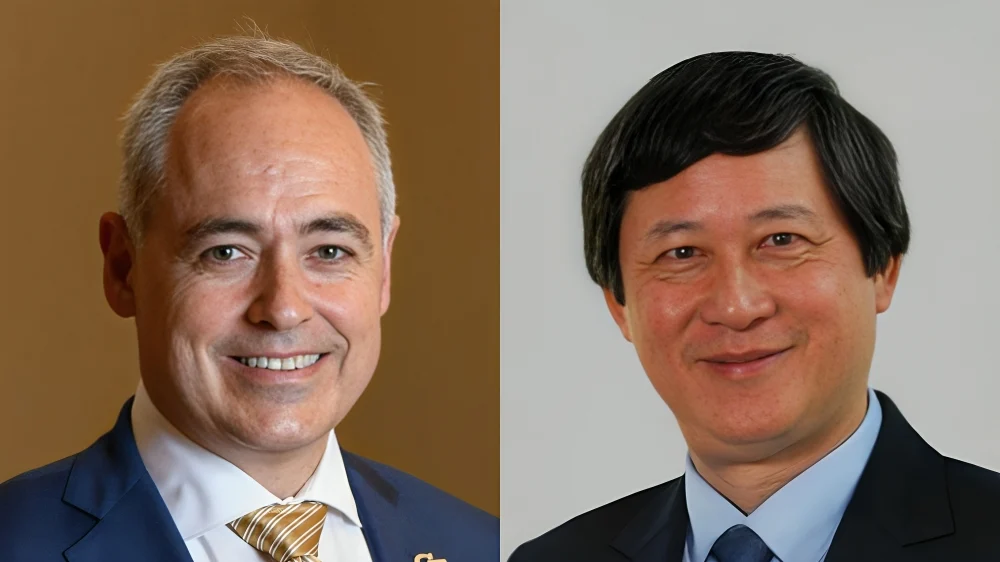
Ángel Cabrera/president.gatech.edu;David Ku/LinkedIn
Jun 26, 2026, 13:25
Ángel Cabrera: Clotting Disorders Behind Heavy Menstrual Bleeding
Ángel Cabrera, President at Georgia Institute of Technology, shared a post on LinkedIn:
“It affects 1/3 of the human population and can be severe enough to lead to hospitalization.
Yet its causes remain a mystery, it’s rarely discussed in public, often goes undiagnosed, and it remains a consistently underfunded and understudied area of science.
My colleague David Ku and his team are changing that by studying how clotting disorders contribute to heavy menstrual bleeding.”
Stay updated with Hemostasis Today.
-
Sep 24, 2026, 18:43Hugh Nguyen: Honored to Accept the Friend of Singapore Red Cross Award
-
Sep 24, 2026, 18:42Titilope Fasipe: Proud to Support American Society of Hematology’s SCD Initiative
-
Sep 24, 2026, 18:34Ifeanyichukwu Ifechidere: Why Coagulation Samples Can Be “Too Valuable to Throw Away”?
-
Sep 24, 2026, 18:33Aswin K. Mohan: When a Superpower Hears the Call for Blood
-
Sep 24, 2026, 18:31Mercy Lung’aho: Anemia Is Not Only An Iron Problem
-
Sep 24, 2026, 18:29Nick Hanson: Before a Dementia Diagnosis Check Vitamin B12
-
Sep 24, 2026, 18:28Rachel McBryan: Nearly One in Five Older Canadians Has Low Vitamin B12
-
Sep 24, 2026, 18:27Kemal Karaagac: Early DOAC Initiation After Acute Ischaemic Stroke in Atrial Fibrillation
-
Sep 24, 2026, 18:26Mohammed A. AlOmar: What Characterizes Young Stroke in the UAE?