


Charlie Windri: CAC as the Missing Link in Lp(a) Risk
Charlie Windri, Laboratory Specialist at FHI 360, Clinical Pathologist at Laboratorium Dia Care Pasar Minggu, shared a post on LinkedIn:
“In cardiovascular prevention, we often face a familiar dilemma:
We identify risk… but hesitate on action.
This is especially true for lipoprotein(a) or Lp(a).
We know it is a causal risk factor for atherosclerotic cardiovascular disease (ASCVD), yet in primary prevention, the question remains:
When should we escalate treatment?
A recent study presented at the American College of Cardiology (ACC) 2026 Scientific Session offers a practical answer.
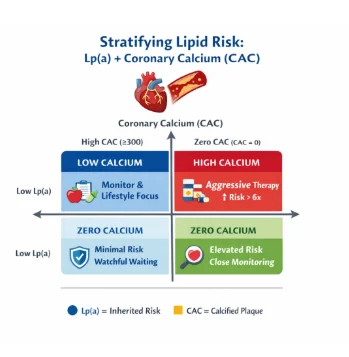
It shows that coronary artery calcium (CAC) scoring and Lp(a) are independent predictors of risk, and when used together, they help move clinical decision-making from uncertainty to clarity.
As someone working across laboratory systems and diagnostics in Indonesia, I see this not just as a clinical update, but as a shift in how we translate biomarkers into real-world decisions.
First, What Is CAC and Why Does It Matter?
Coronary artery calcium (CAC) scoring is a CT-based imaging method that quantifies calcium deposits in coronary arteries.
At a basic level:
Atherosclerosis begins with soft plaque.
Over time, part of this plaque becomes calcified.
CAC score reflects the burden of subclinical coronary atherosclerosis.
Clinically, CAC is powerful because:
CAC equals to 0 – very low short- to intermediate-term risk
Higher CAC (e.g., more than 100 or more than 300) – progressively higher event risk
In simple terms:
Lp(a) tells us the biological tendency to develop disease CAC tells us whether the disease is already there.
That distinction is exactly what clinicians need when deciding whether to intensify therapy.
What the Study Actually Shows.
This large pooled analysis (over 11,000 participants, approximately 15 years follow-up) found:
Elevated Lp(a) (more than 50 mg/dL) increases ASCVD risk.
CAC more than 0 strongly increases risk.
The two are independent, not redundant.
But the most important insight is in absolute risk:
- High Lp(a) plus CAC equals 0 – still relatively low event rates
- High Lp(a) plus CAC more than 300 – more than 6-fold increase in risk
This reframes the conversation.
Not all patients with high Lp(a) need the same level of intervention.
A Simple Framework: 3 Shifts in Lipid Risk Assessment
This study aligns with a broader shift already reflected in recent guidelines.
1. From ‘Risk Factors’ to ‘Risk Layers’
We are no longer relying on single markers.
Instead:
- Lp(a) equals inherited risk
- CAC equals expressed disease
- Together, they provide a more complete picture.
2. From Relative Risk to Absolute Risk
A modest hazard ratio does not always translate into urgent action.
CAC helps answer: Is this risk clinically imminent?
That is what drives treatment decisions.
3. From Uniform Treatment to Stratified Action
Instead of treating all elevated Lp(a) the same:
- Lp(a) high plus CAC equals 0 – monitor, optimize lifestyle, consider stepwise therapy
- Lp(a) high plus CAC elevated – justify earlier and more aggressive LDL lowering
This is precision prevention in practice, not theory.
Why This Changes Clinical Practice?
The updated cholesterol guidelines now recommend:
- Measuring Lp(a) at least once in adulthood.
- Using CAC scoring as a risk-enhancing tool in appropriate age groups.
What this study adds is confidence in how to use them together.
In practical terms, for a patient:
- Age more than 40
- Elevated Lp(a)
- No clear high-risk features
- CAC can act as a decision anchor:
Escalate therapy now.
Or safely defer and monitor.
This helps avoid both overtreatment and undertreatment.
Looking Ahead: Where This Is Going?
Lp(a)-targeted therapies (antisense and siRNA) are advancing rapidly.
When they become available, the key question will be:
Who should receive them first?
The combination of:
- Elevated Lp(a)
- Evidence of subclinical atherosclerosis (via CAC)
- will likely define that population.
A Practical Takeaway
For clinicians, the message is straightforward:
Measure Lp(a) at least once.
Understand CAC, even if access is still evolving.
Focus on absolute risk, not just biomarker presence.
Use CAC to guide timing and intensity of intervention.
Because prevention is no longer just about identifying risk.
It is about knowing when that risk becomes actionable.”
References
- Bhatia HS, et al. Coronary artery calcium and lipoprotein(a) for ASCVD risk prediction. J Am Coll Cardiol. 2026.
- Garg PK, et al. Editorial: CAC as a gatekeeper in elevated Lp(a). J Am Coll Cardiol. 2026.
- American College of Cardiology/American Heart Association. Updated cholesterol management guideline. 2026.
- Tsimikas S. A test in context: Lipoprotein(a). J Am Coll Cardiol. 2017;69(6):692–711.
- Budoff MJ, et al. Coronary artery calcium scoring: past, present, and future. JACC Cardiovasc Imaging. 2016;9(12):1467–1480.
Stay updated with Hemostasis Today.
-
Oct 20, 2026, 13:20The Global Blood Crisis – Are We Solving the Wrong Problem?
-
Oct 20, 2026, 06:45Grant Garcia: Why Does a Blood Clot Diagnosis Immediately End an Athlete’s Season?
-
Oct 20, 2026, 06:35Parag Tamhankar: Landmark Study Reveals Genetic Spectrum and Targeted Therapies for ALPS in the Indian Population
-
Oct 20, 2026, 06:26Nina Houben: Neonatal Blood Transfusion Symposium and PhD Defense
-
Oct 20, 2026, 05:46Jan T. Kielstein: DNP Poisoning and Hemoadsorption The Limits of Rescue Therapy
-
Oct 20, 2026, 05:33Giulia Di Paolo: Connecting Plasma Donation to the Patients Who Depend on It
-
Oct 20, 2026, 05:20James Knowles: Exploring Plasma Manufacturing and Strengthening Industry Collaboration
-
Oct 20, 2026, 05:11Giuseppe Lippi։ Understanding Liver Test Abnormalities After AAV Gene Therapy
-
Oct 20, 2026, 05:02Sanam Loghavi: Test Your Hematology Knowledge at ASH 2026!