

Craig Clapper: What the Andrea Doria Collision Teaches Us About Safety
Craig Clapper, Founder and Chief Knowledge Officer at Reliability 4 Life, shared a post on LinkedIn:
“70 years ago in safety history (26 JUL 1956) the SV Stockholm collided with the SS Andrea Doria south of Nantucket, sinking the Andrea Doria. 51 people died.
Ships in the area responded to aid the Andrea Doria, avoiding a replay of the RMS Titanic sinking of 15 APR 1912.
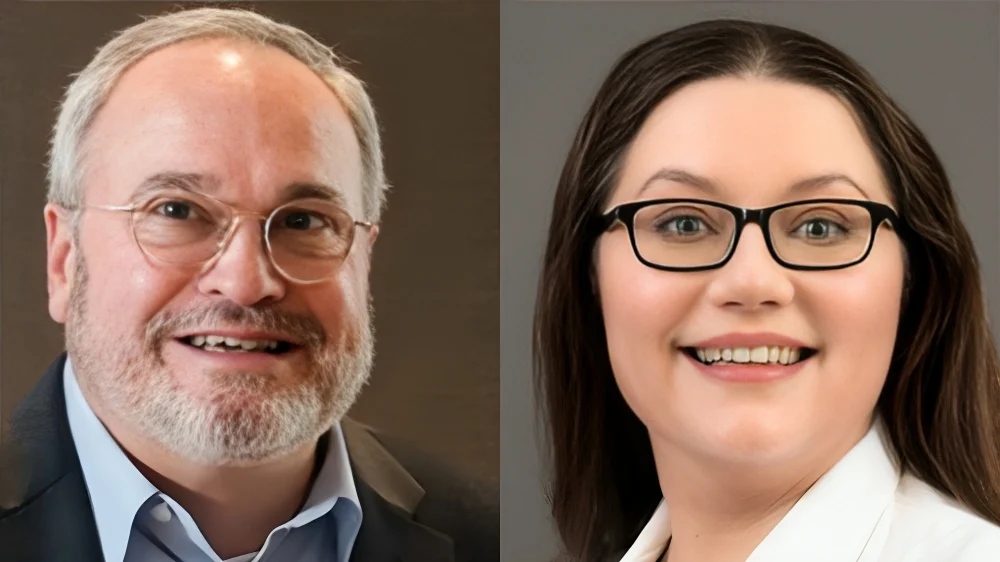
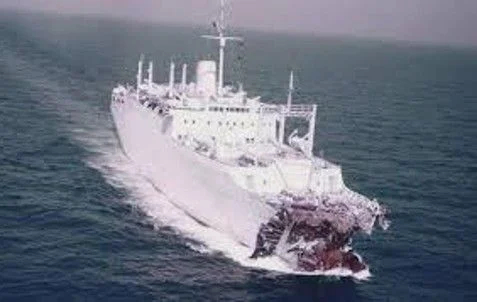
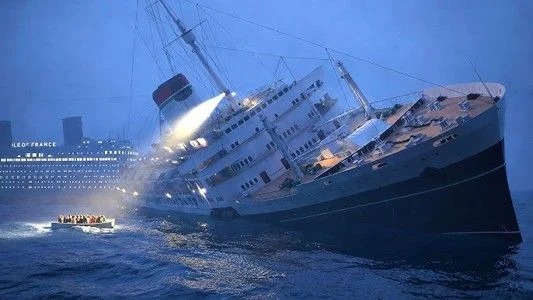
The Stockholm (inset left) departed New York and was headed east. The Andrea Doria (inset right) was westbound for New York.
To save some time, the Stockholm was 20 miles north of the eastbound shipping lane. She was headed east in a westbound lane.
In heavy fog, the Andrea Doria slowed only a few knots. Closing speed of the two ships was 40 knots. Both ships saw the other on radar.
Neither made radio contact.
And when the head-on collision course become clear to both, Stockholm turned to starboard per collision avoidance rules and Andrea Doria turned to port (in violation of rules).
Both ships turned the same way.
Stockholm then turned hard to port and reversed engines, having the effect of a T-type collision. The bow of the Stockholm rammed Andrea Doria midship.
Andrea Doria stayed afloat for 11 hours. Stockholm, a nearby liner (the Ile de France), and two US Navy ships (USS Edward H Allen and USNS William H Thomas) assisted.
1,660 passengers and crew were rescued from the Andrea Doria.
1,660 of 1,706 saved on the Andrea Doria compared to 1,500 of 2,200 lost on the Titanic.
Of the many safety lessons, the best to know and share is system readiness.
Operating officers are responsible to maintain work systems in a constant state of readiness.
This includes operating configuration and proficiency of the operators.
Latent weaknesses in both combined this day in a complex, non-linear loss event.
- Andrea Doria had not ballasted her emptying fuel tanks with seawater, resulting in the instability leading to the starboard list.
- Andrea Doria was missing a watertight door on the engine space.
- Stockholm was in westbound shipping lane.
- Stockholm 3rd mate was thinking radar setting was 15 nautical miles – setting was 5 nautical miles. The ships were much closer than thought.
- Neither ship made radio contact.
- Andrea Doria turned to port instead of starboard.
If you’re an operating officer – find and fix your latent weaknesses before they find you through your next loss event. Safe systems are resilient systems that are error resistant and error tolerant.
That means safe operating configuration (the machine) and proficiency in human performance (the people).
Operating officers do not need to do the work of assuring readiness themselves – they just need to see that this work is done well.”
Caitlin Raymond, Assistant Professor of Pathology and Transfusion Medicine at the University of Wisconsin-Madison, shared this post on LinkedIn, adding:
“Follow Craig for excellent lessons in safety culture.
Those who don’t know their history are doomed to repeat it.”
Stay uodated with Hemostasis Today.
-
Sep 29, 2026, 11:21Richard Davis: Rapid Rescue in Massive Pulmonary Embolism
-
Sep 29, 2026, 11:14Nissan Brown: Every Step Counts for the Hemophilia Community
-
Sep 29, 2026, 11:03Zain Khalpey: SINGLE AF Adds New Evidence to the Anticoagulation Debate
-
Sep 29, 2026, 10:54How Does Haemophilia Affect Motor Development in Infants? – EAHAD
-
Sep 29, 2026, 10:49Alison Davey: The Vital Role of Community Support in Bleeding Disorders
-
Sep 29, 2026, 10:36Abdul Muqtadir Abbasi: 5 Questions to Ask When the CBC Is Abnormal
-
Sep 29, 2026, 10:28Manu Morales Sánchez: DOACs in Intermediate Risk Atrial Fibrillation
-
Sep 29, 2026, 09:59William Sauer: Ablation in Patients With LAAO Devices
-
Sep 29, 2026, 03:53Nahrwan Masaoodi: Iron Deficiency Can Exist Without Anemia