


Ifeanyichukwu Ifechidere: When Fibrinogen isn’t Really Fibrinogen
Ifeanyichukwu Ifechidere, Specialist Biomedical Scientist at Sheffield Teaching Hospitals NHS Foundation Trust, shared a post on LinkedIn:
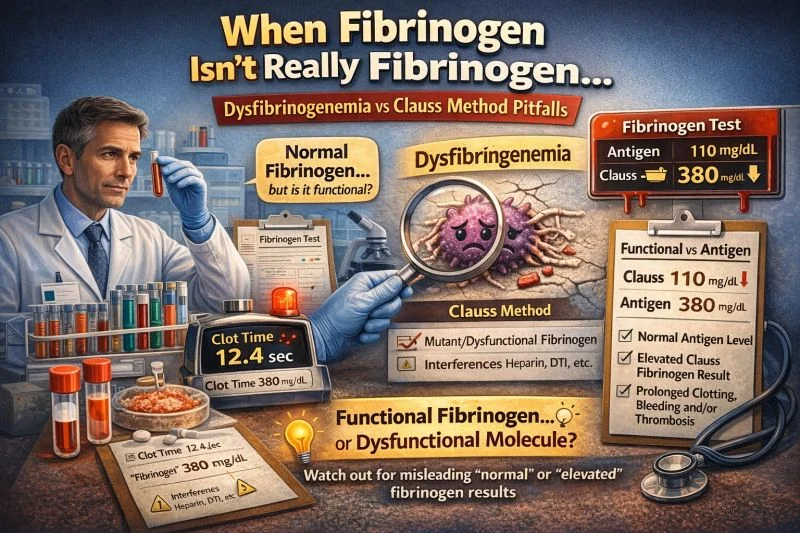
“When fibrinogen isn’t really fibrinogen…
A ‘normal’ or even elevated fibrinogen result can be reassuring.
But what if that number isn’t telling the full story?
Welcome to one of the most overlooked pitfalls in coagulation testing
The Clauss fibrinogen assay – trusted, but not foolproof
The Clauss method measures functional fibrinogen by assessing clot formation after high thrombin concentration.
But here’s the catch:
It assumes fibrinogen is functionally normal
When it’s not… results can mislead.
Dysfibrinogenemia: the great imitator
In dysfibrinogenemia, fibrinogen antigen levels may be normal… but function is impaired.
What you might see:
Discrepancy between Clauss fibrinogen (low) and antigen (normal)
Unexplained bleeding… or paradoxically, thrombosis
Prolonged clotting times (sometimes subtle, sometimes not)
In other words:
There is fibrinogen present — it just doesn’t work properly
But it’s not always dysfibrinogenemia…
The Clauss assay can be affected by multiple interferences:
- Direct thrombin inhibitors (e.g. dabigatran)
- Heparin (depending on reagent sensitivity)
- High FDPs / D-dimer
- Paraproteins
- Severe inflammation
All of these can – falsely low functional fibrinogen
So what should you do?
- Correlate with clinical context
- Compare functional vs antigen fibrinogen
- Review medications and interferences
- Consider reptilase time or genetic testing if needed
Take-home message
Not all fibrinogen results reflect true functional capacity.
Sometimes, what looks like ‘low fibrinogen’ is actually a measurement limitation – or a dysfunctional molecule hiding in plain sight.
Want more clear, practical insights into coagulation testing pitfalls?”
More posts featuring Ifeanyichukwu Ifechidere on Hemostasis Today.
-
Oct 9, 2026, 15:27Mohamed Hegazi: Geostatistical Modelling Maps Global β-Thalassaemia Carrier Prevalence
-
Oct 9, 2026, 15:15Maha Othman: Uncovering the Consensus on TXA in TBI – Call for Collaboration on a Landmark Umbrella Review
-
Oct 9, 2026, 15:07Daniel D. Han: How Inhalation Product Exposure Impairs Cardiac and Platelet Recovery After MI
-
Oct 9, 2026, 14:58William Toole: How Ultrasound-Guided PRP Therapy Relieves Joint and Tendon Pain
-
Oct 9, 2026, 14:50Shayan Mohammadmoradi: In Corpus Christi for the 20th Midwest Platelet Conference
-
Oct 9, 2026, 14:37Tariq Tramboo: High Platelet Concentrate for Osteoarthritis Knee – Recent Meta-Analyses
-
Oct 9, 2026, 14:26Yousma Khan: Hematology Series – Beyond RBCs, WBCs and Platelets
-
Oct 9, 2026, 14:13Jesus Ardila Novoa: Why the WHO’s Historic Essential Medicines List Decision Is Just the Beginning
-
Oct 9, 2026, 14:07Chokri Ben Lamine: Pain After Allogeneic Stem Cell Transplantation in Sickle Cell Disease