

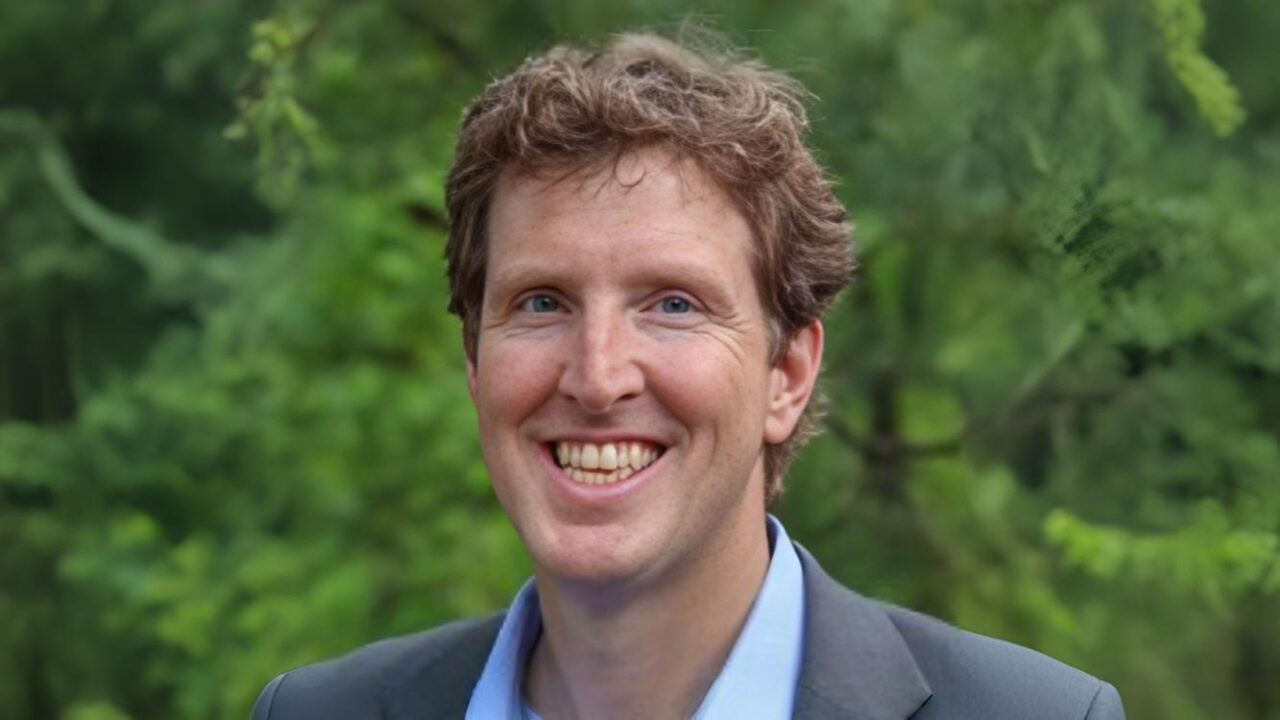
Jeff June: Stroke Care Isn’t Broken, It’s Under-Informed
Jeff June, Innovation Advisor at Early Stage Digital Health, MedTech, Venture Capital, and Accelerator Programs, posted on LinkedIn:
”I spend a lot of time working with founders across accelerators, health systems, and emerging technologies.
Below is an article in a series I have been writing, this article focuses on stroke care.
Stroke care is an area where these tensions are especially visible: high-stakes decisions, uneven resources, and enormous pressure to prevent the next event, not just manage the first.
I wrote this piece as a reflection on:
- Why some problems aren’t broken — they’re under-informed
- Where AI truly adds leverage, and where it doesn’t
- Why secondary prevention, not acute triage, is the next frontier
- And why biology still matters in a world racing toward automation
We often reach for AI when decisions are hard. Sometimes that helps.
Sometimes it just makes the same uncertainty move faster — and I see a familiar pattern repeat itself.
If you work in innovation, healthcare, AI, or just think deeply about how systems make decisions under uncertainty, I’d love your perspective.
Stroke Care Isn’t Broken.
It’s Under-Informed — and Why AI Alone Won’t Solve Secondary Stroke Prevention
Stroke care is often described as “broken.”
I don’t think that’s true at all.
Clinicians make rational, high-stakes decisions every day using the information and resources available to them. Acute stroke care, in particular, has benefited enormously from advances in imaging, protocols, and coordinated response systems. Lives are saved because of it.
The real challenge in stroke care isn’t effort or competence. It’s uncertainty.
And more specifically, it’s biological uncertainty — especially when we move from acute triage to preventing the next stroke.
Stroke care today: five realities we need to acknowledge
A few observations that increasingly shape how I think about stroke innovation:
1. Stroke care isn’t broken.
Care teams make the best possible decisions with incomplete information, under real constraints. That matters, because framing the system as “broken” often alienates the very people doing the work.
2. Stroke patients are biologically heterogeneous.
Two patients with the same diagnosis code may have entirely different underlying mechanisms and very different recurrence risks — yet we often treat them as if they’re the same.
3. Stroke care occurs across highly uneven settings.
Academic centers, community hospitals, and rural facilities operate with vastly different diagnostic depth and resources. These differences contribute to variability in care and disproportionately affect underserved populations.
4. A large fraction of strokes remain cryptogenic.
Depending on the cohort and depth of evaluation, roughly one-third to one-half of ischemic strokes are classified as having no clearly identified cause.
This does not mean there was no cause — it means the cause could not be identified with available tools and information.
This is not a niche problem; it is a central one.
5. Secondary prevention is the next frontier.
Acute triage has matured.
The greatest opportunity to reduce mortality, disability, and cost now lies in preventing recurrence — and that requires understanding why the first event occurred.
Taken together, these realities point to a system that functions — but one that is often forced to act without sufficient biological insight.
Where AI helps — and where it falls short
This context is important when we talk about AI in stroke care.
AI is extraordinarily good at extracting patterns from existing data.
It can accelerate workflows, standardize decisions, and reduce operational friction.
In acute stroke, AI-enabled imaging and triage tools have delivered real value.
But there’s an important limitation that’s easy to overlook:
AI can only analyze the information the system already generates.
If the underlying data lack biological mechanism, AI makes the same uncertainty more efficient — not more precise.
Standard imaging excels at identifying that a stroke has occurred and guiding acute intervention.
It is not designed to explain why the stroke occurred or what biological processes are driving future risk.
As a result, many AI tools today optimize identification and throughput, but leave prevention fundamentally unchanged.
This isn’t a failure of AI. It’s a mismatch between the problem we’re asking it to solve and the signals we provide.
Cryptogenic stroke exposes the gap
Cryptogenic stroke makes this limitation explicit.
By definition, it is a diagnosis of exclusion — applied after extensive imaging, cardiac testing, rhythm monitoring, and laboratory evaluation fail to reveal a clear cause.
Patients are often treated with broad, non-specific prevention strategies, even though we know recurrence risk remains high.
Guidelines and professional consensus increasingly acknowledge this gap.
Longer monitoring, additional imaging, and invasive testing are often layered on after an initial failure to identify mechanism.
In many cases, clinically meaningful causes are discovered only after recurrence.
In other words, the system works hard — but it often works late.
Why secondary prevention is not an AI problem — it’s a biology problem
The future of stroke care will not be defined by faster dashboards or better alerts alone.
It will be defined by earlier biological stratification — insight into mechanism that can guide prevention decisions across diverse care settings, before recurrence occurs.
AI will absolutely play a role in this future.
But its greatest value will come when it is paired with new biological signal, not when it is asked to endlessly recombine incomplete information.
Secondary prevention isn’t about doing more testing on everyone.
It’s about knowing who needs more certainty, sooner — and why.
That is a biology problem first, and an analytics problem second.”
Stay updated with Hemostasis Today.
-
Oct 16, 2026, 17:50Elad Asher։ STORM-PE Shows Functional Benefits of Thrombectomy
-
Oct 16, 2026, 17:32Shruthi Narayan: STORM-PE and STRIKE-PE Studies Advance Understanding of Recovery After Pulmonary Embolism
-
Oct 16, 2026, 17:22Wolfgang Miesbach։ What a Near-Perfect FISH Score Fails to See
-
Oct 16, 2026, 17:06Troels Wienecke: Connecting Myeloproliferative Disease and Ischemic Stroke
-
Oct 16, 2026, 17:03Only 5 Days Left to Submit Your Research for EAHAD 2027
-
Oct 16, 2026, 16:48Abdul Rahman: Reticulocyte Count and Bone Marrow Activity
-
Oct 16, 2026, 16:44DOAC Adherence in Stroke Patients With Atrial Fibrillation – International Journal of Stroke
-
Oct 16, 2026, 16:22Shannon Farmer: Driving Patient Blood Management Forward in Australia and New Zealand
-
Oct 16, 2026, 16:01Obi Light Ogbonnia: The Greatest Reward Is Changing Lives, Not Winning Awards