


Natalya Shynhera: Using Anemia to Teach Medical English in Real Clinical Practice
Natalya Shynhera, Medical English Content Developer and Educator, shared a post on LinkedIn:
“A few weeks ago, one of my students – a family doctor working in Poland – told me that she had been seeing a lot of patients with anemia in her practice. She asked me to create a lesson on the topic. So I did.
But I didn’t want to make a lesson built around a list of medical terms and a few comprehension questions. Instead, I made it as close to real clinical practice as possible.
- We started with the patient’s symptoms and possible causes.
- We looked at laboratory results and discussed what they might indicate.
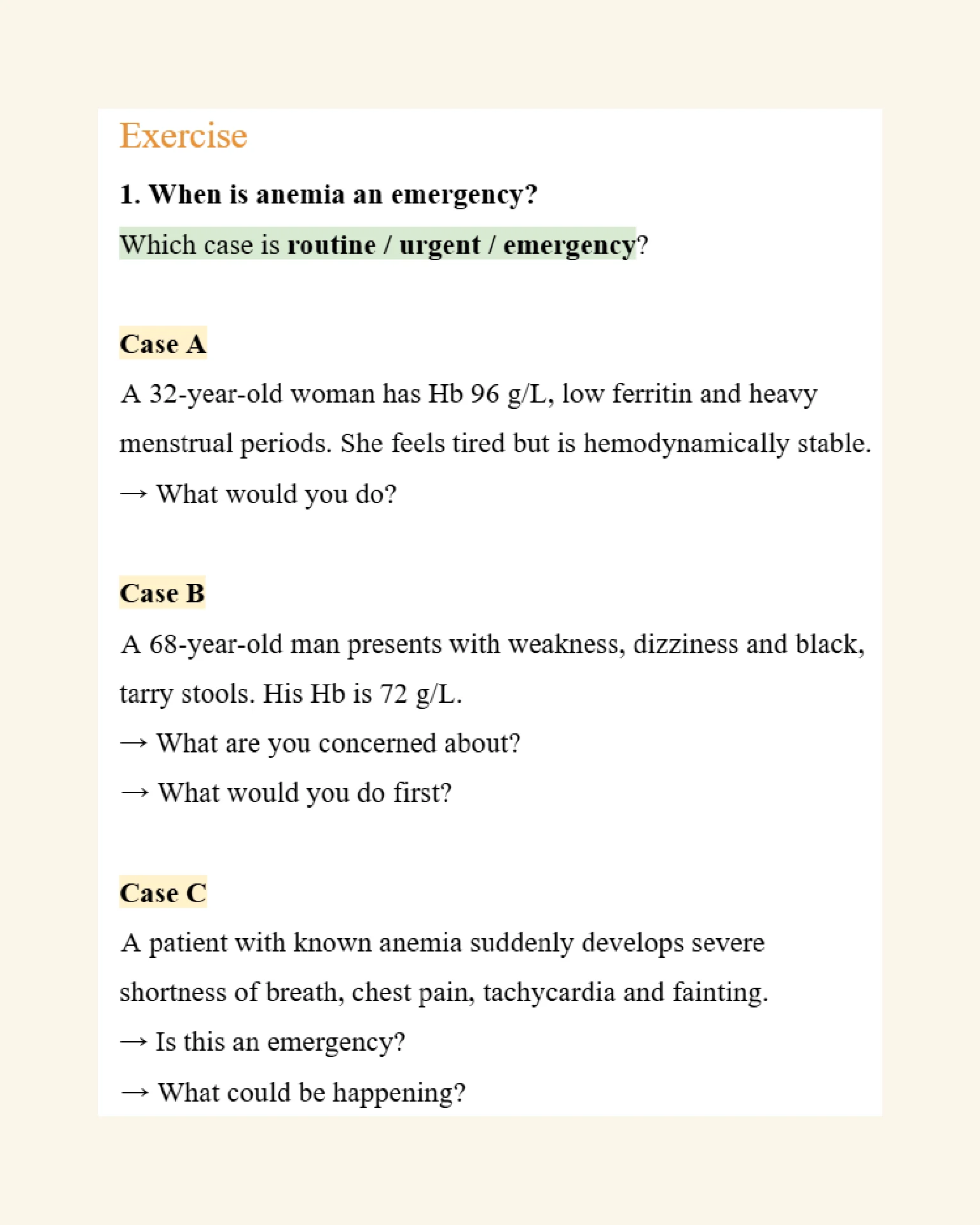
- We worked through clinical cases and decided whether each situation was routine, urgent, or an emergency.
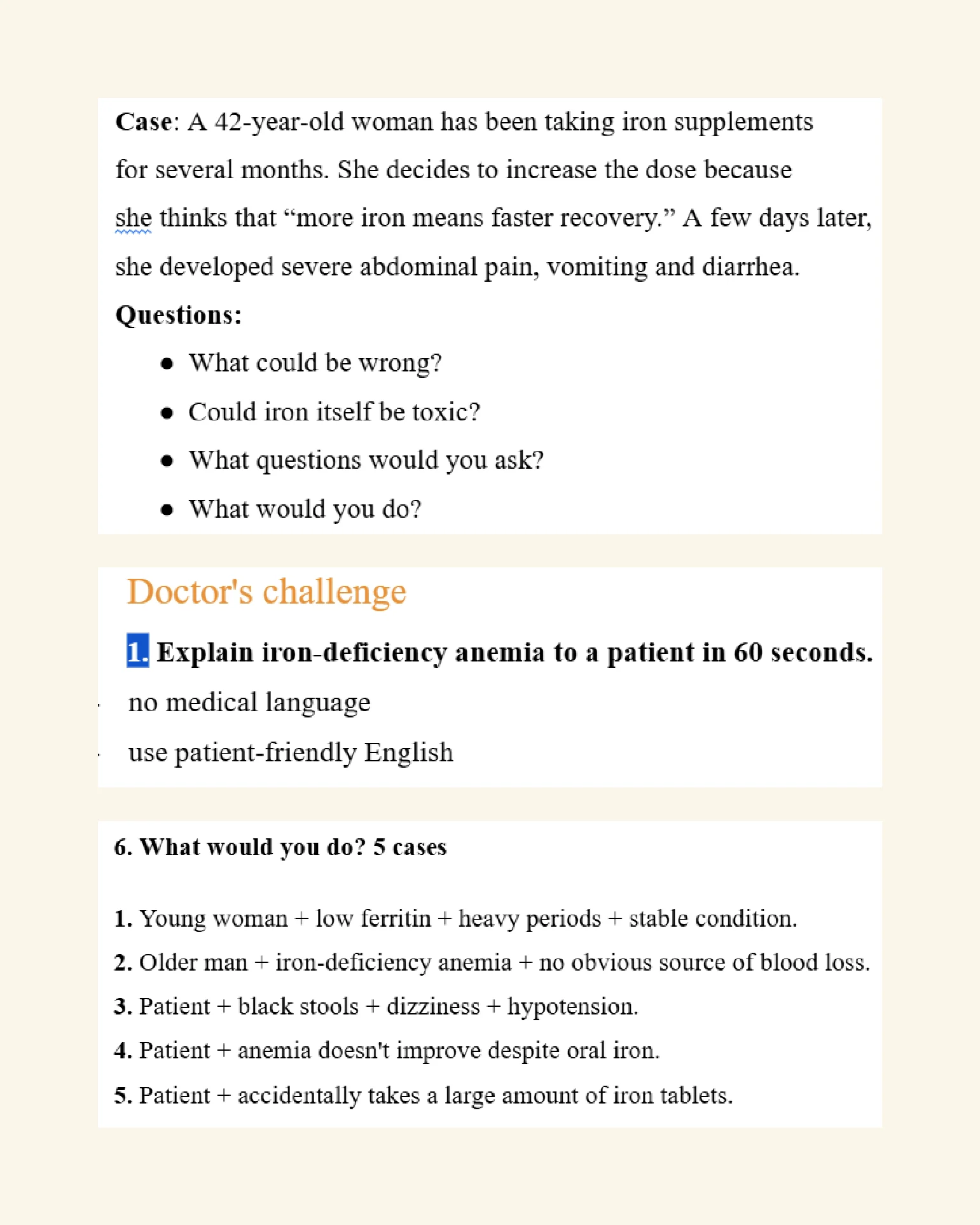
- We discussed when iron supplementation might be appropriate, when the underlying cause needs further investigation, and when IV iron might be considered.
- And then we moved from clinical reasoning to communication.
Because knowing what to do clinically is only part of the job.
A doctor also needs to be able to explain it.
So the student had to explain iron-deficiency anemia to a patient without using medical terminology, answer difficult patient questions, and then explain the same condition to another doctor using professional medical English.
This is what I mean by Medical English. Not learning medical vocabulary for the sake of vocabulary. Not translating medical terms. But using English to think, communicate, explain, discuss, and make professional decisions in real healthcare contexts. And sometimes the best lesson topic comes directly from what a doctor is seeing in practice.
The lesson was planned for one hour, but as you might have guessed, that wasn’t nearly enough to cover everything we wanted to discuss.”
Stay updated with Hemostasis Today.
-
Oct 17, 2026, 02:36Archil Jaliashvili: Oxygen Transport in Capillaries
-
Oct 17, 2026, 02:35Carly Newton: Understanding Access to Red Blood Cell Exchange for People Living With SCD
-
Oct 17, 2026, 02:34Raising Awareness of Blood Clots During and After Pregnancy – Thrombosis UK
-
Oct 17, 2026, 02:33Alaa Salamat: Our Research Accepted for Publication at ASH 2026
-
Oct 17, 2026, 02:32Mohammed Al Sharif: Discussing Factor XIII Testing and Its Clinical Significance
-
Oct 17, 2026, 02:31Joanna Popiolek-Kalisz: Talking about Novel Pharmacotherapy for Hypertension at CV Prevention and Intervention
-
Oct 17, 2026, 02:00How Antiphospholipid Syndrome Can Affect the Adrenal Glands – APS Foundation of America
-
Oct 17, 2026, 01:59Liza-Marie Johnson: How Far Should Clinicians Go to Influence Parents’ Decisions?
-
Oct 17, 2026, 01:54Jim Hoffman: The Importance of Self-Advocacy and Understanding Autoimmune Mechanisms