


Ney Carter Borges: Oral Semaglutide and Cardiovascular Risk Factors in the SOUL Trial
Ney Carter Borges, Member Cardiologist of Global Physician Association at Cleveland Clinic Florida, shared a post on LinkedIn about a recent article by Sharon L Mulvagh et al., published in JAMA Cardiology, adding:
“Oral Semaglutide and Cardiovascular Risk Factors (SOUL Trial Analysis)
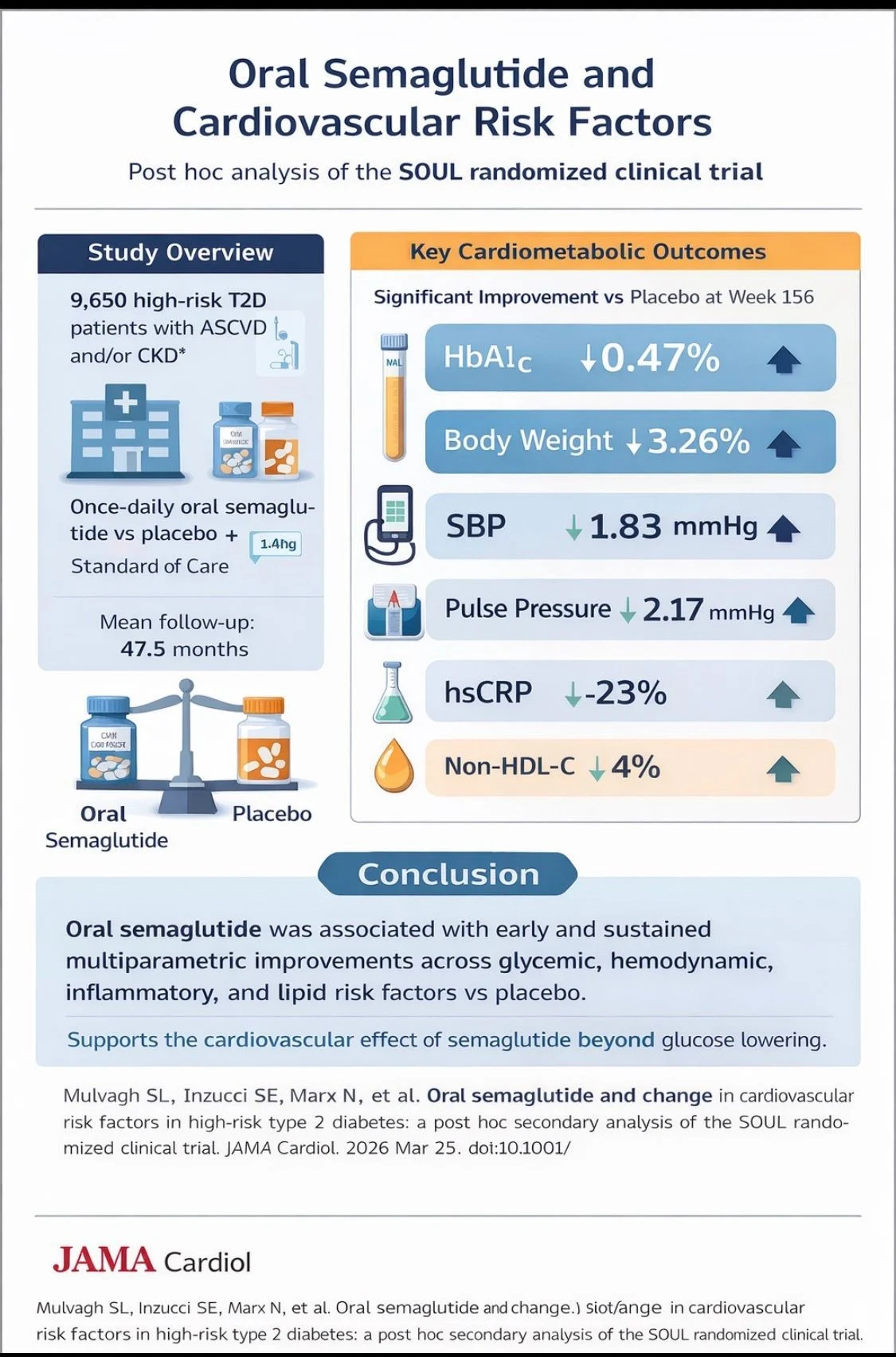
This post hoc secondary analysis of the SOUL randomized clinical trial evaluated the impact of once-daily oral semaglutide on cardiovascular (CV) risk factors in high-risk patients with type 2 diabetes (T2D) and established atherosclerotic cardiovascular disease (ASCVD) and/or chronic kidney disease (CKD).
The trial included 9,650 participants (mean age 66.1 years; 28.9% women), with a median follow-up of 47.5 months, comparing oral semaglutide (up to 14 mg daily) versus placebo on top of standard of care.
Oral semaglutide was associated with early (by week 13) and sustained improvements across multiple cardiometabolic parameters.
At week 13, significant reductions versus placebo were observed in glycated hemoglobin (HbA1c: −0.87%), body weight (−2.54%), systolic blood pressure (SBP: −3.84 mmHg), pulse pressure (−3.81 mmHg), high-sensitivity C-reactive protein (hsCRP: −18.08%), and lipid parameters including total cholesterol (−7.00%), non–HDL-C (−8.02%), and triglycerides (−8.15%).
These benefits persisted long-term.
At week 156, oral semaglutide maintained significant reductions in HbA1c (ETD −0.47%; 95% CI −0.52 to −0.42), body weight (−3.26%; 95% CI −3.55 to −2.98), SBP (−1.83 mmHg; 95% CI −2.47 to −1.18), and pulse pressure (−2.17 mmHg; 95% CI −2.72 to −1.61).
Inflammatory and lipid markers also improved, with hsCRP reduced (ETR 0.77; 95% CI 0.74–0.81), alongside modest but significant reductions in total cholesterol and non–HDL-C.
Notably, LDL-C and diastolic blood pressure showed no significant long-term differences.
Importantly, these effects were consistent across key subgroups (ASCVD only, CKD only, and combined), suggesting broad applicability in high-risk populations.
The magnitude of individual changes was modest; however, the multiparametric improvement across glycemic, hemodynamic, inflammatory, and lipid domains provides a biologically plausible explanation for the previously demonstrated 14% reduction in major adverse cardiovascular events (MACE) in the parent trial.
From a mechanistic perspective, the findings reinforce the concept that GLP-1 receptor agonists exert cardiovascular benefit beyond glucose lowering, likely through integrated effects on endothelial function, inflammation, and metabolic regulation.
Limitations include the post hoc design, lack of multiplicity adjustment, and incomplete capture of background therapy changes.
Nonetheless, these data strengthen the role of oral semaglutide as a comprehensive cardiometabolic risk-modifying therapy in high-risk T2D populations.”
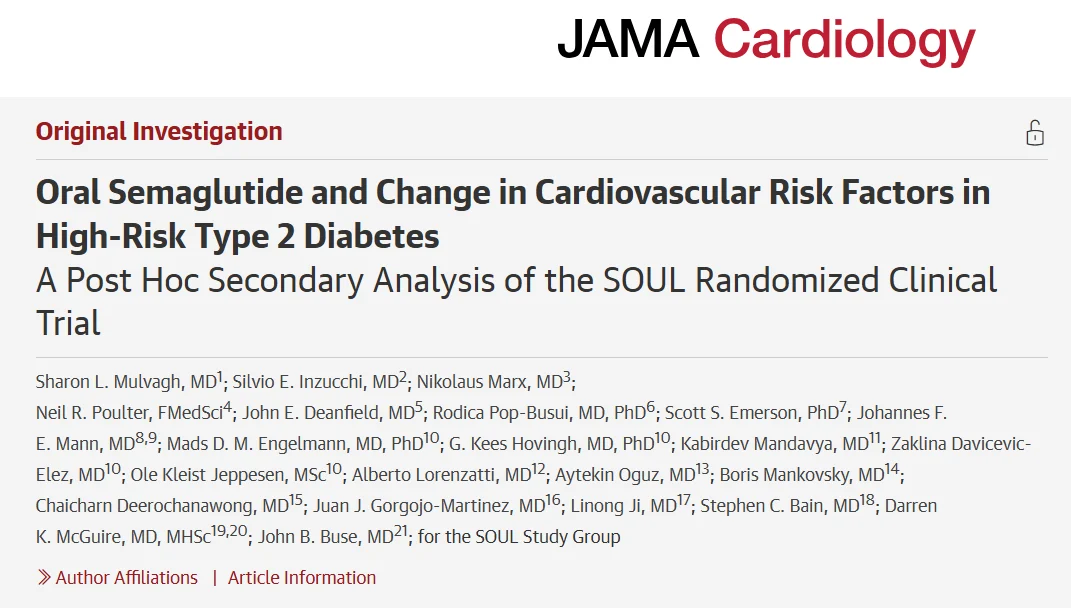
Title: Oral Semaglutide and Change in Cardiovascular Risk Factors in High-Risk Type 2 Diabetes
Authors: Sharon L Mulvagh, Silvio E Inzucchi, Nikolaus Marx, Neil R Poulter, John E Deanfield, Rodica Pop-Busui, Scott S Emerson, Johannes F E Mann, Mads D M Engelmann, G Kees Hovingh, Kabirdev Mandavya, Zaklina Davicevic-Elez, Ole Kleist Jeppesen, Alberto Lorenzatti, Aytekin Oguz, Boris Mankovsky, Chaicharn Deerochanawong, Juan J Gorgojo-Martinez, Linong Ji, Stephen C Bain, Darren K McGuire, John B Buse
Other posts featuring Ney Carter Borges on Hemostasis Today.
-
Sep 21, 2026, 20:56George Touma: ApoB Should Be Central to All Lipid Guidlines
-
Sep 21, 2026, 20:55Christopher Robinson: Obstetric Risks Are Seen at the Extremes of Birthweight
-
Sep 21, 2026, 20:54Emicizumab for Refractory GI Bleeding in Myeloma-Associated Acquired VWD – JTH
-
Sep 21, 2026, 20:52Ross Baker: ASH 2026 Guidelines on Iron Deficiency in HMB and Bleeding Disorders
-
Sep 21, 2026, 20:50Rainer Kaiser: Genes and Signalling Pathways Implicated in Procoagulant Platelet Generation
-
Sep 21, 2026, 20:49Natalia Dovlatova: Celebrating Stan Heptinstall and His Legacy in Platelet Science
-
Sep 21, 2026, 20:48Norm Roulet: The Interaction of Pb and SARS-CoV-2 and Its Impact on the Cardiovascular System
-
Sep 21, 2026, 20:45Felix Scholkmann: The Spleen Plays a Key Role in Regulating Platelet Activity
-
Sep 21, 2026, 20:43Claire Pomeroy: Celebrating the 2026 Lasker Awards and Why Medical Research Matters