


Omid Khalafi: Immature Reticulocyte Fraction – The Earliest Sign That Bone Marrow Is Responding
Omid Khalafi, Technical Support Specialist and After Sale Service Manager at Pharmateb, shared a post on LinkedIn:
“Immature Reticulocyte Fraction (IRF)
The Earliest Sign That Bone Marrow Is Responding
When evaluating anemia or monitoring treatment, hemoglobin often changes too slowly to guide early clinical decisions.
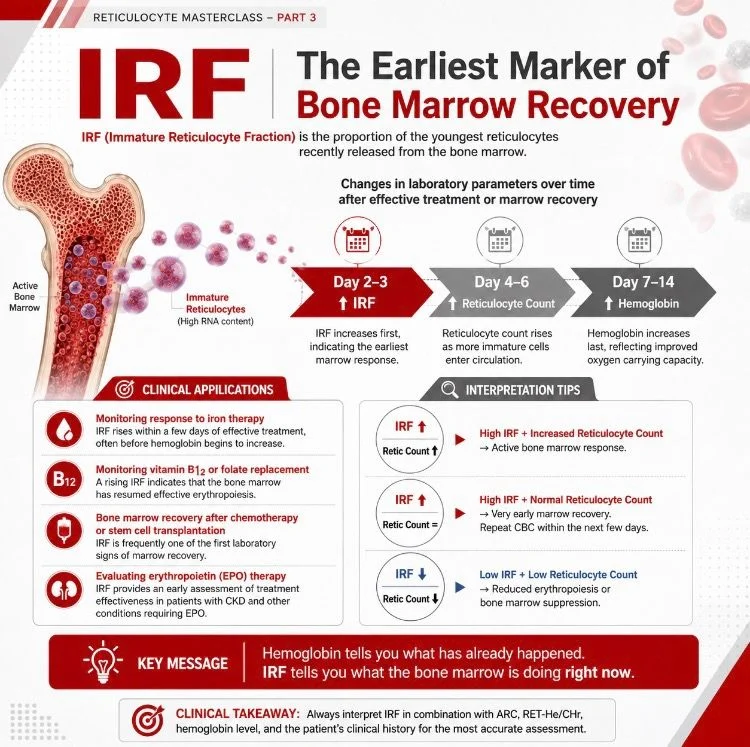
One of the earliest indicators of bone marrow recovery is the Immature Reticulocyte Fraction (IRF).
IRF represents the proportion of the youngest reticulocytes released from the bone marrow. These immature cells contain higher amounts of residual RNA and are detected by modern fluorescence-based hematology analyzers.
Why is IRF clinically important?
An increase in IRF usually occurs several days before a significant rise in reticulocyte count or hemoglobin.
This makes IRF an excellent early marker of erythropoietic activity.
Clinical Applications
- Monitoring response to iron therapy
Patients with iron deficiency anemia often demonstrate an increase in IRF within a few days after effective treatment, long before hemoglobin begins to rise.
- Monitoring vitamin B12 or folate replacement
A rising IRF indicates that the bone marrow has resumed effective erythropoiesis.
- Bone marrow recovery after chemotherapy or stem cell transplantation
IRF is frequently one of the first laboratory indicators that marrow function is returning.
- Evaluating erythropoietin (EPO) therapy
IRF provides an early assessment of treatment effectiveness in patients with chronic kidney disease and other conditions requiring EPO.
Interpretation Tips
• High IRF and Increased Reticulocyte Count: Active bone marrow response
• High IRF and Normal Reticulocyte Count: Very early marrow recovery; repeat CBC within the next few days.
• Low IRF and Low Reticulocyte Count: Reduced erythropoiesis or bone marrow suppression.
Key Message
Hemoglobin tells you what has already happened.
IRF tells you what the bone marrow is doing right now.
Understanding IRF allows clinicians and laboratory professionals to detect treatment response days earlier, improving clinical decision-making.
Whenever IRF is available, never interpret it in isolation. Combine it with the Absolute Reticulocyte Count (ARC), RET-He (or CHr), hemoglobin level, and the patient’s clinical history to obtain a more accurate picture of erythropoietic activity.”
Stay updated with Hemostasis Today.
-
Sep 16, 2026, 16:06Katrina Louise Manalaysay: In Your 20s, You Might be Given the Opportunity to Donate Blood for the First Time
-
Sep 16, 2026, 15:45Matthew Hazell: A Brilliant Explanation of Phenotype vs Genotype Using a LEGO House
-
Sep 16, 2026, 15:23Ahmad Al-Ramahi: Presenting the Military Pharmacists Blood Training Course at the FIP World Congress
-
Sep 16, 2026, 15:21HIT Reimagined: Can 12-Lipoxygenase Inhibition Stop Immune Thrombosis?
-
Sep 16, 2026, 14:42Ruchi Punamia: Beyond the Blood Bank and The Clinical Impact of Apheresis
-
Sep 16, 2026, 14:06Kalyan Roy: Celebrating Apheresis, Advancing Care, Saving Lives
-
Sep 16, 2026, 13:38Andrew Zapfel: Advancing Sickle Cell Disease Care and Research
-
Sep 16, 2026, 13:30Thirunavukkarasu Angappan: Why Plasma-Derived Factor VIII Still Matters for Inhibitor Patients
-
Sep 16, 2026, 13:22Matthew Hazell: New BSH Guidance for Fetal, Neonatal and Paediatric Transfusion