

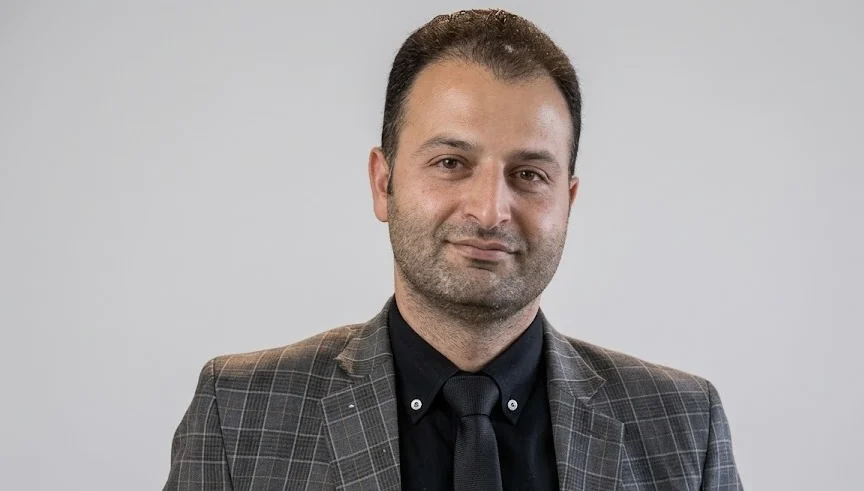
Omid Khalafi: PCT – The Platelet Parameter Almost Everyone Ignores
Omid Khalafi, Technical Support Specialist and After Sale Service Manager at Pharmateb, shared a post on LinkedIn:
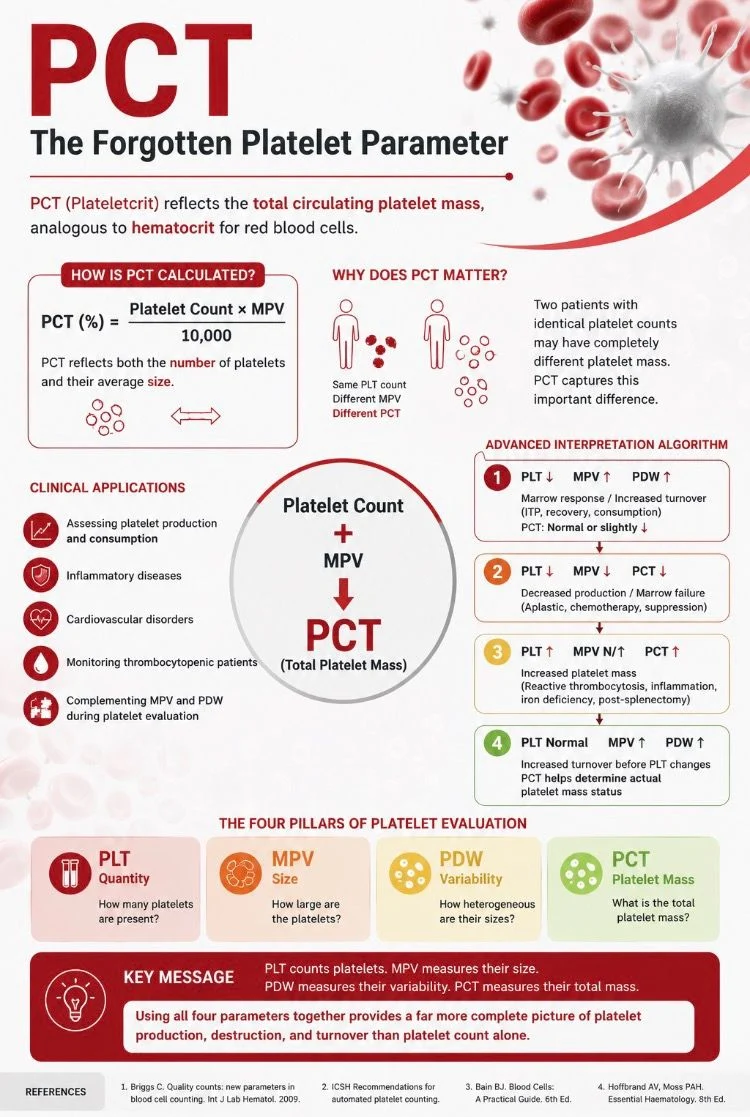
“PCT (Plateletcrit): The Platelet Parameter Almost Everyone Ignores
Most clinicians routinely review Platelet Count (PLT) and occasionally MPV, but one parameter is frequently overlooked despite being automatically reported by many hematology analyzers:
Plateletcrit (PCT).
PCT represents the total circulating platelet mass, analogous to how hematocrit represents the volume occupied by red blood cells.
How is PCT calculated?
PCT (%) equals Platelet Count times MPV divided to 10,000
This means PCT reflects both:
- The number of platelets
- Their average size
As a result, two patients with identical platelet counts may have completely different platelet masses.
Why Does PCT Matter?
Looking at platelet count alone may be misleading.
For example:
Patient A
- Platelet Count: 180 ×10⁹/L
- MPV: 7.5 fL
Patient B
- Platelet Count: 180 ×10⁹/L
- MPV: 12.0 fL
Although both have the same platelet count, Patient B has a substantially higher circulating platelet mass.
PCT captures this important difference.
Clinical Applications
PCT has shown potential value in:
- Assessing platelet production and consumption
- Inflammatory diseases
- Cardiovascular disorders
- Monitoring thrombocytopenic patients
- Complementing MPV and PDW during platelet evaluation
It should never replace platelet count, but rather be interpreted together with other platelet indices.
Platelet Count tells you how many platelets are present.
MPV tells you how large they are.
PCT tells you how much platelet mass is actually circulating.
Using all three together provides a far more complete picture than relying on platelet count alone.”
Stay updated with Hemostasis Today.
-
Sep 19, 2026, 10:52Consuela A. Albright: The Critical Role of Black Blood Donors in Sickle Cell Treatment
-
Sep 19, 2026, 10:47Amber Yates: Inside Agios’ Partnership with the Sickle Cell Community
-
Sep 19, 2026, 10:46Anton Farkas: Mechanical Thrombectomy for Acute PE in Early Pregnancy
-
Sep 19, 2026, 10:40Marjolein Smidt: ASH Raises Ferritin Thresholds for Iron Deficiency
-
Sep 19, 2026, 10:34Nawsherwan Mohammad: ASH 2026 Guidelines Redefine How We Detect Iron Deficiency
-
Sep 19, 2026, 10:21Upcoming Podcast on Thalassaemia with The Lancet Haematology
-
Sep 19, 2026, 10:20Steve Helm: Cardiology and Anticoagulation Pharmacist Role Opens Near NYC
-
Sep 19, 2026, 10:12Omid Seidizadeh: A Great Pleasure to Speak on vWD at the 59th NordCoag Congress
-
Sep 19, 2026, 10:08Carsten Hansen: What Happens During a Sickle Cell Crisis?