


Pooja Choradia: Obesity and Pulmonary Embolism – The Hidden Prothrombotic State
Pooja Choradia, Critical care associate at P.D. Hinduja Hospital Khar, shared a post on LinkedIn:
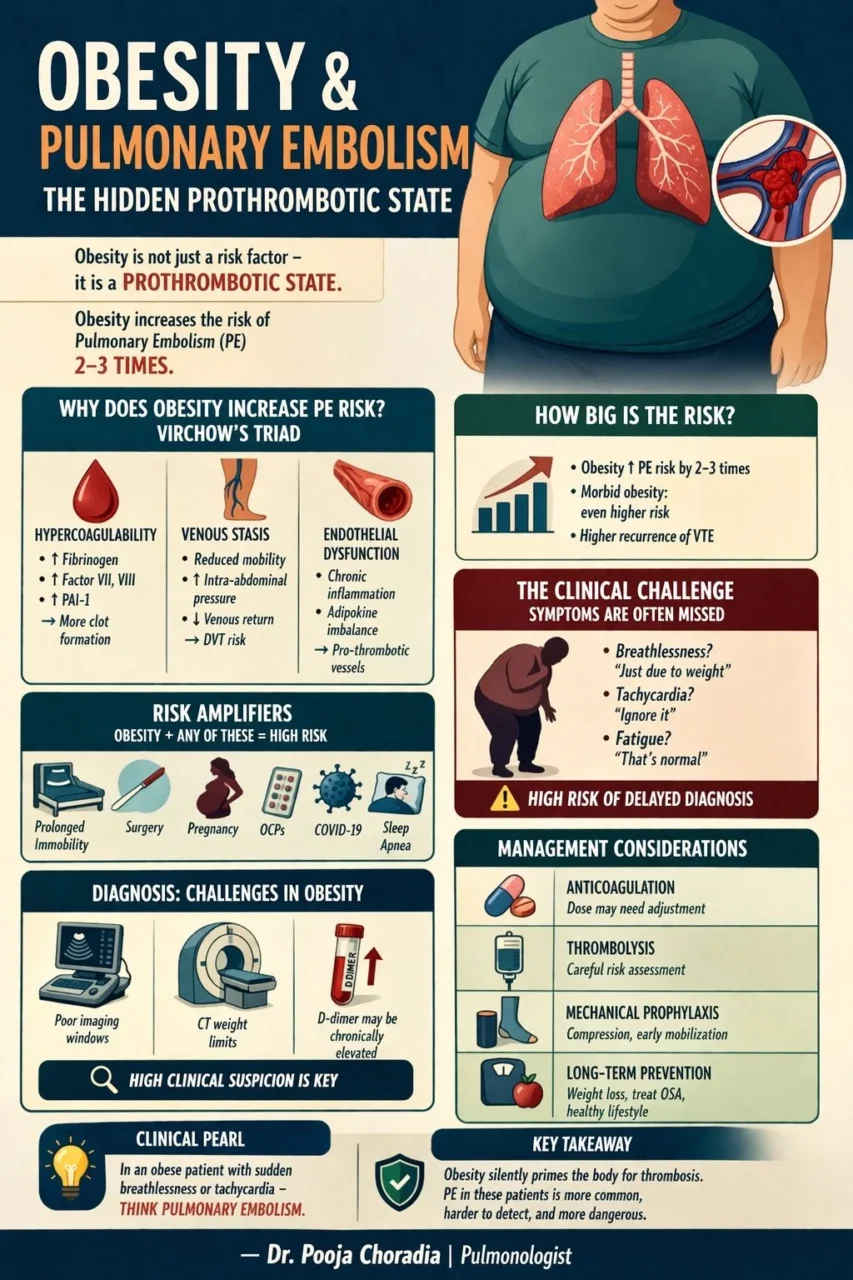
“Obesity and Pulmonary Embolism: The Hidden Prothrombotic State
Obesity is often discussed in terms of diabetes, hypertension, and heart disease.
But one of its most dangerous and under-recognized complications is: Pulmonary Embolism (PE)
Obesity is not just a risk factor—it is a prothrombotic state.
Why Does Obesity Increase PE Risk?
Obesity affects all components of Virchow’s triad:
- Hypercoagulability
Increased levels of Fibrinogen, Factor VII, VIII, Plasminogen activator inhibitor-1 (PAI-1)
Leads to impaired fibrinolysis plus increased clot formation
- Venous Stasis
Reduced mobility, increased intra-abdominal pressure, impaired venous return from lower limbs
Promotes deep vein thrombosis (DVT)
- Endothelial Dysfunction
Chronic inflammation, adipokine imbalance
Creates a pro-thrombotic vascular environment
How Big Is the Risk?
- Obesity increases PE risk by 2–3 times
- Morbid obesity causes even higher risk
- Strong association with recurrent VTE
The Clinical Challenge
Symptoms are easily missed or misattributed
In obese patients:
- Breathlessness – blamed on weight
- Tachycardia – ignored
- Reduced exercise tolerance – considered baseline
This leads to delayed or missed diagnosis
Additional Risk Amplifiers
Obesity plus any of the following
- Prolonged immobility
- Surgery (especially bariatric/orthopedic)
- Pregnancy
- Oral contraceptives
- COVID-19
- Obstructive sleep apnea
- Diagnosis: Not Always Straightforward
- Challenges in Obese Patients
- Poor imaging windows (echo, ultrasound)
- CT scanner weight limits (in extreme cases)
- D-dimer may be chronically elevated
Requires high clinical suspicion
Management Considerations
1. Anticoagulation
Standard therapy, but:
- Dosing may need adjustment
- Limited data in extreme obesity
2. Thrombolysis
Same indications, but higher bleeding risk assessment needed
3. Mechanical Prophylaxis
- Compression devices
- Early mobilization
4. Long-Term Prevention
- Weight reduction
- Treat OSA
- Lifestyle modification
- Clinical Pearl
If an obese patient presents with:
- Sudden worsening breathlessness
- Unexplained tachycardia
Do not attribute everything to weight
Rule out pulmonary embolism
Key Takeaway
Obesity silently primes the body for thrombosis.
Pulmonary embolism in these patients is:
- More common
- More difficult to diagnose
- And potentially more fatal“
Stay updated with Hemostasis Today.
-
Sep 30, 2026, 01:52Javed Anees: DADA2 – When a Young Stroke Is More Than a Stroke
-
Sep 30, 2026, 01:51How a Venous Thrombus Becomes Revascularized – ISTH
-
Sep 29, 2026, 22:45Victor Agunyego: Paracetamol – The Most Common Drug We Underestimate
-
Sep 29, 2026, 22:42Nova Sinclair: Advancing the Future of Hematology – Meet Our 2027 Organizing Committee
-
Sep 29, 2026, 22:41Lorenz Räber: Intracoronary Imaging in PCI – Why, When, How, and Which Modality?
-
Sep 29, 2026, 22:31Selma Turkovic: Pleased to Deliver the Opening Presentation at Kingston Hospital
-
Sep 29, 2026, 22:31Miguel Teran: Ultrasound and Simulation in Arterial Blood Sampling
-
Sep 29, 2026, 22:28Mohammad Refaei: Navigating Your Career in Hematology From Training to Practice
-
Sep 29, 2026, 22:27Matteo Foschi: 10 Clinical Pearls for Antithrombotic Therapy in Secondary Stroke Prevention