

Priya Singh: How to Write the Discussion of a Research Paper
Priya Singh, Founder of Research Made Clear, Research Advisor at IFERP, shared a post on LinkedIn:
“You can have perfect results… and still get rejected.
A weak Discussion is one of the fastest ways to lose your reviewer.
Not because your research is bad.
But because your thinking is not visible.
Here’s how to get it right
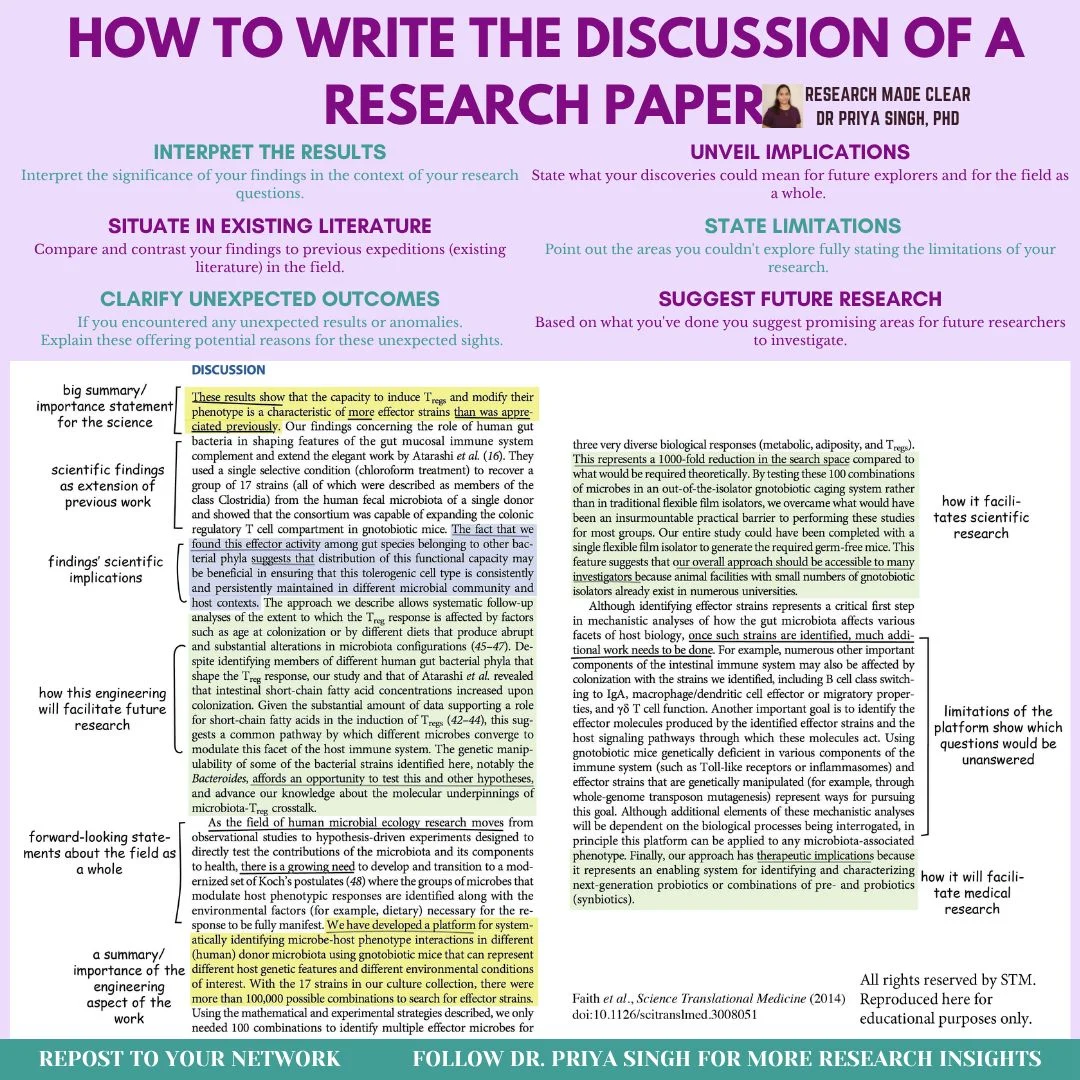
- Interpret your results
Don’t repeat findings. Explain what they mean in relation to your research question.
- Connect with existing literature
Where do you agree? Where do you challenge?
This is where your work enters the academic conversation.
- Explain unexpected findings
Reviewers value honesty and reasoning more than ‘perfect results.’
- Highlight implications
Why should anyone care?
What changes because of your findings?
- State limitations clearly
This shows maturity, not weakness.
- Suggest future research
Show that your work opens doors, not closes them.
Think of your Discussion like this:
- Results: What you found
- Discussion: Why it matters
If your Results show your work…
Your Discussion proves your intellectual contribution.
Before you submit your paper or thesis, ask yourself:
‘Have I explained my thinking… or just described my data?’
That one question can change your entire paper.
PS: What feedback do you most often get on your Discussion?
Share in the comments.
Repost to help someone struck in writing.
Follow Dr Priya Singh, Founder Research Made Clear for more insights.
For research tutorials and AI tool guides, subscribe to my YT channel.”
Stay updated with Hemostasis Today.
-
Oct 20, 2026, 16:51Suzan Nakasendwa: A Growing Stroke Challenge in Uganda
-
Oct 20, 2026, 16:38Steve Moon: How Does Smoking Cessation Duration Affect Ischemic Stroke Risk
-
Oct 20, 2026, 16:25Cedrice Mentor: Reducing Platelet Wastage Through Cold Storage
-
Oct 20, 2026, 16:09Thirunavukkarasu Angappan: Can a Purified Fibrinogen Concentrate Replace Cryoprecipitate
-
Oct 20, 2026, 16:01Kalyan Roy: Platelet Conservation Through Evidence-Based Transfusion Practice
-
Oct 20, 2026, 15:28Stacy E. Croteau: 33 Countries, One Mission – Better Bleeding Disorder Care
-
Oct 20, 2026, 15:19Teresa Barnes: What Does a Pulmonary Embolism Mean for Jalen Hurts?
-
Oct 20, 2026, 15:04Laura S.: Could Speaking Up Prevent Maternal Deaths from Thrombosis?
-
Oct 20, 2026, 14:44Pete Stibbs: VTE in Professional Athletes – When Fitness Is Not Enough