

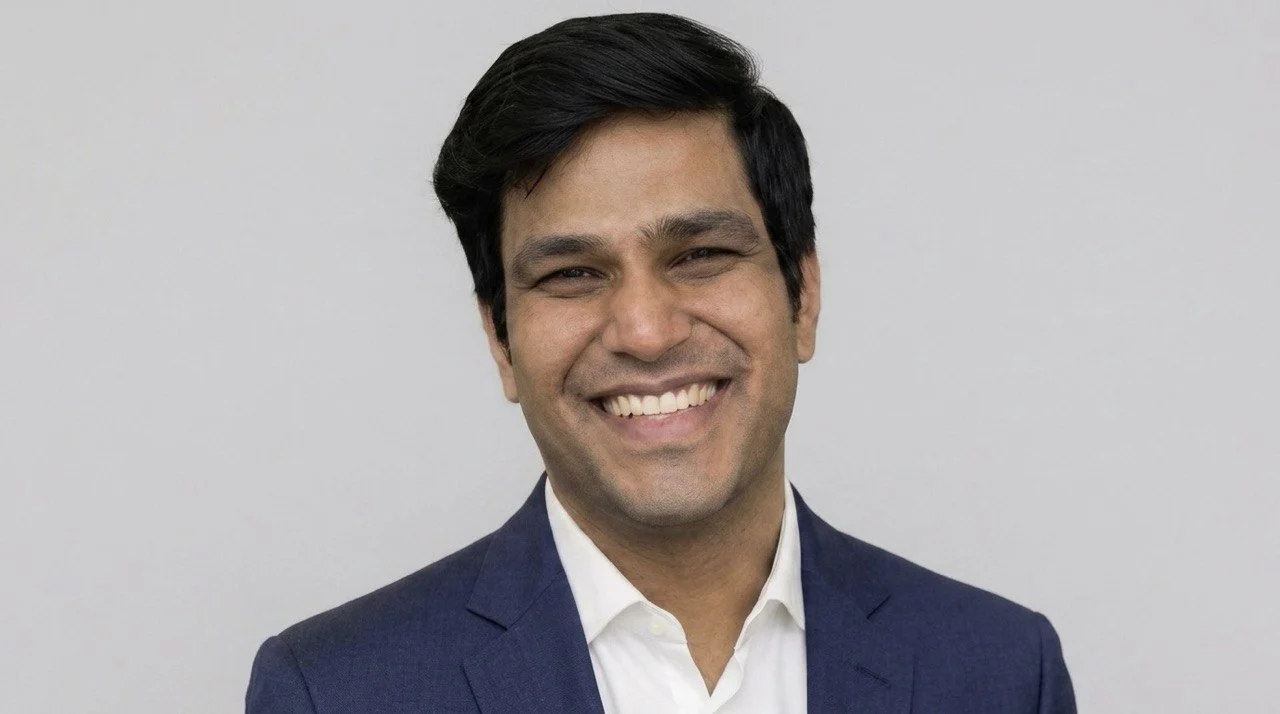
Ram Khandelwal: Why AI Is Transforming Patient Education and the Future of Healthcare
Ram Khandelwal, Consulting Leader in Cities and Infrastructure at the Urban Innovation Lab (UIL), shared a post on LinkedIn:
“At 33, I had a heart attack. The angioplasty took less than an hour.
Understanding everything that came after took years. And still continues.
But nobody tells you that you don’t just leave the hospital with stents.
You learn new words—LDL, ejection fraction, beta blockers, Lp(a)—and the quiet fear of asking, ‘Can you explain that again?’
Turns out, that’s not just my story.
Research shows 40–80% of medical information is forgotten immediately after a consultation, and nearly half of what patients do remember is inaccurate.
Now add another reality:
consultations are often 10–15 minutes,
while patients live with their condition 24 hours a day.
So yes, many of us now ask AI before we ask Google—and sometimes before we see our doctor.
That doesn’t scare me.
Because AI isn’t replacing cardiologists.
It’s replacing the silence between appointments.
It can explain a test report, translate medical jargon, remind you what questions to ask, and help you understand your treatment.
That’s important because patients who understand their condition participate more in shared decision-making, which is associated with better engagement and self-management.
But AI cannot hear the crack in your voice.
It cannot reassure your family. It cannot replace clinical judgment, compassion, or trust.
As a heart attack survivor and patient advocate, I don’t want AI to replace doctors.
I want it to replace confusion.
Because the future of healthcare isn’t AI versus doctors.
It’s informed patients, trusted clinicians, and responsible AI—working together so no one leaves the hospital with more questions than answers.”

Stay updated with Hemostasis Today.
-
Oct 11, 2026, 12:11Carmine Siniscalchi: Could LDL Cholesterol Help Us Better Predict Bleeding Risk in Patients with VTE?
-
Oct 11, 2026, 12:03What is ITP? Raising Awareness for Immune Thrombocytopenia – ITP Australia and New Zealand
-
Oct 11, 2026, 11:55Gauri Jayasinghe: Privileged to Serve as Resource Person for the Blood Transfusion Essentials Programme
-
Oct 11, 2026, 11:49Toby Richards: New Definitions for Iron Deficiency Delighted to Be in the USA with the New ASH Guidelines
-
Oct 11, 2026, 11:44Lesley Van Wyk: ASCP High-Yield Review – Essential Thalassemia Concepts and Differential Diagnosis
-
Oct 11, 2026, 11:37Susanne Pass: Key Takeaways from ESVS 2026 Workshops in Belgrade
-
Oct 11, 2026, 10:44Logesh. M: Managing Warfarin-Associated Recurrent Epistaxis and Anticoagulant Safety
-
Oct 11, 2026, 10:28Sébastien Béland: Validating RUDAS for Detecting Neurocognitive Impairment in Sickle Cell Disease
-
Oct 10, 2026, 17:58Archo Farzana Batool: Exploring Medical Writing Through an Article on Iron Deficiency Anemia