


Syed A. Rizvi: Natural Blood Thinners – What Does the Science Really Say
Syed A. Rizvi, Public Health Program Specialist at Illinois Department of Public Health (IDPH), PhD Advisor in Clinical Research Program at University of Jamestown, shared a post on LinkedIn:
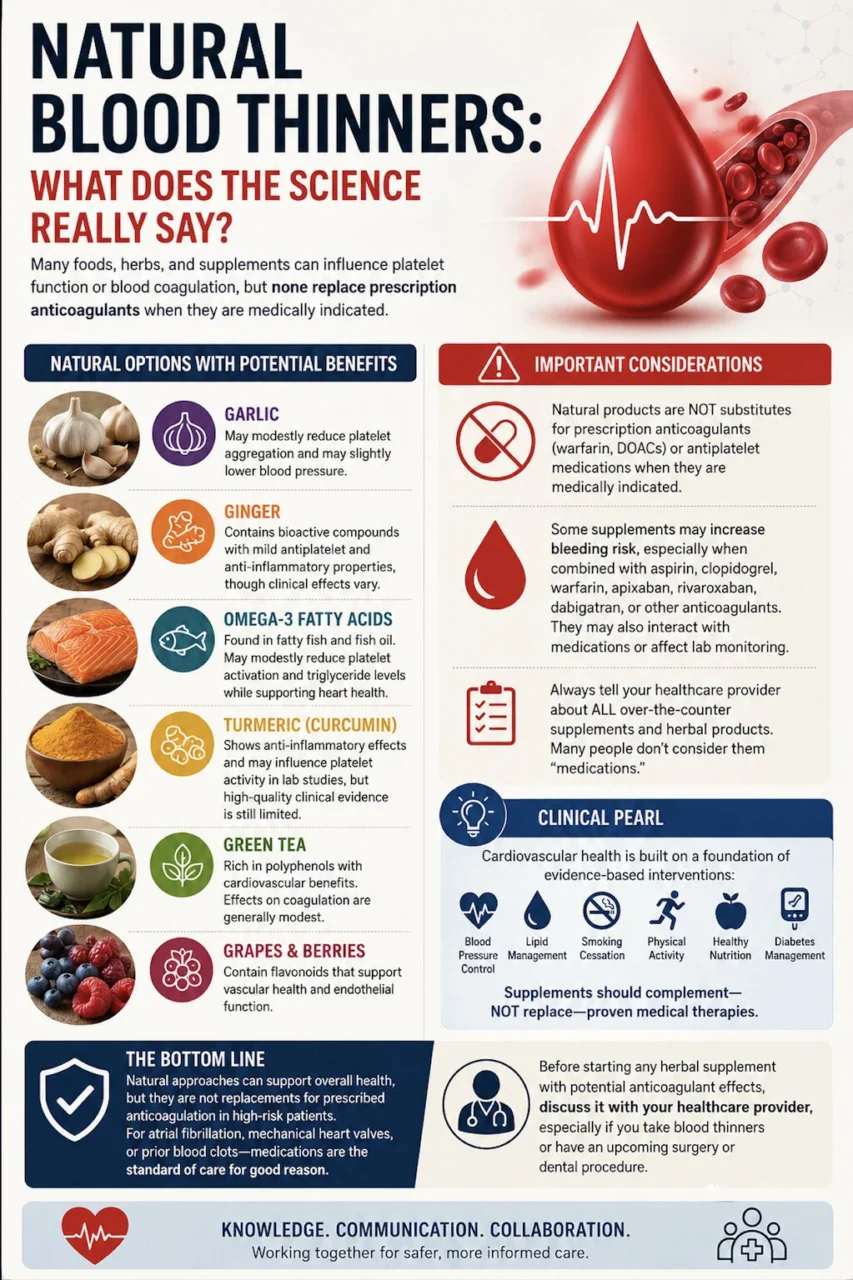
“Natural Blood Thinners: What Does the Science Really Say?
The phrase ‘natural blood thinner’ is everywhere, but it often oversimplifies a complex topic. While certain foods, herbs, and dietary supplements can influence platelet function or the coagulation cascade, none have consistently demonstrated effectiveness comparable to prescription anticoagulants or antiplatelet medications when these are medically indicated.
Several natural products have shown promising biological activity:
- Garlic – May modestly reduce platelet aggregation and slightly lower blood pressure.
- Ginger – Contains compounds with mild antiplatelet and anti-inflammatory effects, although clinical evidence remains inconsistent.
- Omega-3 fatty acids – found in fatty fish and fish oil – may modestly reduce platelet activation and triglyceride levels while supporting cardiovascular health. However, large clinical trials have produced mixed results regarding cardiovascular outcomes.
- Turmeric (Curcumin) – Demonstrates anti-inflammatory and potential antiplatelet effects in laboratory studies, but robust clinical evidence is still limited.
- Nattokinase – An enzyme derived from fermented soybeans that has shown fibrinolytic activity in experimental studies. Although promising, current evidence is insufficient to recommend it as an alternative to established anticoagulant therapy.
- Green tea, grapes, berries, and other flavonoid-rich foods provide antioxidants that support vascular and endothelial health, though their direct anticoagulant effects are generally modest.
The most important message: Natural does not always mean safe.
Many herbal supplements, including garlic, ginger, turmeric, ginkgo, high-dose vitamin E, and nattokinase, may increase bleeding risk, particularly when combined with anticoagulants such as warfarin, aspirin, clopidogrel, apixaban, rivaroxaban, dabigatran, or other anticoagulants.
Patients should also inform their healthcare providers about all supplements before surgery or invasive procedures.
Clinical Pearl: Cardiovascular health is built on evidence-based interventions, blood pressure control, lipid management, smoking cessation, regular physical activity, healthy nutrition, diabetes management, and appropriate use of prescribed medications. Supplements may complement these strategies, but they should never replace therapies that have been proven to reduce stroke, myocardial infarction, or venous thromboembolism in high-risk patients.
The best ‘blood thinner’ is not always natural; it is the one that is appropriate, evidence-based, and individualized for the patient’s clinical condition.”
Stay updated with Hemostasis Today.
-
Nov 23, 2026, 18:51Anirban Sen Gupta: Platelet-Inspired Nanoparticles for Targeted Drug Delivery at Vascular Disease Sites
-
Nov 23, 2026, 18:50Jan Sloves: Honored to Serve as Faculty at VEITH Symposium 2026
-
Nov 23, 2026, 18:50Edward Lee Carter: AI vs FDA Anticoagulant Education – The Most Important Finding Wasn’t Who Scored Highest
-
Nov 23, 2026, 16:04Gamunu Wijetunge: Stop Leaving TRICARE Transfusion Reimbursement on the Table
-
Nov 23, 2026, 15:58Mohsin Raza: Why is Anemia so Common in Patients with Chronic Kidney Disease?
-
Nov 23, 2026, 15:39Thirunavukkarasu Angappan: From Donated Plasma to Life – Saving Medicines
-
Nov 23, 2026, 15:06Giuseppe Biondi Zoccai: Hemoglobin-to-Creatinine Ratio Linked to Early Markers of Anthracycline-Induced Cardiac Injury
-
Nov 23, 2026, 14:54Mina Mokaram: New Research Examines MDS Progression and Transplant Outcomes in Pediatric CAMT
-
Nov 23, 2026, 14:41Danyel Chermon: Study Reveals Independent Effects of BMI and Genetic Risk on B12 and Folate Status