


Tareq Abadl: Blood Culture Essentials – The Ultimate Clinical Guide to Diagnostic Success
Tareq Abadl, Medical Lab Specialist, shared a post on LinkedIn:
”Blood Culture Essentials: The Ultimate Clinical Guide to Diagnostic Success
Blood culture remains the gold standard for detecting bacteremia and fungemia, serving as the critical first step toward targeted antimicrobial therapy. Mastering these core collection principles ensures maximum diagnostic yield and prevents costly misdiagnoses.
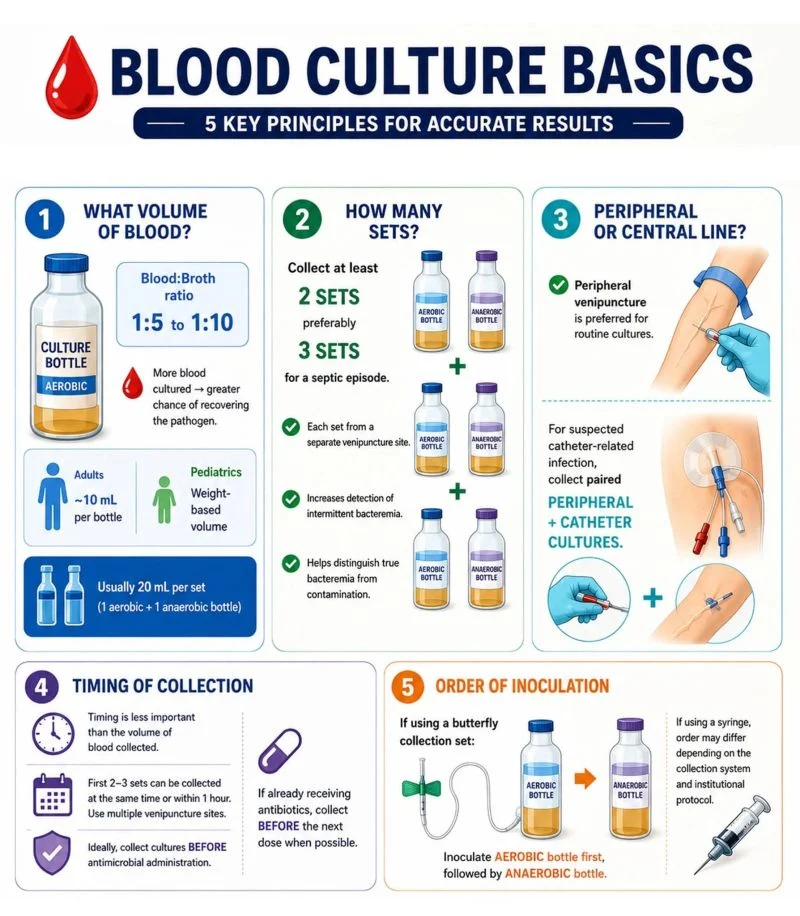
1. What Volume of Blood Should Be Collected?
Blood volume is the single most critical variable influencing pathogen detection.
- Blood-to-Broth Ratio: Maintain a strict 1:5 to 1:10 ratio inside each bottle.
- Adult Volume: Collect approximately 10 mL per bottle, totaling 20 mL per set (1 aerobic amd 1 anaerobic bottle). Pediatric Volume: Always adjust the collection volume
- dynamically based on total body weight.
2. How Many Blood Culture Sets Should Be Collected?
Always collect at least 2-and preferably 3-sets per septic episode from distinct anatomical sites. Drawing multiple sets captures intermittent bacteremia and differentiates true pathogens from skin contaminants.
- 1st Set (20 mL total): Yields 73.1 percent cumulative pathogen detection.
- First 2 Sets (40 mL total): Increases cumulative pathogen detection to 89.7 percent.
- First 3 Sets (60 mL total): Boosts diagnostic sensitivity up to 98.3 percent.
- Up to 4 Sets (80 mL total): Required to achieve greater than 99 percent pathogen detection.
3. Peripheral Vein or Central Line?
- Routine Cultures: Peripheral venipuncture is strongly preferred to lower contamination risks.
- Suspected CRBSI: For suspected catheter-related bloodstream infections, collect simultaneous paired cultures from both a peripheral vein and the central line catheter.
4. Timing of Blood Collection
Total blood volume impacts diagnostic yield far more than exact timing intervals.
- Rapid Draw: The initial 2-3 sets can be drawn simultaneously or within a 1-hour window using separate venipuncture sites.
- Antibiotic Considerations: Always draw blood cultures before administering antimicrobials. If the patient is already on therapy, draw the sample immediately before the next scheduled dose.
5. Order of Inoculation
- Butterfly Tubing System: Fill the aerobic bottle first so residual air in the collection tubing purges before filling the anaerobic bottle.
- Syringe System: Fill the anaerobic bottle first to prevent exposing the sample to room air, while adhering to institutional guidelines.”
Other posts featuring Tareq Abadl on Hemostasis Today.
-
Oct 8, 2026, 04:28Jeff Molter: Electrophysiological PIEZO1 Analysis Advances Diagnosis in Hereditary Xerocytosis
-
Oct 8, 2026, 04:23Barbara Adams Krolak: Women and Blood Clots Are We Missing the Warning Signs
-
Oct 8, 2026, 04:10Rutendo Muzambi: Hospital Admission Patterns and Care Disparities in Sickle Cell Disease
-
Oct 8, 2026, 03:50Olfat Berro: Redefining the Future of Haemophilia A
-
Oct 8, 2026, 03:35Tasnia Tarana: Heavy Menstrual Bleeding When the Cause Is Not in the Uterus
-
Oct 8, 2026, 03:28Kian Haseli: Electrophysiological PIEZO1 Analysis Advances Diagnosis in Hereditary Xerocytosis
-
Oct 8, 2026, 03:20Sthanu Subramanian: Leukopenia in Sepsis A Marker of Severe Disease
-
Oct 7, 2026, 16:44Amor Salah: 2026 NCS/SCCM Guidelines for Managing Antithrombotic-Associated ICH
-
Oct 7, 2026, 16:04NETs in Thrombosis: From Mechanism to Therapeutic Target