


Venugopalan Unni: Guidelines for the Evaluation and Management of Acute Pulmonary Embolism in Adults
Venugopalan Unni, Chairman of the Department of Emergency Medicine at Meitra Hospital, shared a post on LinkedIn:
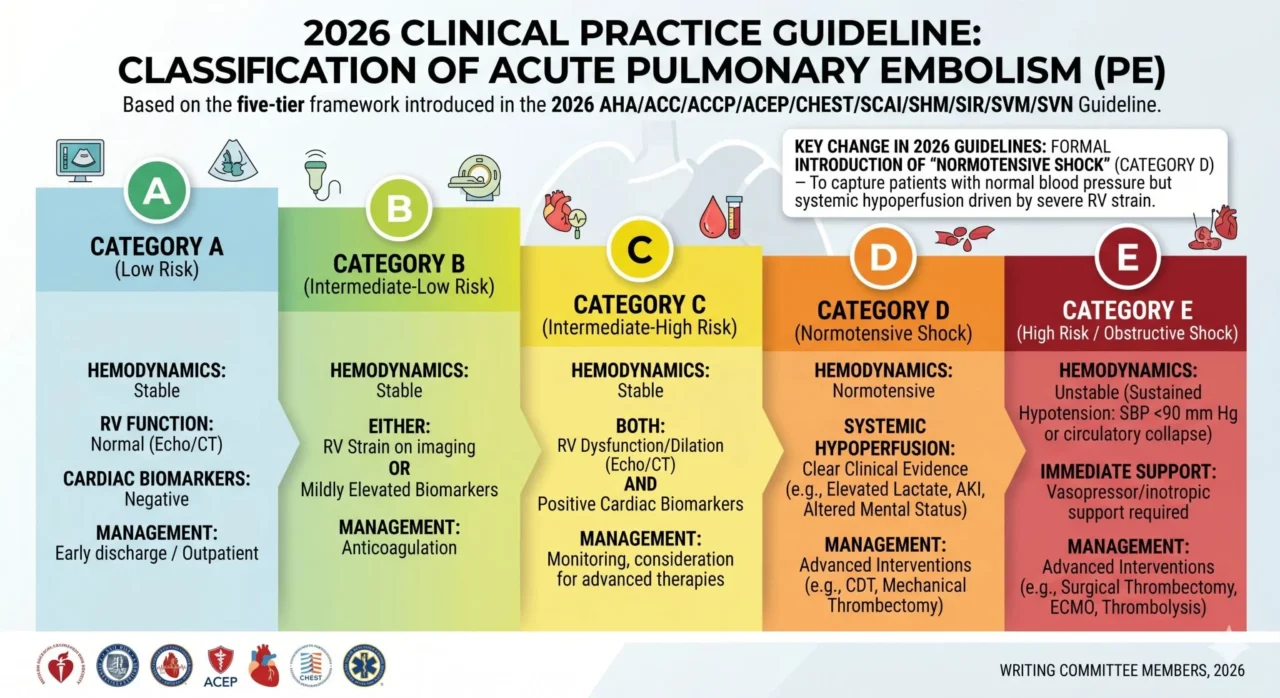
“The 2026 AHA, ACC,ACCP, ACEP, CHEST, SCAI, SHM, SIR, SVM, SVN Guideline for the Evaluation and Management of Acute Pulmonary Embolism in Adults marks a significant shift in the risk stratification of acute pulmonary embolism (PE).
Moving away from the traditional three-tier classification (low, sub-massive/intermediate, and massive/high risk), the new guidelines introduce a more precise five-tier classification framework labeled Categories A through E. This system incorporates clinical signs, hemodynamic stability, respiratory factors, cardiac biomarkers (such as troponin or BNP), and right ventricular (RV) size/function to enhance precision management.
Key Takeaways from the 2026 Updates:
Introduction of ‘Normotensive Shock’ (Category D):
This refinement captures a vulnerable subset of patients who maintain normal blood pressure but experience occult tissue hypoperfusion and depressed cardiac index due to severe RV strain.
Precision Advanced Therapies:
The categorization influences the escalation of care.
Advanced interventions, such as catheter-directed thrombolysis (CDT) or mechanical thrombectomy, are recommended for Categories D and E to rapidly relieve right ventricular outflow tract obstruction, while standard anticoagulation remains the primary approach for lower tiers.
References:
- Chaer, R. (2026). Surgical societies respond to updated pulmonary embolism clinical practice guidelines. Vascular Specialist.
- de Lange, M. (2026). Pulmonary embolism in the perioperative setting. UKZN Anesthetics Guideline Series.
- Roto, D. (2026). Navigating normotensive shock. CHEST Physician.
- Writing Committee Members. (2026). 2026 AHA, ACC,ACCP, ACEP, CHEST, SCAI, SHM, SIR, SVM, SVN Guideline for the Evaluation and Management of Acute Pulmonary Embolism in Adults. Circulation, 153(e00).”
Stay updated with Hemostasis Today.
-
Oct 19, 2026, 10:57Jesmond Dalli: How Erythroblasts Shape Neutrophil Development and Function
-
Oct 19, 2026, 10:41Hisham Fahmi: SCD – Should Gene Editing Begin Before Organ Damage?
-
Oct 19, 2026, 10:33Pallavi Madhiraju: YARTEMLEA Faces Another European Rejection Despite FDA Approval
-
Oct 19, 2026, 10:28Brig Tathagata Chatterjee: Acute Leukemias in AYAs at the Japanese Society of Hematology Conference
-
Oct 19, 2026, 10:27Heather M. Johnson: Join the Discussion on Optimizing the CTEPH Diagnostic Pathway
-
Oct 19, 2026, 10:18Flora Peyvandi: Unravelling the Complexity of VWF Through Genetics
-
Oct 19, 2026, 09:55High DOAC Adherence in Patients With Ischemic Stroke and AF – International Journal of Stroke
-
Oct 19, 2026, 08:20Cory Dugan: The IRONWOMAN Trial Individual Responses to IV Iron Therapy in Active Women
-
Oct 19, 2026, 07:36Johannes Kaesmacher: Cerebral No-Reflow After Thrombectomy Toward a Standardized Definition