

New Therapeutic Strategies Targeting Iron Metabolism
At EHA 2026, Professor John Porter presented an overview of new therapeutic approaches targeting iron metabolism, highlighting how the field is moving beyond simple iron replacement or removal.
The focus is shifting toward precise modulation of the hepcidin–ferroportin axis, alongside advances in iron chelation therapies and the emerging biology of ferroptosis.
Iron metabolism is now understood not simply as a balance between deficiency and overload, but as a dynamic trafficking system regulating iron distribution between distinct physiological compartments.
Scientists now focus on how iron is distributed, stored and mobilised – not just on total body iron.
Most iron in the body is contained within hemoglobin, with additional pools in macrophages and hepatocytes as storage and recycling compartments, in myoglobin and in enzymatic systems.
Only a very small fraction circulates bound to transferrin at any given time, yet this pool has a very high flux, with approximately 20–30 mg of iron recycled daily through erythrophagocytosis and macrophage recycling of senescent red cells.
Humans can’t excrete iron in a regulated way. So iron balance depends on absorption, recycling, and release.
This system is controlled by the hepcidin-ferroportin axis—the body’s iron gatekeeper.
The Hepcidin-Ferroportin Axis
Hepcidin binds to ferroportin, inducing its internalisation and lysosomal degradation.
Ferroportin is expressed on macrophages, hepatocytes and duodenal enterocytes, and therefore represents the key exit pathway for iron from both storage and absorptive compartments.
When hepcidin is increased, ferroportin is degraded, leading to iron sequestration within macrophages and hepatocytes and reduced intestinal iron absorption.
When hepcidin is suppressed, ferroportin remains active, resulting in increased iron export into plasma and increased systemic iron availability.
This simple axis explains a wide range of pathological iron states and has become a central therapeutic target.
Therapeutic Strategies Targeting Iron
Therapeutic manipulation of iron biology can be conceptualised in three overlapping approaches.
- The first is total body iron manipulation, which includes oral and intravenous iron supplementation, blood transfusion, phlebotomy and iron chelation.
- The second is modulation of iron distribution between compartments, which reflects the fact that iron is not uniformly accessible across tissues and that different iron pools such as hepatic, macrophage and myocardial iron may behave differently and respond differently to pharmacological chelators.
- The third and most mechanistically specific approach is direct targeting of the hepcidin–ferroportin axis through agonists, antagonists, or upstream regulatory pathways.
Iron Overload, NTBI and Infection Risk
In iron overload, transferrin saturation becomes a key determinant of toxicity.
When it rises to around 60–70%, non–transferrin-bound iron (NTBI) appears in plasma.
This labile iron fraction is redox-active, promoting oxidative injury and potentially supporting microbial growth.
Preclinical studies suggest that hepcidin mimetics, including mini-hepcidin approaches, may reduce transferrin saturation and suppress NTBI even in iron overload states.
Mouse models further indicate potential effects on iron distribution and infection susceptibility, particularly in settings such as myeloablative chemotherapy, where erythropoietic shutdown rapidly alters circulating iron pools.
Polycythaemia Vera as a Clinical Model
Polycythaemia vera (PV) has emerged as one of the most informative clinical settings for testing iron restriction strategies. It is a JAK2-driven myeloproliferative neoplasm in which erythropoiesis is largely uncoupled from iron availability.
Many patients are already iron deficient at presentation, often due to prior therapeutic phlebotomy and sustained erythroid drive, yet erythrocytosis persists because it is driven by constitutive JAK2 signalling rather than iron supply.
This creates the clinical “phlebotomy treadmill,” in which iron is repeatedly removed to control haematocrit, while erythropoiesis continues.
Rusfertide (PTG-300) and Hepcidin Mimetics
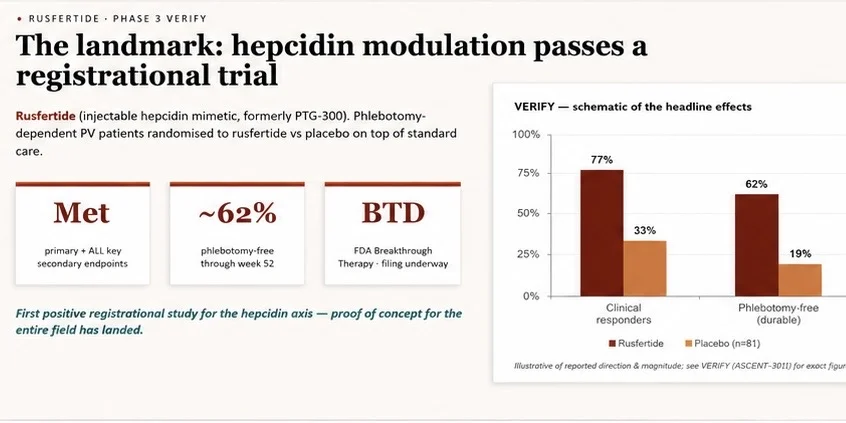
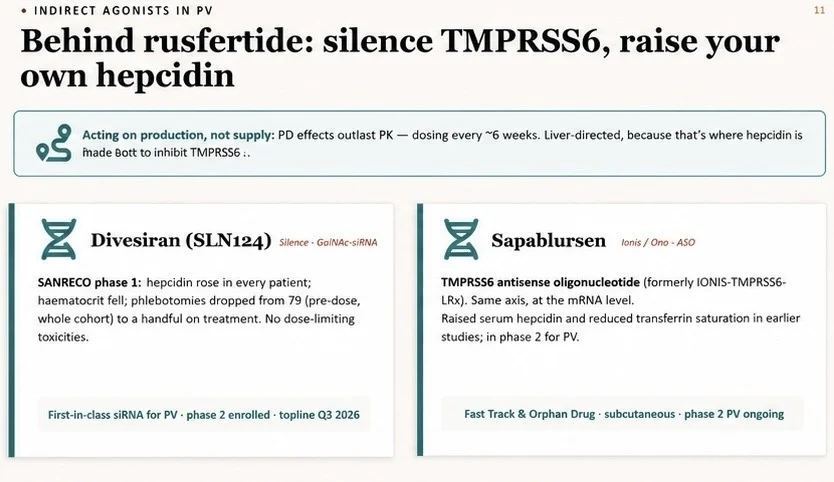
Rusfertide (PTG-300) is the most advanced clinical proof-of-concept for hepcidin-based therapy.
In Phase 2 studies of phlebotomy-dependent polycythaemia vera (PV), around 62% of patients became phlebotomy-free at 52 weeks, with overall response rates of approximately 70–80%.
Treatment also improved symptoms such as fatigue, pruritus and cognitive dysfunction, providing compelling evidence that hepcidin agonism can effectively control disease activity.
Beyond Rusfertide: Targeting TMPRSS6
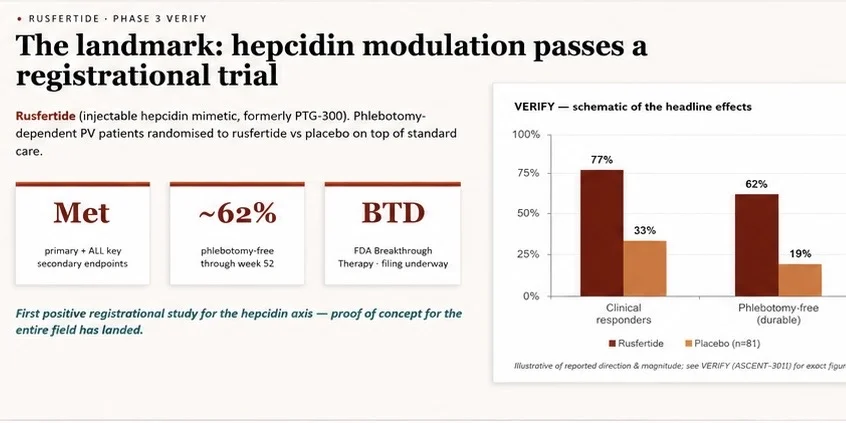
An alternative approach is to increase the patient’s own hepcidin production by inhibiting TMPRSS6 (matriptase-2), a negative regulator of hepatic hepcidin synthesis.
Unlike rusfertide, these therapies stimulate endogenous hepcidin and have pharmacodynamic effects that outlast drug exposure, allowing dosing approximately every six weeks.
Divesiran (SLN124), a liver-directed siRNA, increased serum hepcidin and reduced hematocrit and phlebotomy requirements in the Phase 1 SANRECO study, with no dose-limiting toxicities reported.
Sapablursen (formerly IONIS-TMPRSS6-LRx), an antisense oligonucleotide, has shown increased hepcidin and reduced transferrin saturation in early studies and is currently being evaluated in Phase 2 trials in PV.
This version is much tighter, presentation-focused, and should fit smoothly into your blog without feeling repetitive.
IMPRESSION study
The IMPRESSION trial, presented at ASH 2025, evaluated subeperson, a TMPRSS6-targeting approach, in 49 patients with polycythaemia vera over a 37-week treatment period.
The primary endpoint was reduction in phlebotomy requirement over a 20-week evaluation window.
The study demonstrated a significant reduction in treatment burden, with biological evidence of effective iron restriction and haematological control consistent with the proposed mechanism of action.
Hepcidin Targeting Across Disease States: From Iron Overload to Functional Deficiency
Hereditary haemochromatosis (type 1) is characterised by inappropriately low hepcidin levels, leading to excessive intestinal iron absorption.
Restoring hepcidin activity represents a rational strategy to correct the underlying defect rather than simply removing excess iron.
In thalassaemia, modulation of the hepcidin–ferroportin axis has been explored to limit iron delivery to the marrow, improve ineffective erythropoiesis and reduce parenchymal iron loading.
While preclinical models showed strong effects, translation to humans has been more limited, particularly in achieving sustained reductions in transferrin saturation.
In sickle cell disease, iron is not a primary driver of pathology, but iron restriction at the level of erythropoiesis may theoretically reduce intracellular haemoglobin concentration and influence MCHC and sickling, although clinical evidence remains limited.
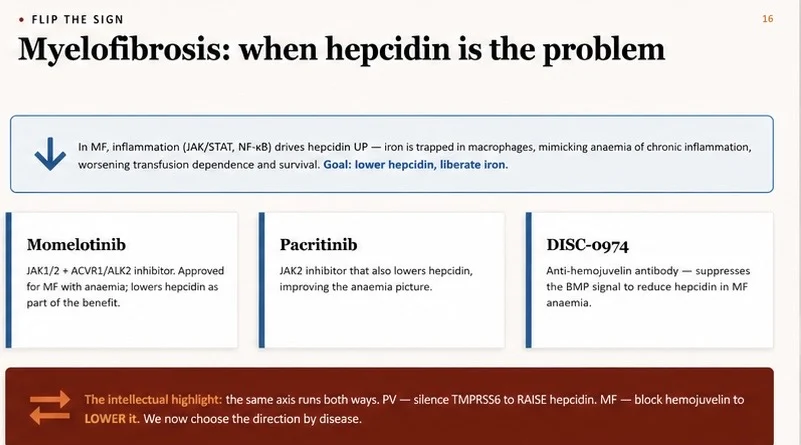
In myelofibrosis, inflammation-driven hepcidin elevation leads to iron sequestration in macrophages and functional iron deficiency, contributing to anaemia and transfusion dependence.
Therapeutic strategies aimed at lowering hepcidin activity, including monoclonal antibodies, are currently in early development.
Siderophilic Infections and Iron Flux
Iron availability is a key determinant of microbial growth.
In clinical states such as myeloablative chemotherapy, suppression of erythropoiesis can lead to rapid redistribution of iron and the appearance of non–transferrin-bound iron.
This raises the possibility that manipulation of iron trafficking may influence susceptibility to severe infection or septic complications, although this remains an area of ongoing investigation.
Iron Toxicity and Ferroptosis: When Iron Kills Cells
Iron-mediated toxicity is primarily driven by non–transferrin-bound iron and labile plasma iron, which catalyse oxidative injury through Fenton chemistry and downstream lipid peroxidation.
Clinically, attention has traditionally focused on cardiac and hepatic injury, but the underlying mechanism is systemic and depends on the size and reactivity of the labile iron pool.
Ferroptosis has emerged as an increasingly important conceptual framework linking iron biology to regulated cell death.
It is characterised by accumulation of redox-active iron, peroxidation of polyunsaturated fatty acids, and failure of glutathione-dependent lipid repair systems.
This pathway is now recognised as potentially relevant in multiple contexts.
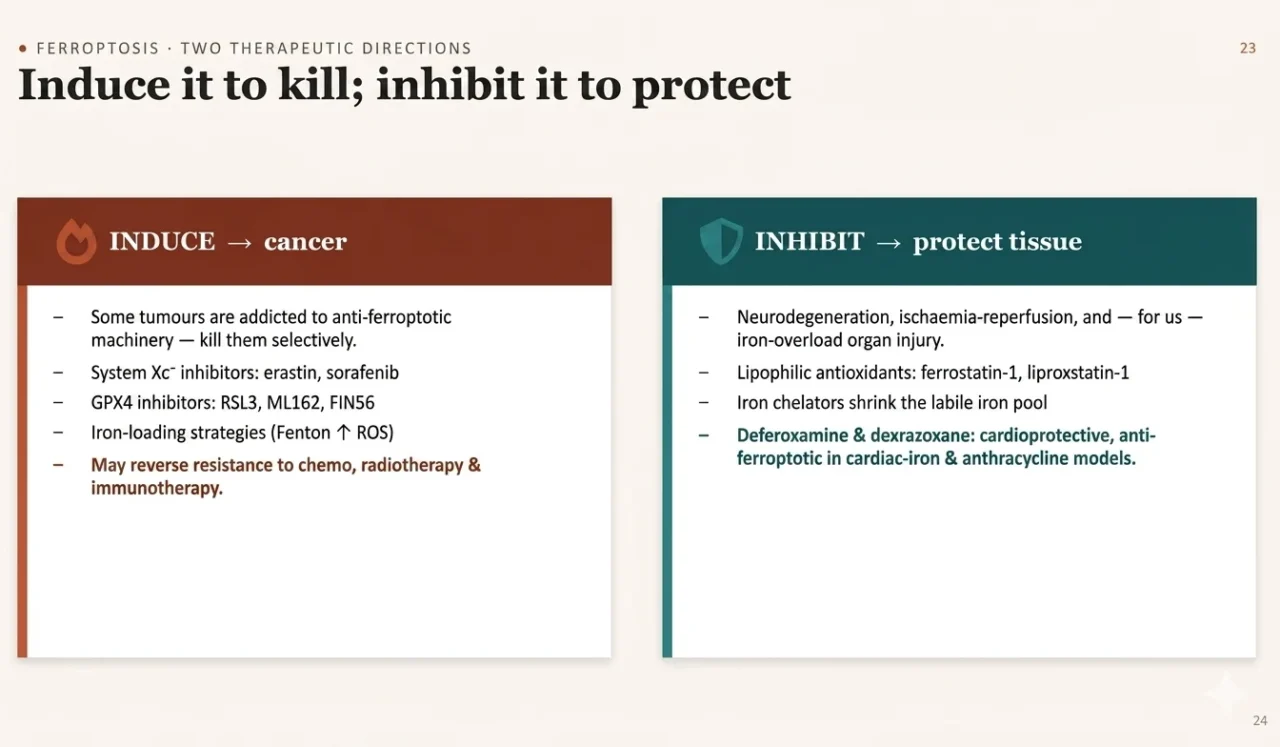
Ferroptosis can be either inhibited or induced therapeutically.
Inhibition may be beneficial in ischemia–reperfusion injury, organ protection, and neurodegenerative disease, with agents such as ferrostatins and iron chelators reducing lipid peroxidation and labile iron pools.
Conversely, induction of ferroptosis is being explored in oncology as a mechanism to selectively eliminate tumour cells.
The Bottom Line
Iron biology is increasingly understood not as a question of “too much or too little,” but of where iron is distributed and how it is trafficked between compartments.
The hepcidin–ferroportin axis is now a validated therapeutic target, with rusfertide providing clinical proof-of-concept in polycythaemia vera and emerging approaches such as TMPRSS6 inhibitors and ferroportin modulators expanding the field.
The key shift is from altering iron levels to restoring control of iron flow.
This framework extends beyond haematology, with relevance to cancer, neurodegeneration, infection, and ferroptosis-driven tissue injury.
Stay updated with Hemostasis Today.
-
Sep 29, 2026, 16:35Jonathan Douxfils: Navigating the VTE Risk Continuum in Reproductive Medicine
-
Sep 29, 2026, 16:35Chaima Rajeh: Types of Anemia and Their Laboratory Features
-
Sep 29, 2026, 16:27Scott Isaacs: How GLP-1 RAs Target Systemic Inflammation to Drive Cardio, Autoimmune, and Gut Health
-
Sep 29, 2026, 16:21Yitshak Kreiss: From Treating Patients to Defining the Standard of Knowledge
-
Sep 29, 2026, 16:18Edward Lee Carter: Why Periprocedural DOAC Guidance Needs a Common Output Standard
-
Sep 29, 2026, 16:07Yasmine Laraba: Deep Vein Thrombosis Causes, Signs and Management
-
Sep 29, 2026, 16:01Stephen Cornelissen: How Joining the Stem Cell Registry Can Save Patients with Blood Cancers
-
Sep 29, 2026, 15:45Alan Nurden: Could Mast Cell aIIb Integrin Play a Key Role in Septic Thrombus Stability?
-
Sep 29, 2026, 15:43Priyadarshani Sharma: Advocacy and Patient Rights Transform Indian Haemoglobinopathies Care