


Levacetylleucine: A New Therapeutic Approach to Ataxia Telangiectasia
Ataxia-telangiectasia (A-T) is a rare autosomal recessive multisystem disorder caused by pathogenic variants in the ATM gene. It is characterized by progressive cerebellar ataxia, telangiectasias, immunodeficiency, increased cancer risk, and sensitivity to ionizing radiation.
The disease usually becomes apparent during early childhood, with progressive impairment of gait, coordination, speech, and other motor functions. Although neurological manifestations dominate the clinical picture, A-T also has important hematologic, immunologic, and oncologic consequences.
The Role of ATM in Ataxia Telangiectasia
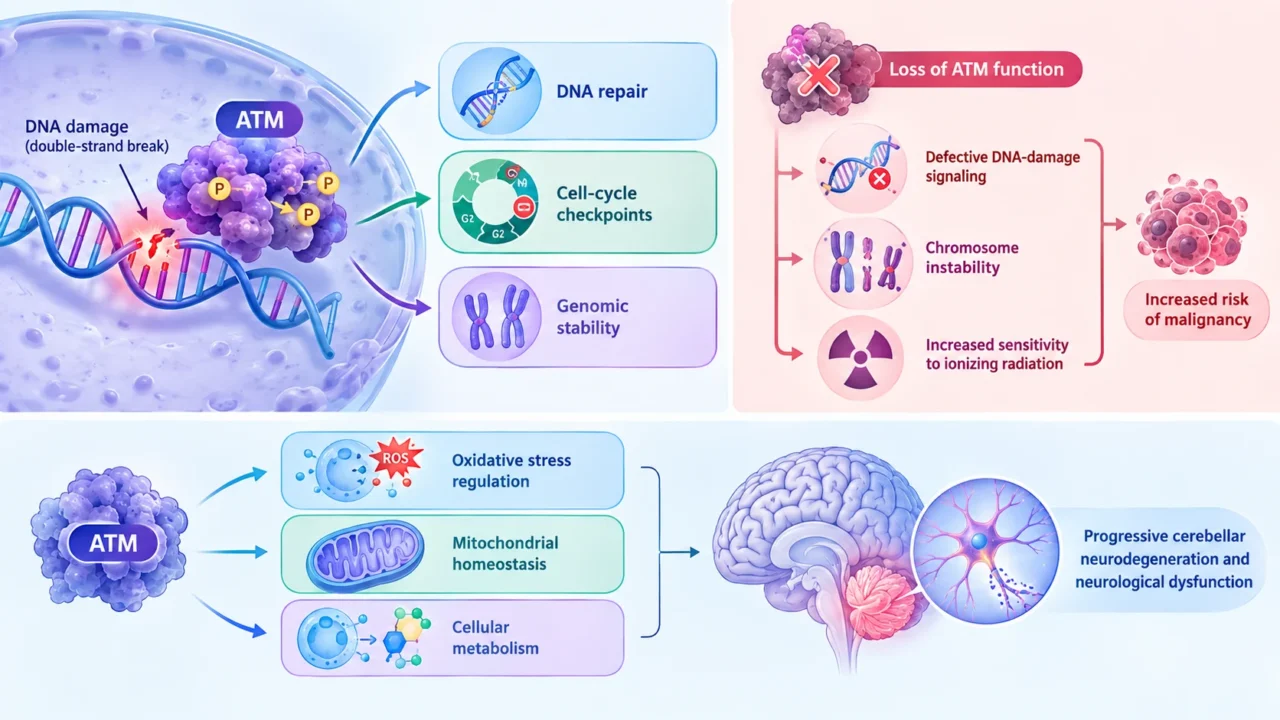
ATM encodes a serine/threonine protein kinase that is a central regulator of the cellular response to DNA double-strand breaks. Following DNA damage, ATM activates pathways involved in DNA repair, cell-cycle checkpoints, and maintenance of genomic stability.
Loss of ATM function results in defective DNA-damage signaling, chromosome instability, and increased cellular sensitivity to ionizing radiation. These abnormalities contribute to the increased risk of malignancy associated with A-T.
ATM also has functions beyond DNA repair, including regulation of oxidative stress, mitochondrial homeostasis, and cellular metabolism. Dysfunction of these pathways is thought to contribute to progressive cerebellar neurodegeneration and neurological dysfunction.
Why A-T Is Relevant to Hematology
A-T has important hematologic and immunologic manifestations. Defective ATM signaling affects lymphocyte development and function, resulting in variable immunodeficiency and increased susceptibility to lymphoid malignancies.
Chromosomal instability in lymphocytes, particularly involving chromosomes 7 and 14, is a characteristic laboratory finding and reflects the role of ATM in maintaining genomic integrity during lymphocyte development.
A Longstanding Therapeutic Gap
Treatment of A-T has historically focused on supportive management, including rehabilitation, treatment of infections, immunoglobulin replacement in selected patients, nutritional support, and surveillance for malignancy. No approved pharmacological treatment specifically targeted the associated ataxia.
This changed in September 2026, when the U.S. Food and Drug Administration approved Aqneursa (levacetylleucine) for the treatment of ataxia in adults and pediatric patients with A-T weighing at least 15 kg.
The approval makes Aqneursa the first FDA-approved treatment for ataxia in patients with ataxia-telangiectasia. Importantly, it does not correct the underlying ATM mutation or constitute a cure for A-T.
What Is Levacetylleucine?
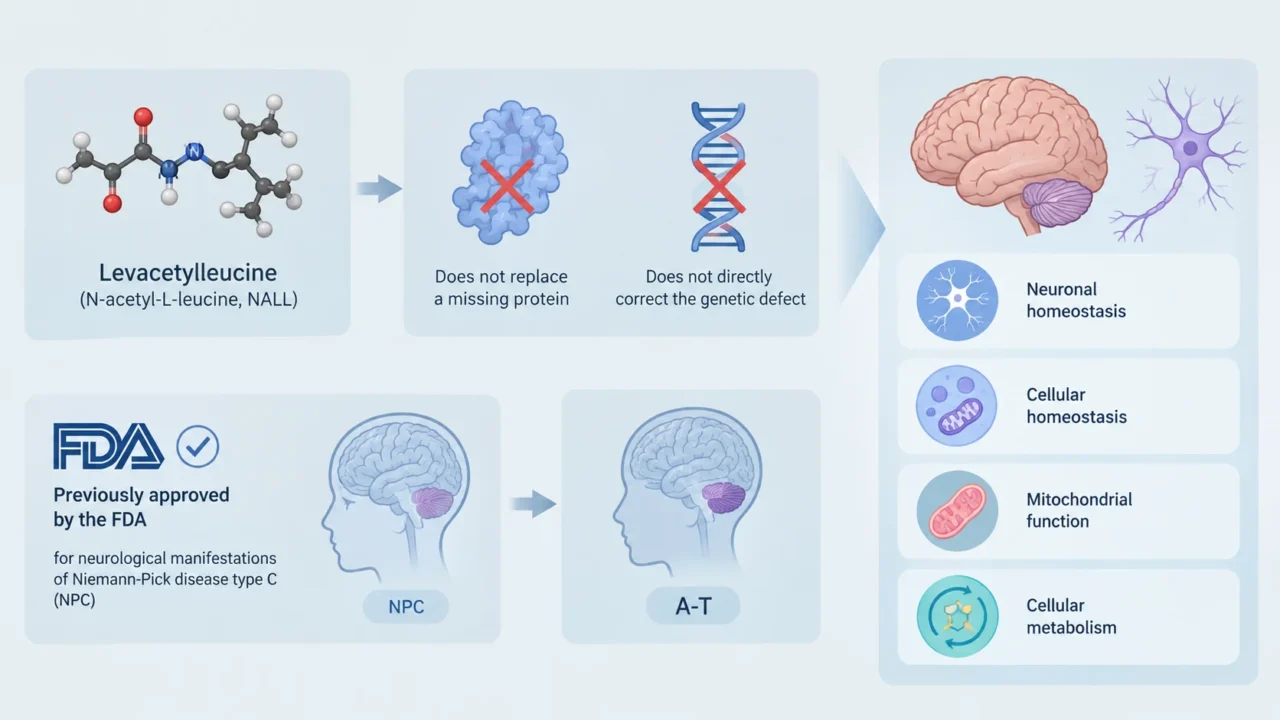
Levacetylleucine, also known as N-acetyl-L-leucine (NALL), is an acetylated derivative of L-leucine. Unlike conventional replacement therapies, it does not replace a missing protein or directly correct the genetic defect responsible for A-T.
The drug had previously been approved by the FDA for neurological manifestations of Niemann-Pick disease type C (NPC). Its subsequent development in A-T provided an opportunity to investigate whether its effects on neuronal and cellular homeostasis could also benefit patients with inherited ataxia.
How Does Levacetylleucine Work?
The precise molecular target of levacetylleucine has not been definitively established. The FDA prescribing information specifically states that its distinct molecular target is unknown, so its mechanism in A-T should be considered an active area of investigation.
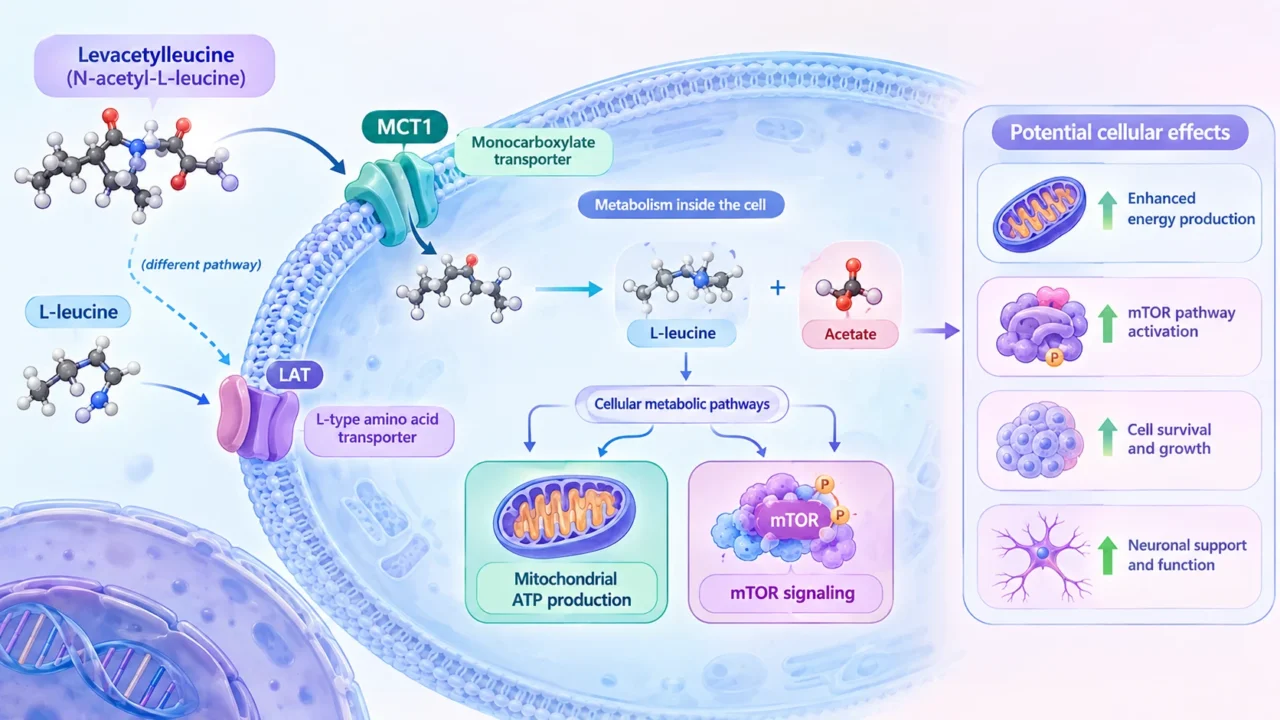
One important property is that acetylation changes how leucine enters cells. N-acetyl-L-leucine can utilize monocarboxylate transporters such as MCT1, allowing cellular uptake through a pathway different from the conventional L-type amino acid transporter used by L-leucine.
Once inside cells, levacetylleucine is metabolized to L-leucine and acetate. L-leucine can enter endogenous metabolic pathways and influence cellular energy metabolism, including pathways associated with mitochondrial ATP production and mTOR signaling.
Effects on Lysosomal and Autophagic Function
Recent experimental work has provided additional insight into how levacetylleucine may influence cellular homeostasis. Studies have demonstrated effects on TFEB, a transcription factor that regulates lysosomal biogenesis and autophagy.
In experimental models, levacetylleucine can modulate TFEB localization and activity, potentially promoting lysosomal and autophagic pathways when cellular clearance is impaired. These effects may help restore cellular homeostasis under conditions of metabolic or lysosomal stress.
The proposed mechanism therefore involves several interconnected processes rather than a single receptor or enzyme. Cellular uptake → metabolism to L-leucine → mitochondrial and metabolic effects → modulation of mTOR/TFEB signaling → effects on lysosomal and autophagic function represent the current mechanistic framework.
However, these mechanistic findings are largely derived from experimental systems and from research in neurological and lysosomal disorders. They should not be interpreted as proof that levacetylleucine directly reverses the underlying cellular pathology caused by ATM deficiency.
Early Clinical Evidence in A-T
Before the pivotal phase 3 study, N-acetyl-L-leucine was evaluated in a small randomized, double-blind, placebo-controlled crossover study in patients with A-T. The study included 20 enrolled participants, with 16 completing the protocol.
The study did not demonstrate a statistically significant improvement in motor ataxia measured using SARA or SCAFI-based outcomes. These findings therefore did not establish efficacy, although the treatment was generally well tolerated.
The subsequent phase 3 trial was substantially larger and used a different study design, providing the evidence that ultimately supported regulatory approval.
The Pivotal Phase 3 Trial
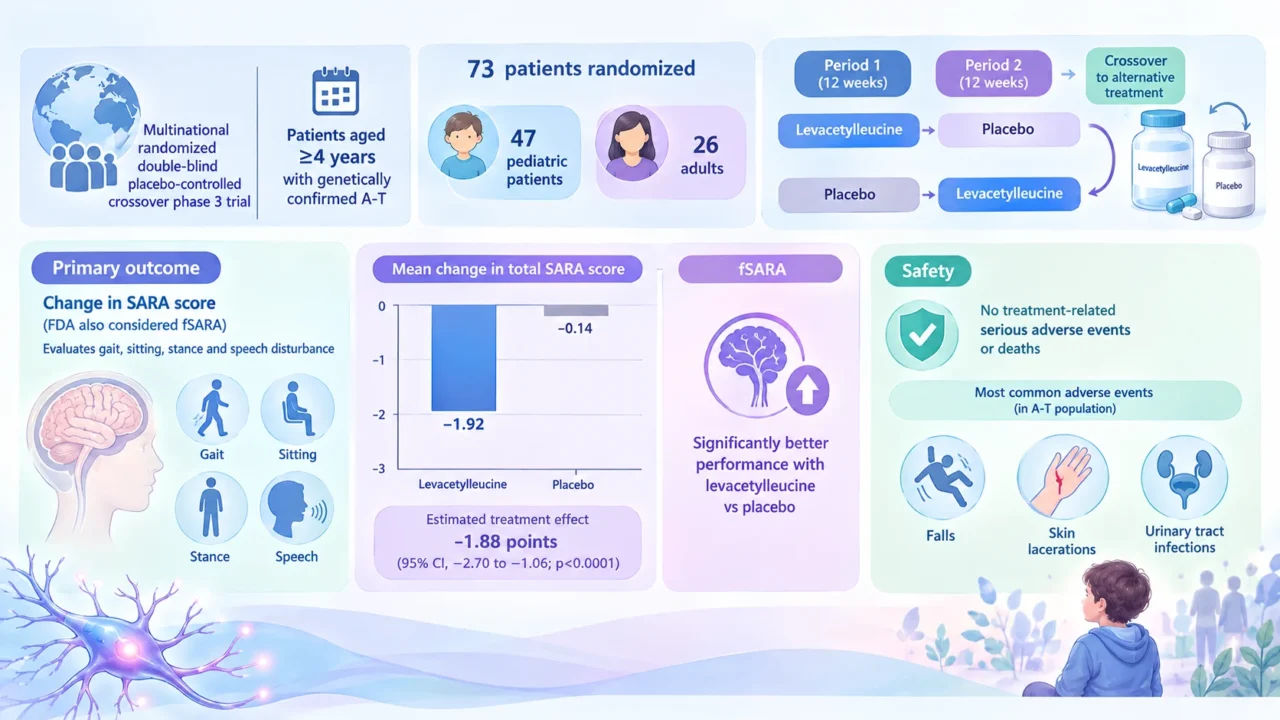
The pivotal IB1001-303 / NCT06673056 study was a multinational, randomized, double-blind, placebo-controlled crossover phase 3 trial. It enrolled patients aged four years or older with genetically confirmed A-T.
A total of 73 patients were randomized, including 47 pediatric patients and 26 adults. Participants received levacetylleucine or placebo during two consecutive 12-week treatment periods, followed by crossover to the alternative treatment.
The primary outcome was the change in the Scale for the Assessment and Rating of Ataxia (SARA) score. The FDA also considered functional SARA (fSARA), which evaluates gait, sitting, stance, and speech disturbance.
What Did the Trial Show?
The mean change in total SARA score was −1.92 with levacetylleucine compared with −0.14 with placebo. The estimated treatment effect was −1.88 points (95% CI, −2.70 to −1.06; p<0.0001).
The FDA similarly reported significantly better fSARA performance during levacetylleucine treatment compared with placebo, indicating improvement in neurological function.
The safety profile was also favorable during the trial. No treatment-related serious adverse events or deaths occurred, while the most common adverse events reported in the A-T population included falls, skin lacerations, and urinary tract infections.
What Does the FDA Approval Mean?
Aqneursa is approved for adults and pediatric patients with A-T weighing at least 15 kg. The indication specifically targets ataxia rather than the underlying genetic disease.
Patients will therefore continue to require management of immunodeficiency, respiratory complications, nutritional problems, malignancy risk, and other manifestations of A-T. Levacetylleucine adds a pharmacological treatment specifically directed toward the neurological phenotype.
Symptomatic Treatment or Disease Modification?
An important distinction is whether improvement in ataxia represents symptomatic treatment or modification of the underlying neurodegenerative process. The phase 3 study demonstrated improvement during 12-week treatment periods, but it was not designed to establish long-term neuroprotection.
An ongoing open-label extension study is evaluating longer-term outcomes. It may provide evidence regarding durability of benefit and potential neuroprotective or disease-modifying effects, but these effects have not yet been established.
From Supportive Care to Pharmacological Treatment
A-T illustrates how disruption of a DNA-damage response pathway can produce interconnected neurological, immunological, hematological, and oncological manifestations. ATM deficiency remains the fundamental driver of the disease.
Levacetylleucine does not repair ATM deficiency. Instead, it represents a downstream therapeutic strategy aimed at improving neurological function and cellular homeostasis in patients affected by the consequences of the genetic defect.
The FDA approval therefore represents an important change in A-T management: for the first time, patients have an approved pharmacological treatment specifically targeting the disease-associated ataxia.
FAQ
1. What causes ataxia-telangiectasia?
A-T is an autosomal recessive disorder caused by pathogenic variants in the ATM gene, which encodes a protein kinase involved in DNA-damage responses and genomic stability.
2. Why is A-T relevant to hematology?
ATM dysfunction affects lymphocyte development and genomic stability, contributing to immunodeficiency and an increased risk of lymphoid malignancies. Chromosomal abnormalities involving chromosomes 7 and 14 may also occur.
3. What is Aqneursa?
Aqneursa is the brand name for levacetylleucine (N-acetyl-L-leucine), an orally administered therapy approved for neurological manifestations of certain rare disorders.
4. What exactly did the FDA approve for A-T?
The FDA approved Aqneursa for the treatment of ataxia in adults and pediatric patients with A-T weighing at least 15 kg.
5. Does levacetylleucine correct the ATM mutation?
No. Levacetylleucine does not replace functional ATM protein or correct the underlying genetic defect. Its therapeutic effect is directed toward the neurological manifestation of A-T.
6. How does levacetylleucine enter cells?
Acetylation changes leucine transport. N-acetyl-L-leucine can enter cells through monocarboxylate transporters, including MCT1, rather than relying exclusively on the conventional leucine transporter pathway.
7. What happens to levacetylleucine inside the cell?
It is metabolized to L-leucine and acetate. L-leucine can participate in metabolic pathways and influence processes related to cellular energy production and mTOR signaling.
8. What is the proposed role of TFEB?
Experimental studies suggest that levacetylleucine can modulate TFEB, a key regulator of lysosomal biogenesis and autophagy. This may help restore cellular clearance and homeostasis under certain pathological conditions.
9. Was levacetylleucine effective in the phase 3 A-T trial?
Yes. In the 73-patient phase 3 trial, levacetylleucine produced a significantly greater improvement in SARA scores than placebo, with a treatment effect of −1.88 points (95% CI, −2.70 to −1.06; p<0.0001).
10. Does the phase 3 trial prove that levacetylleucine slows neurodegeneration?
No. The trial demonstrated improvement in neurological function, but long-term neuroprotective or disease-modifying effects have not yet been established. An open-label extension is ongoing.
Written by Hermine Sayiyan, MD
Stay updated with Hemostasis Today.
-
Sep 21, 2026, 15:40Andreas Tridimas: The Diagnostic Traps of Lipaemic Blood – Why a Normal Amylase Can Mislead You
-
Sep 21, 2026, 15:33Arsene Mekinian: Exploring Cardiac Involvement in Behçet’s Disease
-
Sep 21, 2026, 15:23Anis Mahjoubi: MRI Findings of Krukenberg Tumors
-
Sep 21, 2026, 15:08Fikreab Tesfaye Tefera: 10 Practical Take-Home Points for Diagnosing Iron Deficiency Anemia
-
Sep 21, 2026, 14:10Aswin K Mohan: Lessons from TRANSCON 2026 – Building Resilient Blood Supply Systems Before Crisis Hits
-
Sep 21, 2026, 14:00Vincent Lu: Beyond PT and aPTT – How Hemostasis Evolves Across a Lifetime
-
Sep 21, 2026, 13:56Alex Knapp: Emerging Technologies and Advances in Hemophilia Care
-
Sep 21, 2026, 13:51Abdalhakim Shubietah: pLAAO Fails Noninferiority to OAC in Landmark Meta-Analysis of 7 RCTs
-
Sep 21, 2026, 13:21In His Last UNGA, António Guterres Delivers a Urgent Call for Global Unity