

Von Willebrand Disease: New Diagnostic Approaches
Von Willebrand disease (VWD) is the most common inherited bleeding disorder but remains frequently underdiagnosed in clinical practice.
Patients often present for years with recurrent epistaxis, easy bruising, heavy menstrual bleeding, or excessive surgical and dental bleeding that may be overlooked or attributed to other causes.
Diagnosis is challenging due to the wide variability in clinical severity and laboratory findings, ranging from mild to severe and often fluctuating over time.
Recent advances in diagnostic criteria, functional assays, and genetic testing have improved early detection and more accurate classification, enabling better identification and management of affected patients.
What Is Von Willebrand Disease?
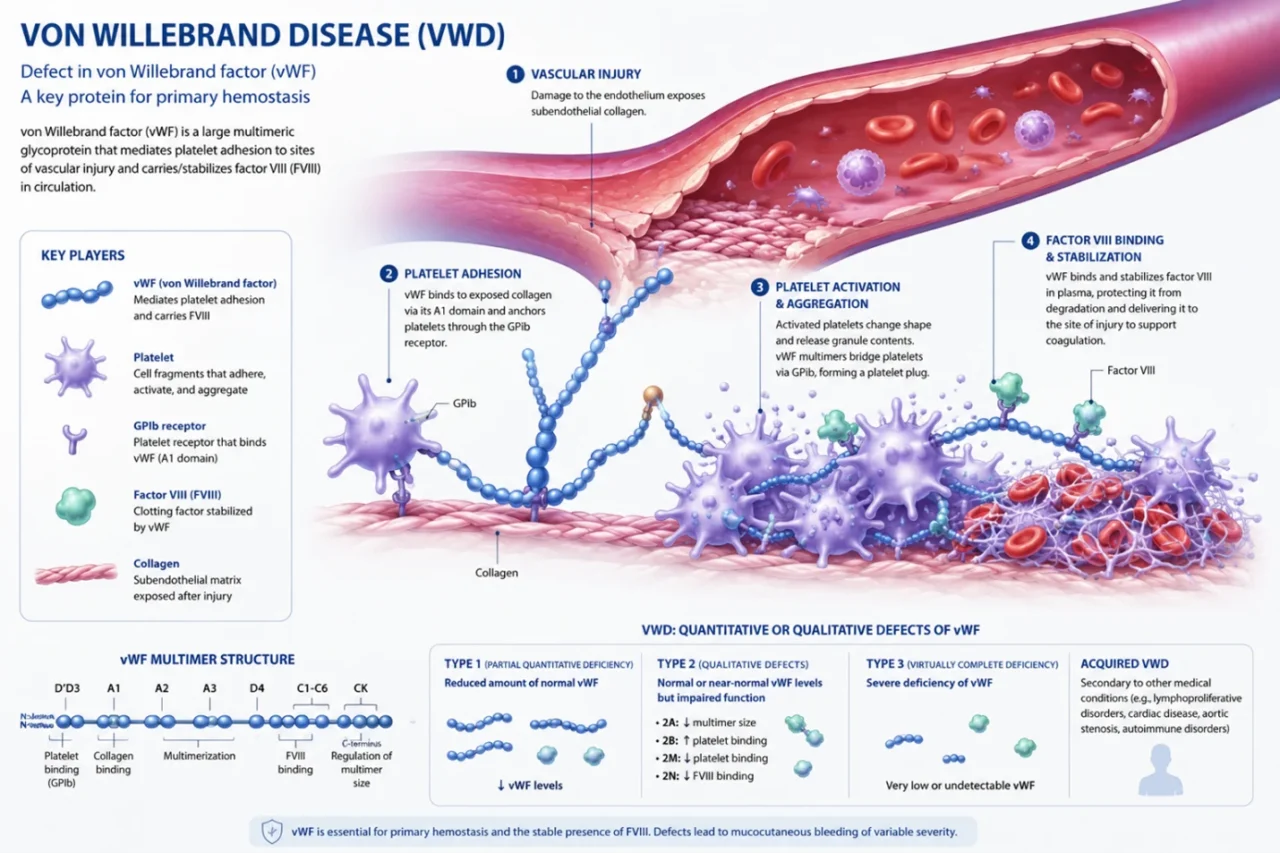
Von Willebrand disease occurs when the body produces too little von Willebrand factor (VWF) or produces VWF that does not function properly. VWF is a large multimeric glycoprotein that plays a central role in primary hemostasis.
It helps platelets adhere to sites of vascular injury and also serves as a carrier protein for factor VIII, protecting it from premature degradation in circulation.
When VWF is quantitatively deficient or functionally abnormal, platelet plug formation becomes impaired and bleeding tendency increases.
Because VWF is involved in both platelet adhesion and factor VIII stabilization, abnormalities in this protein can lead to a broader hemostatic defect than might be expected from a single laboratory abnormality.
VWD is traditionally classified into three major types: Type 1, which is a partial quantitative deficiency in which VWF is reduced but the molecule is usually structurally and functionally normal; Type 2, which is a qualitative defect in which VWF is present but does not function normally and includes subtypes 2A, 2B, 2M, and 2N; and Type 3, which is a severe quantitative deficiency with near absence of VWF and more pronounced bleeding manifestations.
Subtype classification is clinically important because it affects not only diagnosis but also management decisions, response to desmopressin, and genetic counseling.
A patient with one subtype may respond well to treatment that would be ineffective or inappropriate in another.
Why Diagnosis Is Challenging
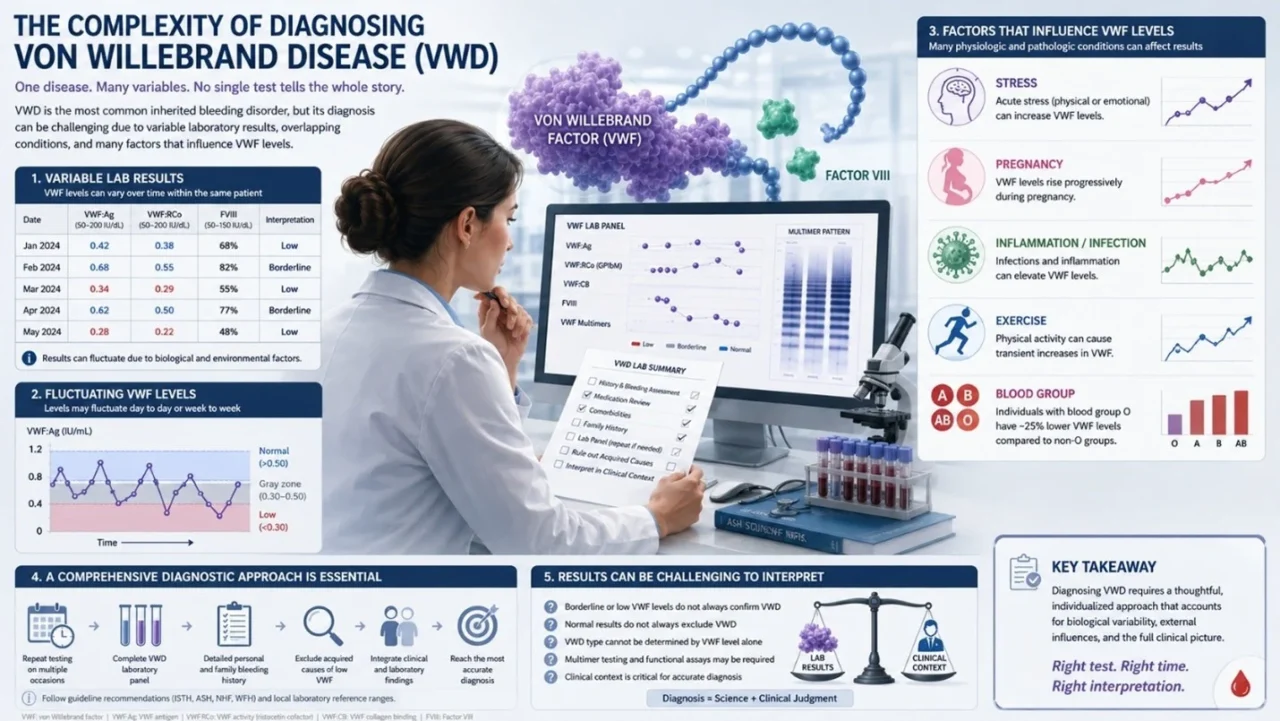
Diagnosing VWD requires combining symptoms, family history, and laboratory results rather than relying on a single test.
VWF levels are biologically variable and can increase with stress, acute illness, inflammation, exercise, pregnancy, and hormonal changes, which may temporarily mask low baseline levels in affected patients.
Blood group O is also associated with naturally lower VWF levels, making borderline results more difficult to interpret and sometimes leading to diagnostic uncertainty.
Because of these factors, repeat testing is often necessary, and a normal single result should not exclude VWD if clinical suspicion remains high.
The Central Role of Bleeding History
Before laboratory testing, a detailed bleeding history remains the most important first step.
This history should not focus only on dramatic bleeding episodes.
It should also include the recurrent symptoms that patients often consider normal, such as frequent or prolonged nosebleeds, easy bruising with minimal trauma, gingival bleeding, heavy menstrual bleeding that interferes with daily life or requires medical treatment, prolonged bleeding after tooth extraction or surgery, delayed bleeding after childbirth, and a family history of diagnosed or suspected bleeding disorders.
Many hematology practices now use Bleeding Assessment Tools to make this evaluation more structured. These tools help quantify symptom burden and improve consistency between clinicians.
They are particularly useful in identifying patients whose symptoms are significant enough to justify further testing, even when the initial clinical impression is uncertain.
This step is especially important because many patients, particularly women, are told for years that their bleeding symptoms are simply part of their normal baseline. A systematic bleeding history can uncover patterns that would otherwise be overlooked.
Standard Laboratory Evaluation
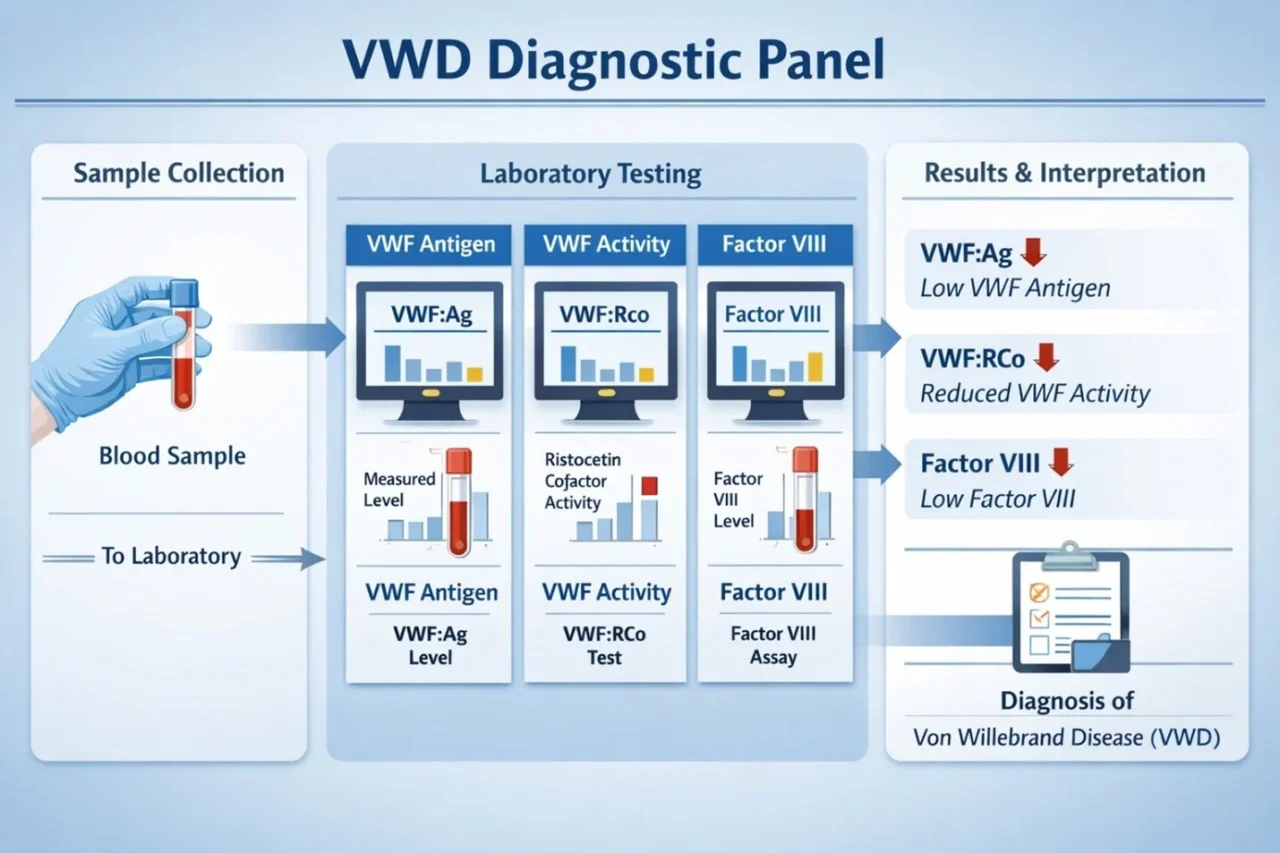
Traditional laboratory evaluation of VWD has relied on three principal tests: VWF antigen, which measures the amount of circulating VWF; VWF activity, which evaluates how well VWF functions; and factor VIII level, which may be reduced because VWF stabilizes factor VIII in the bloodstream.
These tests remain the foundation of diagnosis, but interpretation requires caution. VWF antigen alone is not enough because a normal quantity of protein does not necessarily indicate normal function.
Similarly, factor VIII may be normal in mild cases and therefore does not exclude VWD.
In practice, results must be interpreted as a pattern rather than as isolated values. For example, a reduced VWF antigen with proportionally reduced activity may suggest a quantitative deficiency, whereas disproportionately low activity compared with antigen raises suspicion for type 2 disease.
This pattern-based interpretation is one reason why VWD evaluation is best handled in a hematology setting familiar with hemostatic disorders.
Limitations of the Ristocetin Cofactor Assay
For many years, VWF ristocetin cofactor activity was the standard assay for measuring VWF function. It became widely used because it provided a practical way to assess the ability of VWF to interact with platelets. However, over time, important limitations became apparent.
The ristocetin cofactor assay is known for high inter-laboratory variability, limited reproducibility, and less reliable performance in some patients with mild disease or specific type 2 variants.
In some settings, it may also produce misleading results because of assay-specific technical issues rather than true biologic dysfunction.
Because of these drawbacks, many laboratories have moved toward newer assays that provide more stable and accurate functional assessment. This shift represents one of the most important practical changes in modern VWD diagnosis.
New Generation VWF Activity Assays
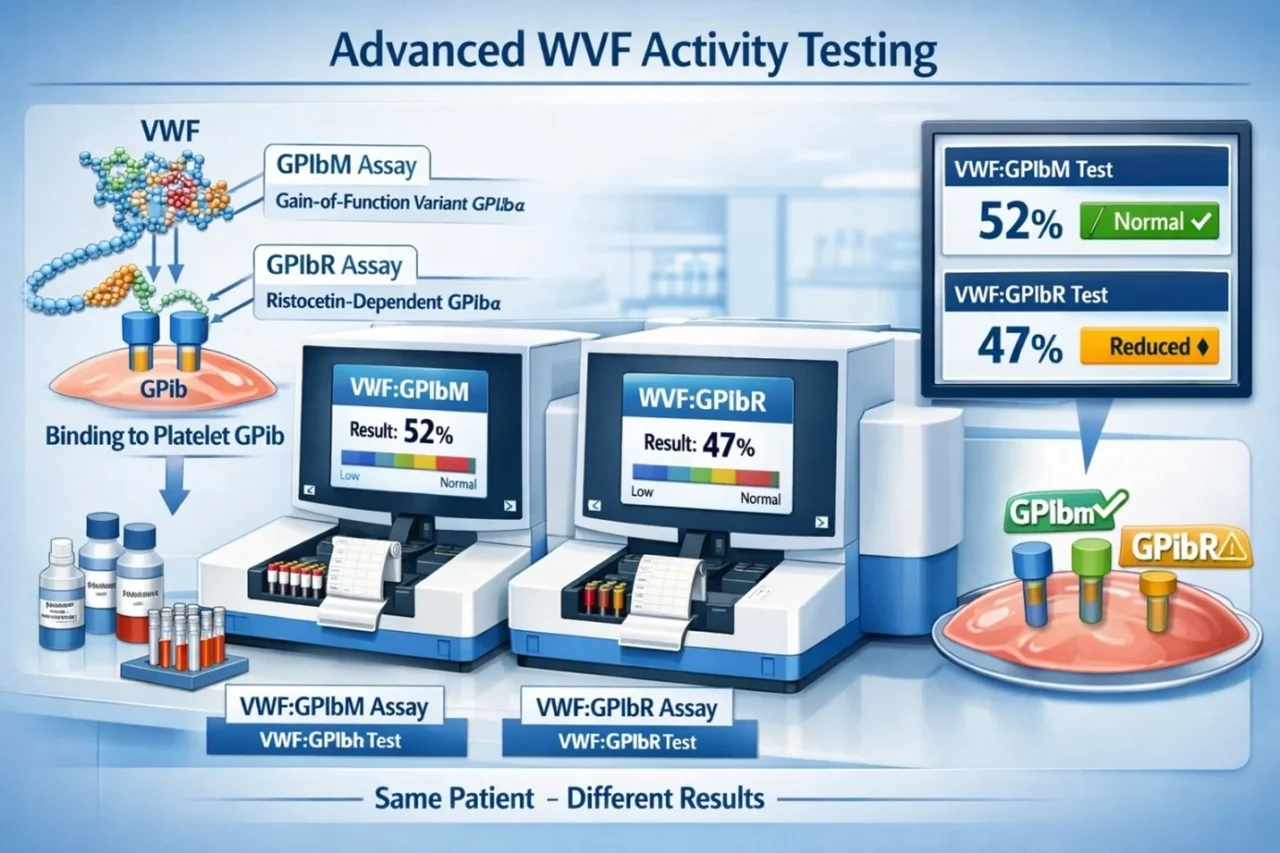
Newer platelet-binding assays, including VWF:GPIbM and VWF:GPIbR, have improved the evaluation of VWF function. These assays are designed to measure binding of VWF to the platelet glycoprotein Ib receptor more directly and more consistently than older ristocetin-based methods.
Their advantages include better precision, improved reproducibility, less variability between laboratories, more reliable detection of certain type 2 variants, and greater suitability for modern diagnostic workflows.
These assays are gradually replacing VWF:RCo in many centers because they better reflect the biologic interaction between VWF and platelets. In clinical practice, this transition is important because more accurate functional testing can reduce both false reassurance and misclassification.
The Value of Multimer Analysis
Multimer analysis provides a more detailed structural assessment of VWF. Since VWF circulates as multimers of different sizes, analysis of this distribution can reveal patterns that are highly informative for subtype classification.
This test is particularly useful in type 2 VWD, where the protein is present but behaves abnormally. For example, type 2A is often associated with loss of high-molecular-weight multimers, which are the most hemostatically active forms.
Type 2B may show abnormal platelet binding and altered multimer patterns.
Type 2M can show relatively preserved multimer distribution despite defective function.
Multimer analysis does not replace routine testing, but it adds an important layer of detail when the diagnosis is unclear or when subtype distinction is clinically relevant. It is especially helpful in cases where functional assays and antigen levels do not fully explain the phenotype.
Genetic Testing and Precision Diagnosis
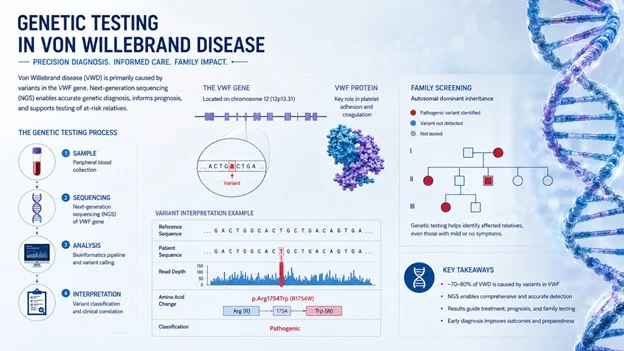
Genetic testing is increasingly used in VWD assessment, with next-generation sequencing helping identify variants affecting VWF structure and function.
It can confirm diagnosis, detect rare mutations, and clarify subtype classification, particularly in challenging cases.
It is especially valuable in type 2N VWD, which can mimic mild hemophilia A due to reduced factor VIII levels, and genetic testing helps differentiate between them, guiding appropriate management and counseling.
Genetic analysis is also useful for family screening once a pathogenic variant is identified, but it should complement, not replace, clinical and laboratory evaluation.
The Concept of Low VWF
One of the most significant shifts in modern guidelines is the recognition of low VWF as a clinically important category.
Historically, diagnostic focus often centered on patients with VWF levels below 30 IU/dL.
Today, however, there is growing recognition that patients with levels between 30 and 50 IU/dL may still experience meaningful bleeding, especially in the setting of surgery, childbirth, trauma, or invasive dental procedures.
This concept has changed how clinicians think about diagnosis. Instead of relying only on a strict laboratory cutoff, there is now greater emphasis on the real-world bleeding phenotype. In other words, a patient’s clinical risk may be more important than whether the laboratory value falls just above or just below a threshold.
This approach is particularly valuable in patients with borderline results who have a convincing bleeding history. It helps ensure that those who may benefit from preventive treatment are not overlooked simply because they do not meet a rigid numerical definition.
Special Considerations in Women
Women are disproportionately affected by delayed recognition of VWD. Heavy menstrual bleeding is one of the most common presenting symptoms, but it is frequently normalized or attributed to gynecologic causes alone. As a result, the underlying bleeding disorder may remain undiagnosed for years.
Postpartum hemorrhage can also be an important clue, particularly if bleeding is excessive or recurrent. However, diagnosis in women is complicated by the fact that pregnancy physiologically increases VWF levels.
Hormonal contraceptives may also affect interpretation in some cases. These factors can mask underlying disease and make laboratory evaluation more difficult during pregnancy or while hormonal status is changing.
For this reason, timing of testing matters. When possible, diagnostic evaluation should be performed at a time when physiologic confounders are minimized. In women with persistent symptoms, a normal result during pregnancy should not necessarily end the workup if the history remains strongly suggestive.
What Is Changing in 2025–2026?
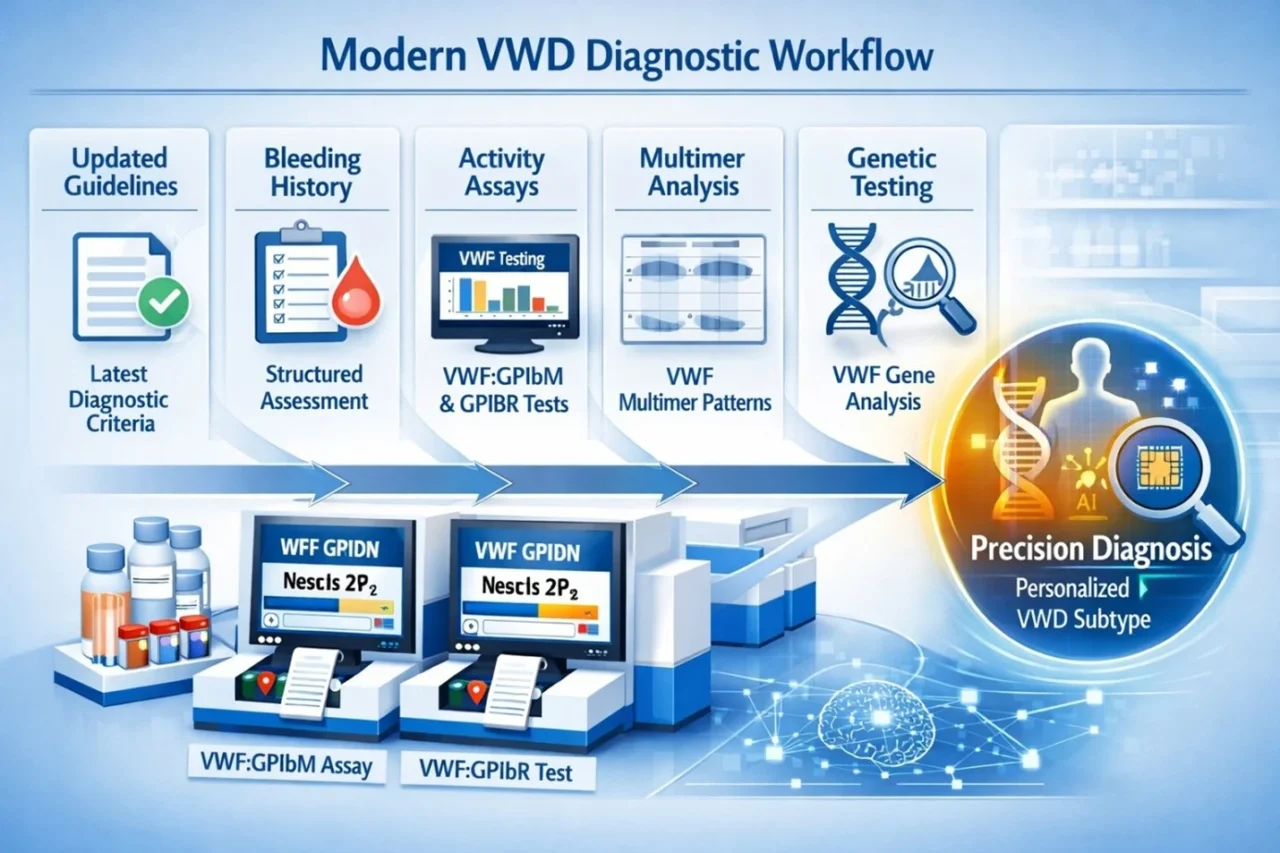
VWD diagnosis is moving toward greater precision through better standardized assays, detailed bleeding history, multimer analysis, and genetic testing.
Modern practice focuses on refining clinical judgment rather than replacing it, as VWD spans a wide clinical and laboratory spectrum.
Improved methods are allowing earlier recognition of subtle cases and more careful interpretation of borderline results.
Future advances are expected in assay standardization, subtype classification algorithms, and integration of genetic and clinical data, with emerging AI tools serving only as supportive aids.
How modern guidelines are changing the way we diagnose bleeding disorders
Diagnosing bleeding disorders has never been simple. Some patients experience severe bleeding from childhood, while others may go years without realizing that their “normal” bruising, nosebleeds, or heavy periods could be signs of an underlying condition.
Among inherited bleeding disorders, Von Willebrand disease (VWD) remains the most common — and one of the most complicated to diagnose.
Although the disease was first described almost 100 years ago, the diagnostic process continues to evolve.
The latest 2025 ASH/ISTH/NBDF/WFH monitoring report confirmed that the current diagnostic recommendations remain clinically relevant, while newer laboratory technologies and genetic tools are improving precision even further.
This means that in 2025–2026, VWD diagnosis is becoming more personalized, more accurate, and more focused on the patient’s real-life bleeding symptoms.
Clinical Implications
Improved diagnosis has direct implications for patient care. Earlier recognition of VWD can reduce missed diagnoses, prevent unnecessary procedures without hemostatic planning, improve management of heavy menstrual bleeding, and guide safer care during pregnancy, delivery, and surgery. It can also help families understand inheritance patterns and enable appropriate screening of relatives.
From a clinical standpoint, the most important message is that VWD should be considered whenever a patient presents with recurrent mucocutaneous bleeding, excessive procedural bleeding, or a family history suggestive of an inherited disorder. A normal initial test does not always exclude disease, particularly when physiologic factors may have influenced the result.
Conclusion
Von Willebrand disease remains a complex but increasingly diagnosable bleeding disorder. Its variability, the physiologic fluctuation of VWF levels, and the limitations of older assays have historically made diagnosis difficult. However, updated guidelines, improved activity testing, multimer analysis, and genetic approaches are steadily improving diagnostic precision.
The modern approach to VWD is more comprehensive than in the past. It places greater weight on the bleeding history, interprets laboratory results in context, and recognizes that patients with borderline VWF levels may still be clinically significant. As a result, diagnosis is becoming more accurate, more individualized, and more useful for real-world patient care.
Frequently Asked Questions (FAQ)
1. What is von Willebrand disease?
Von Willebrand disease is an inherited bleeding disorder caused by too little von Willebrand factor or a factor that does not work properly.
2. Why is VWD often missed?
It is often missed because symptoms can be mild, fluctuate over time, and overlap with common bleeding complaints such as nosebleeds or heavy menstrual bleeding.
3. What symptoms should raise suspicion for VWD?
Frequent nosebleeds, easy bruising, prolonged bleeding after dental work or surgery, heavy menstrual bleeding, and a family history of bleeding disorder are key warning signs.
4. What tests are used to diagnose VWD?
Diagnosis usually requires a combination of VWF antigen, VWF activity, factor VIII testing, and sometimes multimer or platelet function studies.
5. Why are repeat tests sometimes needed?
Repeat testing may be needed because VWF levels can change with stress, exercise, pregnancy, infections, and other physiologic factors.
6. What is the difference between VWF:RCo and newer activity assays?
Newer assays such as VWF:GPIbM and VWF:GPIbR are preferred in many guidelines because they are more precise and reproducible than VWF ristocetin cofactor testing.
7. What is multimer analysis used for?
Multimer analysis helps classify VWD subtype, especially when type 2 disease is suspected and functional results need further clarification.
8. When is genetic testing helpful?
Genetic testing is useful for difficult subtype distinctions, family studies, and cases such as suspected type 2N VWD or type 2B VWD.
9. What does “low VWF” mean?
Low VWF refers to borderline VWF levels that may still be associated with clinically significant bleeding, especially during surgery, childbirth, or trauma.
10. Why is diagnosis especially important in women?
Women are often diagnosed late because heavy menstrual bleeding and postpartum bleeding may be normalized or attributed only to gynecologic causes.
Written by Anna Stepanyan, MD
Stay updated with Hemostasis Today.
-
Sep 23, 2026, 13:04Ben Samelson-Jones: Do Gene Variants Drive PK Differences in FIX-Fusion and N9-GP Therapies?
-
Sep 23, 2026, 12:57Shelly Reed: Advocating for HTCs and CDC Funding with the Hemophilia Federation of America
-
Sep 23, 2026, 12:51Domenico Girelli: How Verona Hospital Transformed ED Anemia Care with Patient Blood Management
-
Sep 23, 2026, 12:45Lina Camacho-Arteaga: ENTIS Study Uncovers Safety Data on Early Pregnancy Exposure to Direct Oral Anticoagulants
-
Sep 23, 2026, 12:34Hiteshi K.C. Chauhan: Why Mechanical Valve Thrombosis Is a Systems Failure, Not Just an Anticoagulation Error
-
Sep 23, 2026, 12:33World Thrombosis Day 2026 Puts Women’s Health in Focus – JTH
-
Sep 23, 2026, 12:30Zain Khalpey: How a Sudden Blockage Causes Myocardial Infarction
-
Sep 23, 2026, 12:16Apurva Popat: When Heparin Triggers Thrombosis
-
Sep 23, 2026, 12:14Zahra Ghasemi: The Power of Voluntary Blood Donation