

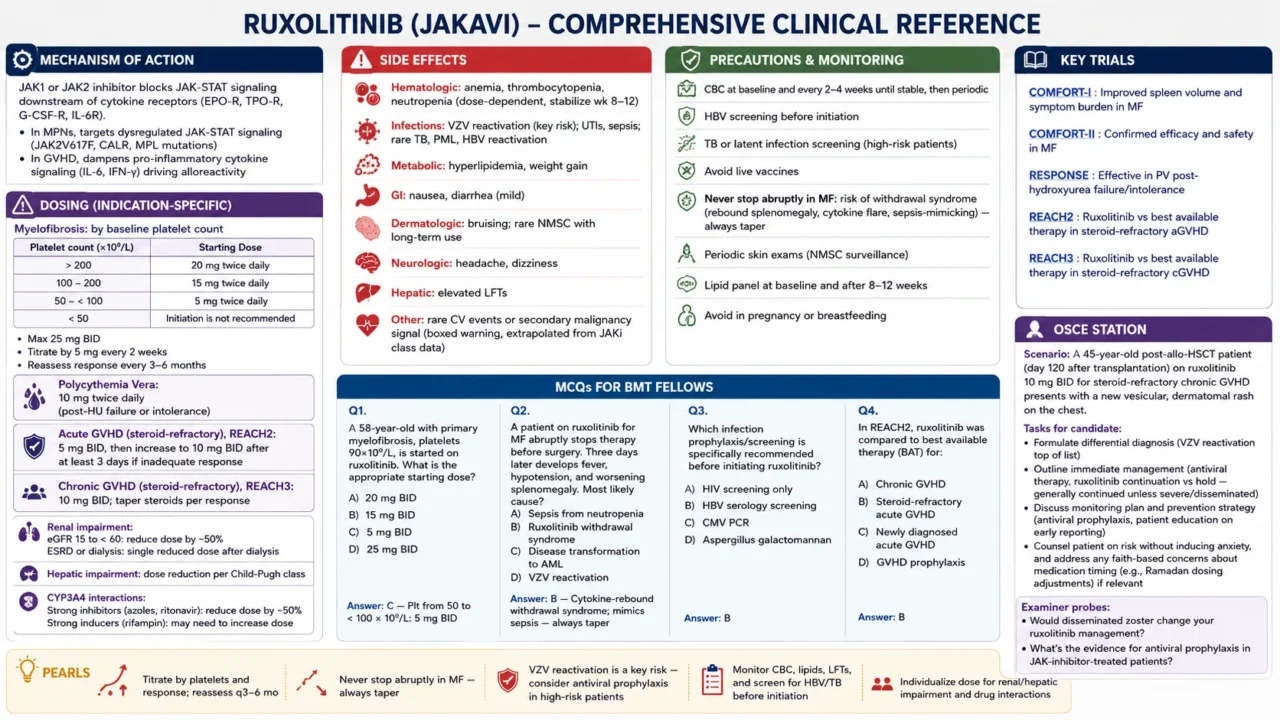
Chokri Ben Lamine: Ruxolitinib – Comprehensive Clinical Reference
Chokri Ben Lamine, Hematologist at King Faisal Specialist Hospital and Research Center, shared a post on X:
“Ruxolitinib (Jakavi) – Comprehensive Clinical Reference
Mechanism: JAK1 or JAK2 inhibitor blocks JAK-STAT signaling downstream of cytokine receptors (EPO-R, TPO-R, G-CSF-R, IL-6R). In MPNs, targets dysregulated JAK-STAT signaling (JAK2V617F, CALR, MPL mutations); in GVHD, dampens pro-inflammatory cytokine signaling (IL-6, IFN-γ) driving alloreactivity.
Dosing (indication-specific):
Myelofibrosis: by baseline platelet count
- Platelet count above 200 × 10⁹/L: 20 mg twice daily
- Platelet count 100–200 × 10⁹/L: 15 mg twice daily
- Platelet count 50 to less than 100 × 10⁹/L: 5 mg twice daily
- Platelet count below 50 × 10⁹/L: initiation is not recommended
- Max 25mg BID; titrate by 5mg q2 weeks; reassess response q3–6 months
Polycythemia Vera: 10mg BID (post-HU failure or intolerance)
Acute GVHD (steroid-refractory), REACH2: 5mg BID, then increase to 10mg BID after at least 3 days if inadequate response
Chronic GVHD (steroid-refractory), REACH3: 10mg BID; taper steroids per response
Renal impairment: eGFR 15 to less than 60: reduce the dose by approximately 50%; ESRD or dialysis: administer a single reduced dose after dialysis
Hepatic impairment: dose reduction per Child-Pugh class
CYP3A4 interactions: Strong inhibitors (azoles, ritonavir): reduce the dose by approximately 50%; strong inducers (rifampin): may need to increase the dose
Side Effects:
- Anemia, thrombocytopenia, neutropenia (dose-dependent, stabilize wk 8–12)
- VZV reactivation (key risk); UTIs, sepsis; rare TB/PML/HBV reactivation
- Hyperlipidemia, weight gain
- Nausea, diarrhea (mild)
- Bruising; rare NMSC with long-term use
- Headache, dizziness, Elevated LFTs
- Rare CV events or secondary malignancy signal (boxed warning, extrapolated from JAKi class data)
Precautions and Monitoring:
- CBC baseline and after q2–4wk until stable, then periodic
- HBV screening before start
- TB or latent infection screening (high-risk pts)
- Avoid live vaccines
- Never stop abruptly in MF: withdrawal syndrome (rebound splenomegaly, cytokine flare, sepsis-mimicking) — always taper
- Periodic skin exams (NMSC surveillance)
- Lipid panel baseline and after 8–12wk
- Avoid in pregnancy or breastfeeding
Key Trials: COMFORT-I/II (MF), RESPONSE (PV), REACH2 (aGVHD), REACH3 (cGVHD)
MCQs for BMT Fellows
- Q1. A 58-year-old with primary myelofibrosis, platelets 90×10⁹/L, is started on ruxolitinib. What is the appropriate starting dose? A) 20mg BID B) 15mg BID C) 5mg BID D) 25mg BID Answer: C — Plt from 50 to less than 100 × 10⁹/L: 5 mg BID
- Q2. A patient on ruxolitinib for MF abruptly stops therapy before surgery. Three days later develops fever, hypotension, and worsening splenomegaly. Most likely cause? A) Sepsis from neutropenia B) Ruxolitinib withdrawal syndrome C) Disease transformation to AML D) VZV reactivation Answer: B — Cytokine-rebound withdrawal syndrome; mimics sepsis — always taper
- Q3. Which infection prophylaxis/screening is specifically recommended before initiating ruxolitinib? A) HIV screening only B) HBV serology screening C) CMV PCR D) Aspergillus galactomannan Answer: B
- Q4. In REACH2, ruxolitinib was compared to best available therapy (BAT) for: A) Chronic GVHD B) Steroid-refractory acute GVHD C) Newly diagnosed acute GVHD D) GVHD prophylaxis Answer: B
OSCE Station
Scenario: A 45-year-old post-allo-HSCT patient (day 120 after transplantation) on ruxolitinib 10mg BID for steroid-refractory chronic GVHD presents with a new vesicular, dermatomal rash on the chest.
Tasks for candidate:
- Formulate differential diagnosis (VZV reactivation top of list)
- Outline immediate management (antiviral therapy, ruxolitinib continuation vs hold — generally continued unless severe/disseminated)
- Discuss monitoring plan and prevention strategy (antiviral prophylaxis, patient education on early reporting)
- Counsel patient on risk without inducing anxiety, and address any faith-based concerns about medication timing (e.g., Ramadan dosing adjustments) if relevant
Examiner probes:
- Would disseminated zoster change your ruxolitinib management?
- What’s the evidence for antiviral prophylaxis in JAK-inhibitor-treated patients?”
Other posts featuring Chokri Ben Lamine on Hemostasis Today.
-
Oct 8, 2026, 04:28Jeff Molter: Electrophysiological PIEZO1 Analysis Advances Diagnosis in Hereditary Xerocytosis
-
Oct 8, 2026, 04:23Barbara Adams Krolak: Women and Blood Clots Are We Missing the Warning Signs
-
Oct 8, 2026, 04:10Rutendo Muzambi: Hospital Admission Patterns and Care Disparities in Sickle Cell Disease
-
Oct 8, 2026, 03:50Olfat Berro: Redefining the Future of Haemophilia A
-
Oct 8, 2026, 03:35Tasnia Tarana: Heavy Menstrual Bleeding When the Cause Is Not in the Uterus
-
Oct 8, 2026, 03:28Kian Haseli: Electrophysiological PIEZO1 Analysis Advances Diagnosis in Hereditary Xerocytosis
-
Oct 8, 2026, 03:20Sthanu Subramanian: Leukopenia in Sepsis A Marker of Severe Disease
-
Oct 7, 2026, 16:44Amor Salah: 2026 NCS/SCCM Guidelines for Managing Antithrombotic-Associated ICH
-
Oct 7, 2026, 16:04NETs in Thrombosis: From Mechanism to Therapeutic Target