

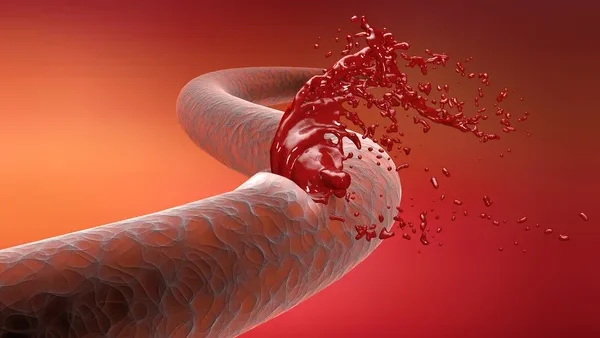
Sara Ayoub (Sadek): How Your Body Magically Stops a Paper Cut from Bleeding? – The Five Acts of Hemostasis
Sara Ayoub (Sadek), Biological and Computer Sciences Student at California State University, shared a post on LinkedIn:
“Ever wondered how your body magically stops a paper cut from bleeding? It’s not magic, but a five step process called hemostasis.
Let’s trace the journey from injury to healing, step by step.
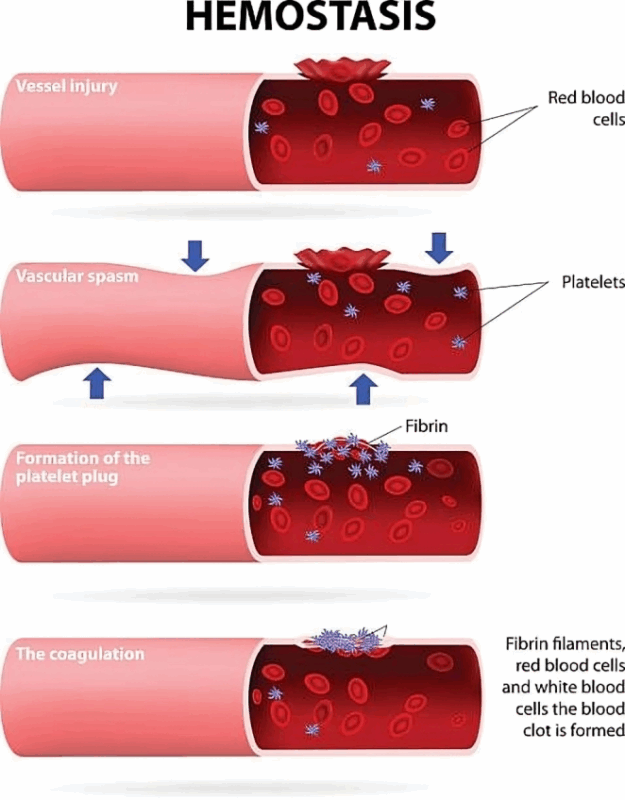
Act 1: The Vascular Spasm
The moment a vessel is breached, the first response is a reflex.
Smooth muscle in the vessel wall contracts powerfully (vasoconstriction), narrowing its diameter. This mechanical squeeze acts like a clamp, immediately reducing blood flow and buying precious time for the next steps.
Act 2: The Platelet Plug
Next, cellular first responders arrive.
- Damage to the vessel lining exposes underlying collagen fibers, a powerful distress signal for circulating platelets.
- Platelets instantly stick to this collagen (adhesion), become activated, change shape, and release chemical signals to call for more platelets.
- This positive feedback loop (aggregation) quickly forms a soft, temporary plug over the hole.
Act 3: The Coagulation Cascade
The plug is temporary; a stronger seal is needed.
- The goal of this chemical domino effect is to convert the soluble plasma protein Fibrinogen into an insoluble, sticky polymer called Fibrin. (See previous post).
- Calcium (Ca²⁺) is a vital cofactor here, acting as a molecular bridge that helps clotting factors assemble correctly on the platelet surface.
- The resulting Fibrin threads weave a tough mesh through and around the platelet plug, creating a stable, durable fibrin clot.
Act 4: Clot Retraction and Repair
The emergency patch is in place; now the clot actively aids healing.
- Platelets trapped in the fibrin mesh contain contractile proteins (actin & myosin), just like in your muscles.
- Over the next 30-60 minutes, these platelets contract, pulling on the fibrin threads. This powerful action does two things:
It squeezes serum from the clot, making it more compact and dense.
It pulls the edges of the damaged vessel together like internal stitches, stabilizing the area for permanent repair.
Act 5: Fibrinolysis
A clot is a temporary solution. Once the vessel wall has healed, it must be removed to restore blood flow.
- The cleanup crew activates as the healed vessel cells secrete an enzyme called Tissue Plasminogen Activator (tPA).
- tPA seeks out an inactive enzyme, Plasminogen, that was cleverly incorporated into the clot as it formed, and converts it to its active form, Plasmin.
- Plasmin acts like molecular scissors, systematically breaking down the fibrin mesh. The clot dissolves into small fragments, returning the vessel to its original, unobstructed state.
An incredible process of clamping, plugging, weaving, tightening, and dissolving, all to keep us safe!”
Stay updated with Hemostasis Today.
-
Oct 9, 2026, 16:23David Boone: Distinguishing Stroke Prevention from Rhythm Control in Atrial Fibrillation
-
Oct 9, 2026, 15:27Mohamed Hegazi: Geostatistical Modelling Maps Global β-Thalassaemia Carrier Prevalence
-
Oct 9, 2026, 15:15Maha Othman: Uncovering the Consensus on TXA in TBI – Call for Collaboration on a Landmark Umbrella Review
-
Oct 9, 2026, 15:07Daniel D. Han: How Inhalation Product Exposure Impairs Cardiac and Platelet Recovery After MI
-
Oct 9, 2026, 14:58William Toole: How Ultrasound-Guided PRP Therapy Relieves Joint and Tendon Pain
-
Oct 9, 2026, 14:50Shayan Mohammadmoradi: In Corpus Christi for the 20th Midwest Platelet Conference
-
Oct 9, 2026, 14:37Tariq Tramboo: High Platelet Concentrate for Osteoarthritis Knee – Recent Meta-Analyses
-
Oct 9, 2026, 14:26Yousma Khan: Hematology Series – Beyond RBCs, WBCs and Platelets
-
Oct 9, 2026, 14:13Jesus Ardila Novoa: Why the WHO’s Historic Essential Medicines List Decision Is Just the Beginning