


Ahmed Bennis on Potential Use of P2Y12 Inhibitors as Safer Alternative in Monotherapy
Ahmed Bennis, Professor of Cardiology at Ibn Rochd University Hospital, shared on LinkedIn:
”For over a century, aspirin has played a central role in cardiovascular prevention.
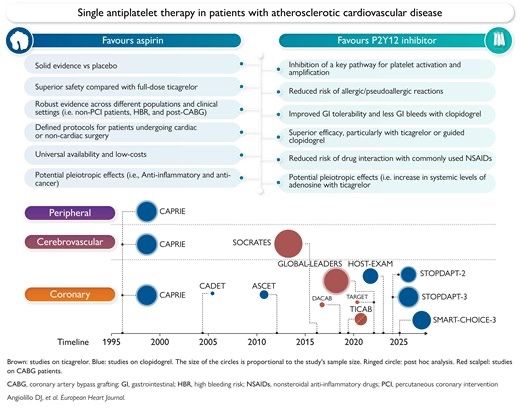
However, a major shift is on the horizon: P2Y12 receptor inhibitors, long reserved for acute phases, are now emerging as a potentially more effective and safer alternative in monotherapy.
This questioning of a historical pillar raises an essential question: should we rethink the basic antithrombotic strategy in atherosclerotic patients?
In light of new clinical data, the debate has never been more relevant.
This review analyzes data comparing monotherapy with aspirin to monotherapy with P2Y₁₂ receptor inhibitors in patients with atherosclerotic disease, suggesting that P2Y₁₂ inhibitors could be an alternative or even a preferred choice to aspirin.
• The authors examine the efficacy (reduction in cardiovascular events) and safety (risk of bleeding, variability of response) of these two strategies, highlighting the challenges of implementing monotherapy.
• They conclude that it is time to personalize long-term antithrombotic strategy in patients with atherosclerosis, as aspirin is no longer necessarily the only standard option.
Aspirin or P2Y12 inhibitor monotherapy in atherosclerotic cardiovascular disease?
Antiplatelet therapy is the cornerstone of management for patients with established atherosclerosis.
The use of a single antiplatelet agent is generally recommended for the long-term follow-up of these patients.
Although aspirin has been the mainstay of antiplatelet therapy for decades, recent data suggest that P2Y12 receptor inhibitors may be more than just an alternative to aspirin and may even be preferable to it.
This review examines current data comparing the efficacy and safety of aspirin and P2Y12 receptor inhibitors in reducing cardiovascular events in patients with atherosclerosis.
Particular attention is paid to the practical difficulties and considerations associated with the use of aspirin or a P2Y12 receptor inhibitor as monotherapy, including interindividual variability in response to the drug, adverse effects, costs, and implementation in clinical practice.
By evaluating the benefits and limitations of these therapeutic options, this article aims to guide clinicians in the optimal choice of antiplatelet monotherapy for long-term secondary prevention in patients with atherosclerosis.”
Read the full article in EHJ.
Article: Aspirin or P2Y12 inhibitor monotherapy in atherosclerotic cardiovascular disease?
Authors: Mattia Galli, Jurrien ten Berg, Marco Valgimigli, Davide Capodanno, Felice Gragnano, Takeshi Kimura, Deepak L Bhatt, C Michael Gibson, Roxana Mehran, Dominick J Angiolillo
Stay updated on all scientific advances with Hemostasis Today.
-
Sep 30, 2026, 15:58Bernhard Merget: New Frontiers in Thrombosis and Stroke Research
-
Sep 30, 2026, 15:39Ifeanyichukwu Ifechidere: The Molecular Orchestra of Primary Hemostasis
-
Sep 30, 2026, 15:28Reassessing the Benefit–Risk Balance of Extended Anticoagulation in Cancer Patients – ESC Working Group on Cardiovascular Pharmacotherapy
-
Sep 30, 2026, 15:07Chiranjeev Sharma: Targeting Factor XIa with the Synthetic Inhibitor SB-01
-
Sep 30, 2026, 14:41Bruna Gigante: Balancing Thrombosis and Bleeding in Cardiovascular Care
-
Sep 30, 2026, 14:13Ashok Choudhury: Portal Vein Thrombosis and Outcomes in Cirrhosis
-
Sep 30, 2026, 13:57Leslye Conde Bazán: When Conventional Imaging Is Not Enough – The Role of IVUS
-
Sep 30, 2026, 13:41Huda Salah Eldin: The Challenge of Balancing Antithrombotic Therapy After PCI
-
Sep 30, 2026, 13:29Abdus Salam: What Can CT Venography Reveal About the Veins?