

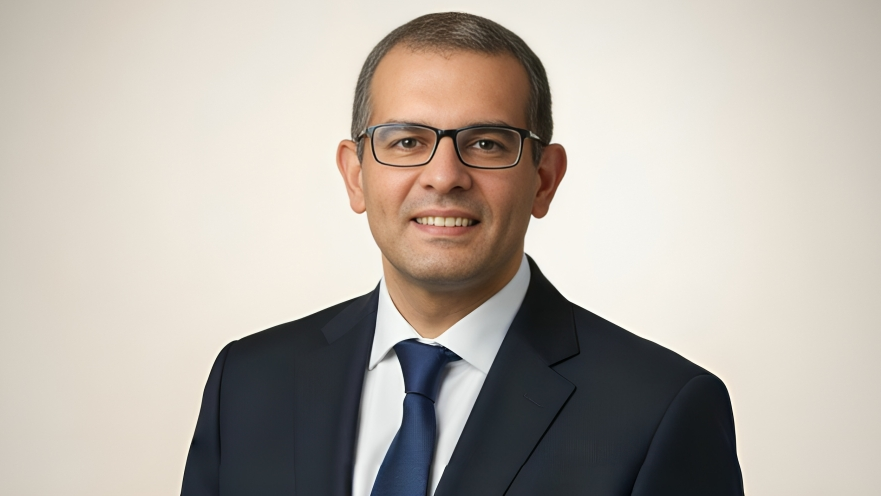
Ahmed Nasreldein: Women and Men Experience Stroke Differently
Ahmed Nasreldein, Professor of Neurology at Assiut University, shared on LinkedIn:
”Happy to share that the International Journal of Stroke has just published the World Stroke Organization Scientific Statement on sex and gender differences in stroke risk and management. This statement makes it very clear: women and men do not experience stroke the same way in risk, recognition, access to acute treatment, or recovery and health systems need to respond to that reality. It’s a global call to deliver more equitable stroke care. I am truly proud to be among the distinguished group of coauthors.”
Title: Addressing sex and gender differences in stroke risk and management: A Scientific Statement from the World Stroke Organization
Authors: Cheryl Carcel, Else Charlotte Sandset, Mariam Ali, Maria Ignacia Allende Echanez, Maria Giulia Mosconi, Ana Claudia de Souza, Lachlan Lee Dalli, Paula Venturelli, Yuki Sakamoto, Ahmed Nasreldein, Amy Ying Xin Yu, Silke Walter, Natasha A. Lannin, Avril Drummond, Valeria Caso, Suvarna Alladi, Cheryl D Bushnell, Mathew J. Reeves, Seana Gall
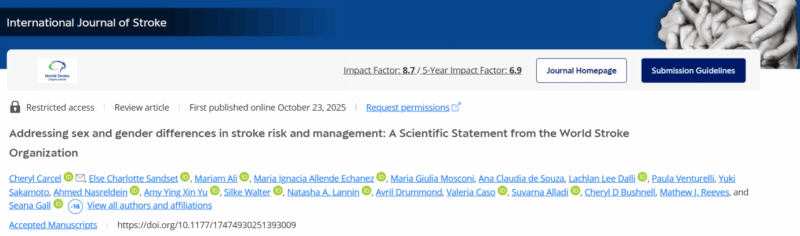
Read full article here.
Stay updated with Hemostasis Today.
-
Oct 3, 2026, 14:26Björn Mulder: Differentiating PRP Formulations and Cell Counts in Knee and Ankle OA
-
Oct 3, 2026, 14:25Jorge Enrique: Personalised Strategies for Thrombosis Management in Cancer-Associated Cases
-
Oct 3, 2026, 14:20James Fildes: A New Way To Study Device Thrombogenicity
-
Oct 3, 2026, 14:07Roberto Pecoits-Filho: The Future Of Integrated Cardiovascular-Kidney-Metabolic Care
-
Oct 3, 2026, 14:04Denis Oduor: Building Community Partnerships to Guarantee Safe Blood Transfusion Access
-
Oct 3, 2026, 13:55Sex Differences In Secondary Stroke Prevention – European Stroke Organisation
-
Oct 3, 2026, 13:16Highlights and Care Insights from Day 1 at EHC 2026 – European Haemophilia Consortium
-
Oct 3, 2026, 12:11Adam Urato: Understanding SSRI Impacts on Maternal and Fetal Serotonin Levels
-
Oct 3, 2026, 12:02Cedric Hermans: How Should We Define Success in Haemophilia Care beyond Bleeding Rates?