

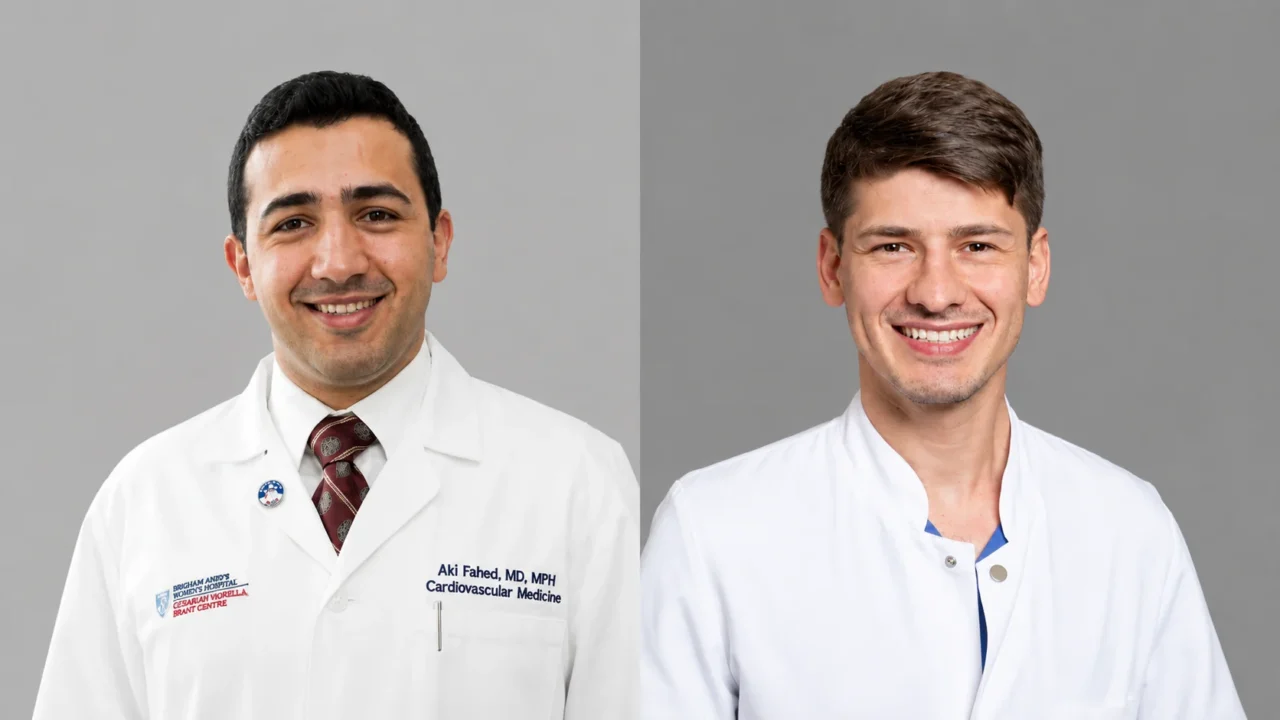
Akl Fahed: Do Lifelong Differences in LDL Cholesterol Influence the Risk of Venous Thromboembolism?
Akl Fahed, Interventional Cardiologist and Physician-Scientist at Massachusetts General Hosptal, shared a post on LinkedIn about a recent article he and his colleagues co-authored, published in JACC, adding:
“Excited to share our new study presented today at European Society of Cardiology ESC 2026 in Munich and simultaneously published in JACC Journals
Do lifelong differences in LDL cholesterol influence the risk of venous thromboembolism (VTE)?
Prior clinical studies have suggested that lipid-lowering therapies may modestly reduce VTE. But whether this benefit is actually mediated by lowering LDL-C, or by other effects of these therapies, has remained unclear.
We used human genetics as a natural experiment, analyzing sequencing data from more than 700,000 participants in UK Biobank and All of Us.
We examined rare functional variants in LDLR, APOB, and PCSK9 that produce remarkably large, lifelong differences in LDL-C, up to approximately 50 percent.
Despite these profound differences in lifelong LDL-C exposure, we found no consistent association with VTE risk across genes, cohorts, or sensitivity analyses.
Additional common-variant and Mendelian randomization analyses suggest that previously reported associations between LDL-C and VTE may partly reflect obesity and broader metabolic pathways, rather than LDL-C itself.
Take-home: LDL-C itself is unlikely to be a major causal determinant of VTE.
If lipid-lowering therapies reduce VTE, the benefit may involve LDL-independent metabolic, inflammatory, endothelial, or antithrombotic mechanisms, an important distinction for understanding how these therapies work and for identifying future targets for VTE prevention.”
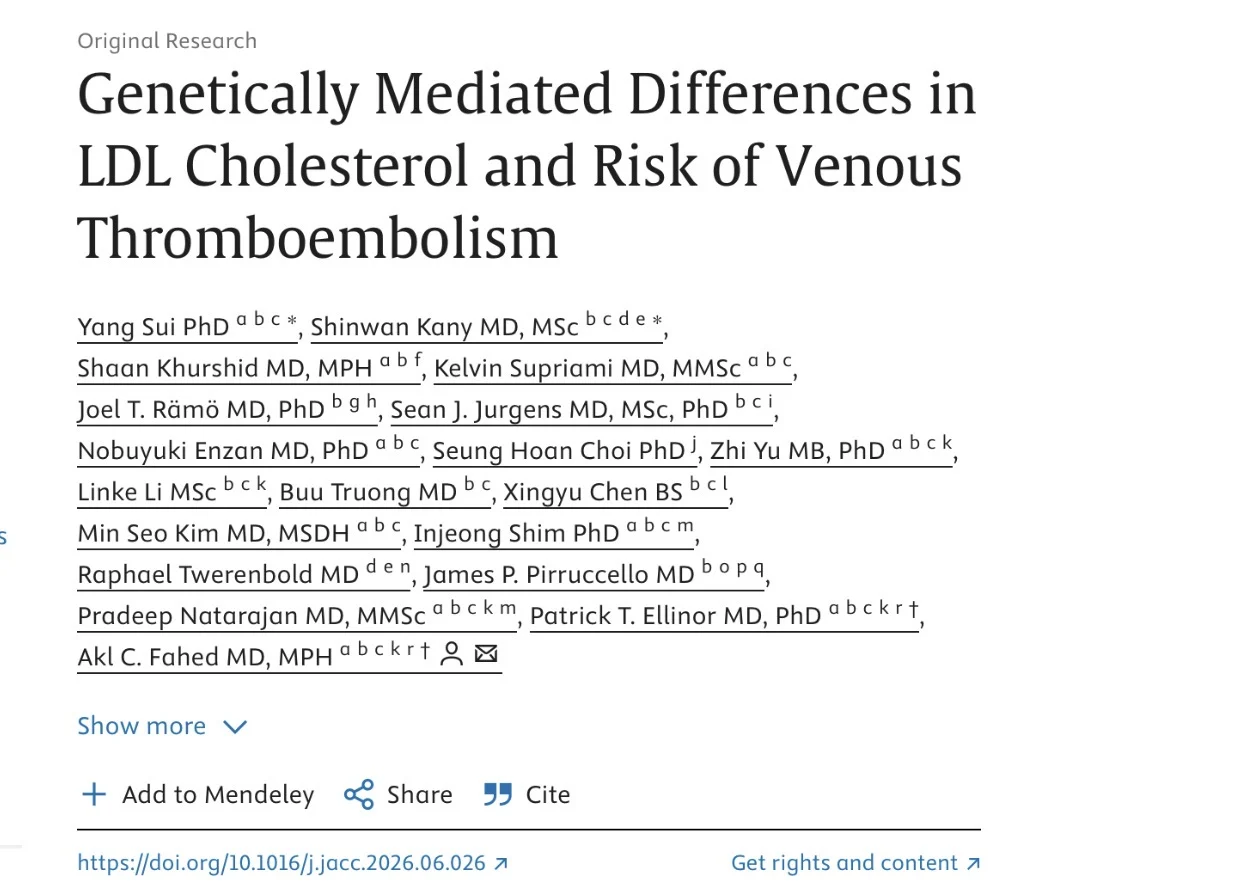
Title: Genetically Mediated Differences in LDL Cholesterol and Risk of Venous Thromboembolism
Authors: Yang Sui, Shinwan Kany, Shaan Khurshid, Kelvin Supriami, Joel T. Rämö, Sean J. Jurgens, Nobuyuki Enzan, Seung Hoan, Zhi Yu, Linke Li, Buu Truong, Xingyu Chen, Min Seo Kim, Injeong Shim, Raphael Twerenbold, James P. Piruccello, Pradeep Natarajan, Patrick T. Ellinor, Akl C. Fahed
Stay updated on all scientific advances with Hemostasis Today.
-
Oct 21, 2026, 00:58Anees Ur Rahman: Completing a Two-Week Clinical Rotation at Haemophilia Treatment Centre Rawalpindi
-
Oct 21, 2026, 00:56Caitlyn Mooney: Pulmonary Embolism in Athletes, Recognition and Return to Sport
-
Oct 21, 2026, 00:54Hani Karrar: Pleased to Share Our Review on Emicizumab in Hemophilia A Management
-
Oct 21, 2026, 00:53Akshay Sharma: HSCT Leads to Sustained Improvements in Sickle Cell Cardiomyopathy for Up to 3 Years
-
Oct 21, 2026, 00:51Prateek Meena: The F. A. T. R. N. Mnemonic for Recognizing TTP
-
Oct 20, 2026, 23:51Registration Is Open for WFH CCS 2027 – World Federation of Hemophilia
-
Oct 20, 2026, 23:44Edward Lee Carter: AF in Nursing Homes – When Stroke Risk Scores Tell Only Part of the Story
-
Oct 20, 2026, 22:59Building Effective Patient Advocacy Through Collaboration Between Patients and Clinicians – EHC
-
Oct 20, 2026, 21:22Intezar Mehdi: When Prolonged Bleeding May Indicate an Underlying Bleeding Disorder