

Obesity, ASCVD and PCSK9 Inhibition: What FOURIER Really Shows
Pablo Corral, Pharmacology Professor at FASTA University, Past President of Argentine Lipid Society, shared on LinkedIn:
”Obesity, ASCVD and PCSK9 Inhibition: What FOURIER Really Shows
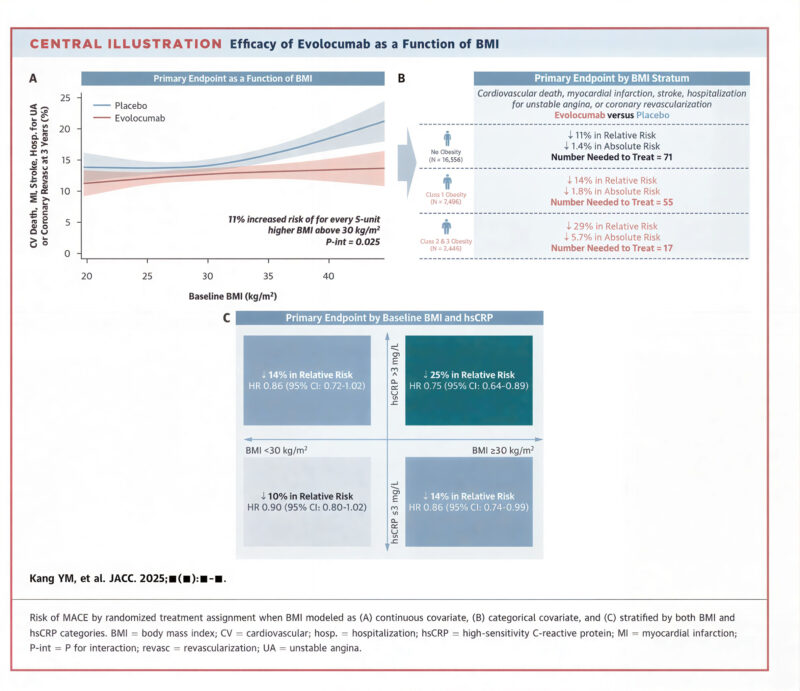
Obesity = higher cardiovascular risk. In the placebo arm, every +5 BMI units above 30 kg/m² increased MACE risk by 11%.
Benefit of evolocumab grows as BMI increases.
•BMI <30: 11% RRR, ARR 1.4%
•BMI 30–34.9: 14% RRR, ARR 1.8%
•BMI ≥35: 29% RRR, ARR 5.7%, NNT = 17 at 3 years
LDL-C lowering remains equally powerful across all BMI categories (≈–56% to –61%). Obesity didn’t blunt the lipid response.
Inflammation amplifies risk. Highest MACE rates occurred in patients with both obesity and elevated hsCRP (>3 mg/L) – and this group also derived the largest benefit from evolocumab.
Key insight: Obesity appears to create an “atherogenic + inflammatory” residual-risk phenotype that is highly modifiable with intensive LDL-C lowering.
Clinical message: For ASCVD patients with obesity – particularly those with class 2–3 obesity or high hsCRP – PCSK9 inhibition is not optional; it’s essential.
Open access.”
Title: Obesity-Associated Cardiovascular Risk and Benefit From PCSK9 Inhibition: A Prespecified Analysis From FOURIER
Authors: Yu Mi Kang, Robert P. Giugliano, Anthony C. Keech, J. Antonio G. López, Maria Laura Monsalvo, E. Magnus Ohman, Xinhui Ran, Sabina A. Murphy, Marc S. Sabatine, and Michelle L. O’Donoghue
Stay updated with Hemostasis today.
-
Sep 18, 2026, 11:10R. Stephani Hellwege: Beyond LVEF Echocardiographic Assessment of Undifferentiated Shock
-
Sep 18, 2026, 06:48Gopal Patidar: Honoured to Contribute to the ASFA 2026 Guidelines for Therapeutic Apheresis
-
Sep 18, 2026, 05:48Julie Taylor: Navigating Tech Glitches to Deliver Engaging BBTS Presentation
-
Sep 18, 2026, 05:42Emma Copperwaite: BBTS Conference Presentation Highlights Power of Peer Support and Pushing Past Fear
-
Sep 18, 2026, 05:34Suhasini Sil: RGSSH Joins Mega Blood Donation Camp at Thyagaraj Stadium
-
Sep 18, 2026, 05:25Lisa Laun: Spleen Clears Activated Platelets to Limit Thrombosis and Inflammation
-
Sep 18, 2026, 05:16Louise St. Germain Bannon: ISTH Advocates for Enhanced Patient Safety in Blood Disorder Care
-
Sep 18, 2026, 05:08Vikas Veer: Exploring Sickle Cell Anemia at the Molecular Level
-
Sep 18, 2026, 01:35Matthew Hazell: From Platelet Refractoriness to Protecting Transplanted Organs