


Eleftherios Mylonakis: Earlier Intervention, Better Risk Stratification, Stronger BP Control
Eleftherios Mylonakis, Chair of Medicine at Houston Methodist Hospital, shared a post on LinkedIn about a recent article by Daniel W. Jones et al., published in JACC journals, adding:
“Cardiovascular risk reduction is evolving and the AHA/ACC Hypertension Guidline.
The new guideline retains the familiar BP classification framework but introduces several important changes that will influence everyday primary care practice.
Key takeaways:
- The treatment goal remains less than 130/80 mm Hg for most adults, with growing support for targeting SBP less than 120 mm Hg when feasible and well tolerated.
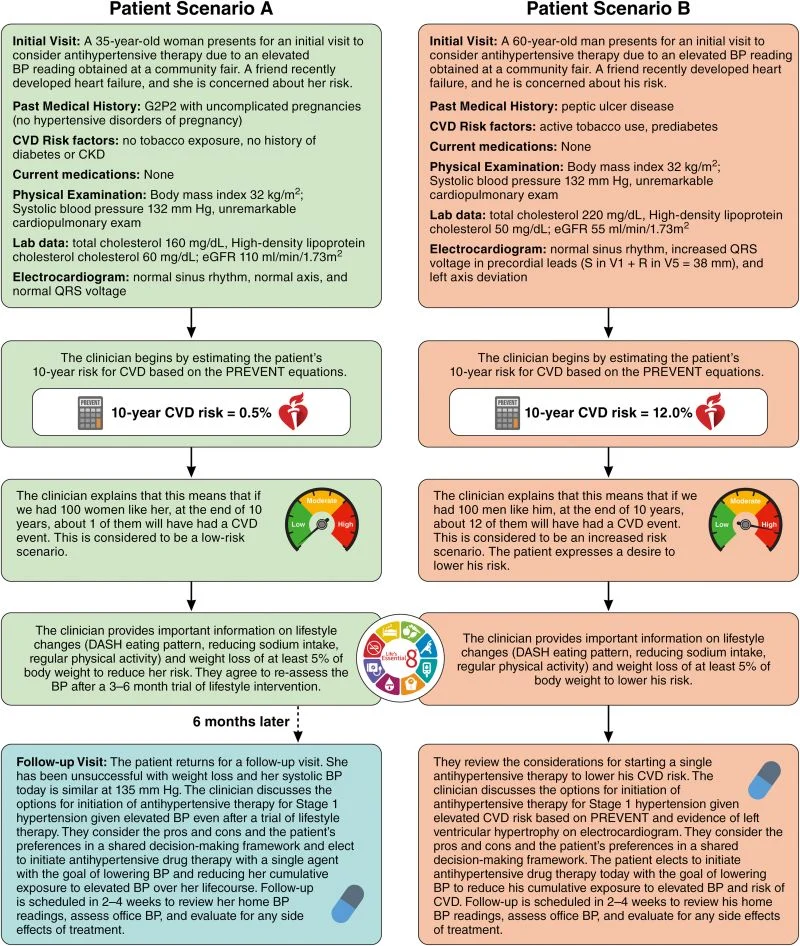
- Risk assessment now uses the prevent calculator rather than the Pooled Cohort Equations.
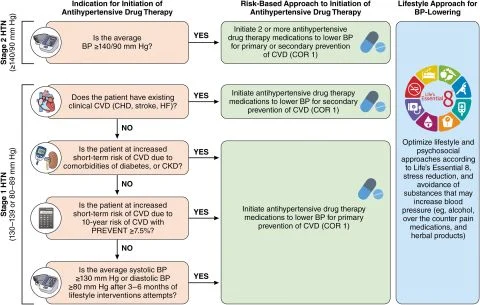
- Medication initiation for stage 1 hypertension is guided by a 10-year cardiovascular risk equal to or more than 7.5%, incorporating heart failure risk in addition to ASCVD.
- Adults with BP equal to or more than 140/90 mm Hg should receive antihypertensive therapy regardless of estimated cardiovascular risk.
- For patients with BP equal to or more than 130/80 mm Hg and diabetes, CKD, established CVD, or prevent risk equal to or more than 7.5%, pharmacologic therapy is recommended.
- For lower-risk stage 1 hypertension, clinicians should begin with 3-6 months of intensive lifestyle intervention, but medications should be added if BP remains equal to or more than 130/80 mm Hg.
- Out-of-office BP measurement moves center stage. Home BP monitoring and ambulatory BP monitoring are strongly recommended to confirm diagnosis and guide treatment.
- Lifestyle interventions receive greater emphasis, including weight reduction, sodium restriction, DASH-style nutrition, regular exercise, potassium-based salt substitutes when appropriate, stress reduction techniques and alcohol abstinence as the optimal goal.
- For stage 2 hypertension, initial treatment with a single pill combination containing two first-line agents is now preferred to improve adherence and accelerate BP control.
- Resistant hypertension should prompt evaluation for obstructive sleep apnea and consideration of spironolactone as a fourth-line agent.
- The guideline places a stronger focus on health equity, social determinants of health, team-based care and community engagement as essential components of BP control.
Take home
- The guideline emphasizes earlier identification of elevated cardiovascular risk, greater use of out-of-office BP assessment, risk-based treatment decisions, and more intensive BP control when appropriate.
- The focus is shifting from treating blood pressure in isolation to a comprehensive strategy aimed at reducing overall cardiovascular, cerebrovascular, renal, and heart failure risk.”
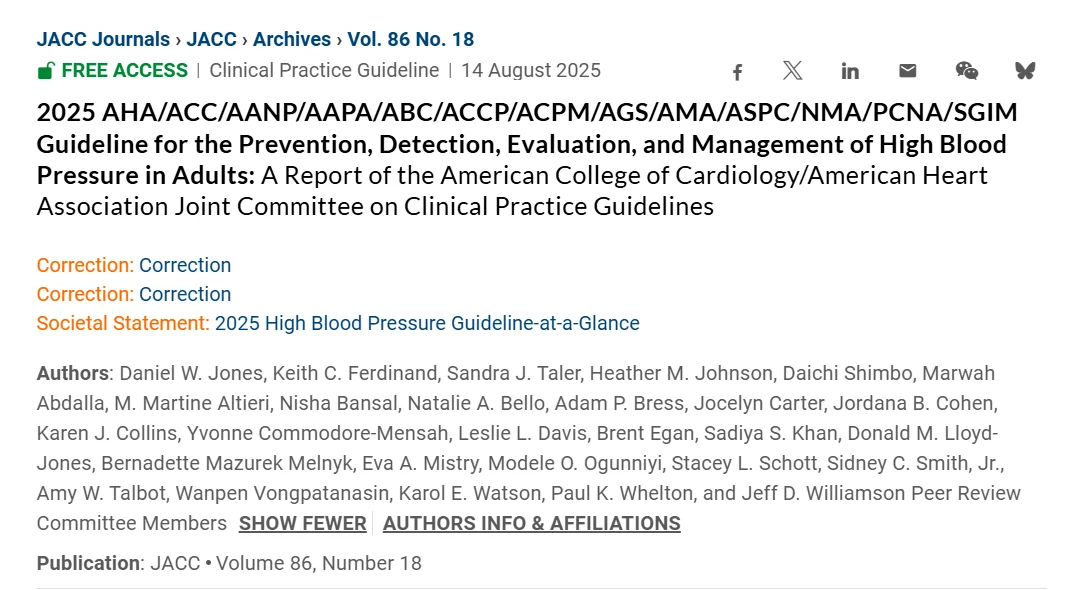
Title: Guideline for the Prevention, Detection, Evaluation, and Management of High Blood Pressure in Adults: A Report of the American College of Cardiology and American Heart Association Joint Committee on Clinical Practice Guidelines
Authors: Daniel W. Jones, Keith C. Ferdinand, Sandra J. Taler, Heather M. Johnson, Daichi Shimbo, Marwah Abdalla, M. Martine Altieri, Nisha Bansal, Natalie A. Bello, Adam P. Bress, Jocelyn Carter, Jordana B. Cohen, Karen J. Collins, Yvonne Commodore-Mensah, Leslie L. Davis, Brent Egan, Sadiya S. Khan, Donald M. Lloyd-Jones, Bernadette Mazurek Melnyk, Eva A. Mistry, Modele O. Ogunniyi, Stacey L. Schott, Sidney C. Smith, Jr., Amy W. Talbot, Wanpen Vongpatanasin, Karol E. Watson, Paul K. Whelton, Jeff D. Williamson, Peer Review Committee Members
Stay updated with Hemostasis Today.
-
Oct 9, 2026, 11:06Nobles Green: How siRNA Therapy Helps the Body Form Stronger Clots
-
Oct 9, 2026, 10:53Switching From Emicizumab to Denecimig in Hemophilia A – Rare Disease Advisor
-
Oct 9, 2026, 10:40What New U.S. Data Reveal About GT – Glanzmann’s Research Foundation
-
Oct 9, 2026, 10:32Anjali Pandey: The Morphologic Clues to MDS With del(5q)
-
Oct 9, 2026, 10:13Reza Shojaei: 5 Leadership Responsibilities for a Sustainable Plasma Ecosystem
-
Oct 9, 2026, 08:38Johannes Gratz: Perioperative Care in Factor VII Deficiency – Treating the Patient, Not the Number
-
Oct 9, 2026, 08:28Ghanim Fajish: Vascular Cells May Retain a Prothrombotic Memory of Oxidative Stress
-
Oct 9, 2026, 07:43Mehmet Cilingiroglu: The First Diagnosis of Coronary Thrombosis in a Living Patient
-
Oct 9, 2026, 07:21Federico Ravaioli: 40 kPa Spleen Stiffness May Help Avoid Endoscopy in Chronic PVT