


Joseph R. Shaw: Thrombin Generation as a Pharmacodynamic Framework for Anticoagulant Therapy
Joseph R. Shaw, Director of Research+ Program at Ottawa Department of Medicine, EHJ-CVP Associate Editor at European Heart Journal, shared on LinkedIn about a recent article he and his colleagues co-authored, published in Pharmacological Reviews, adding:
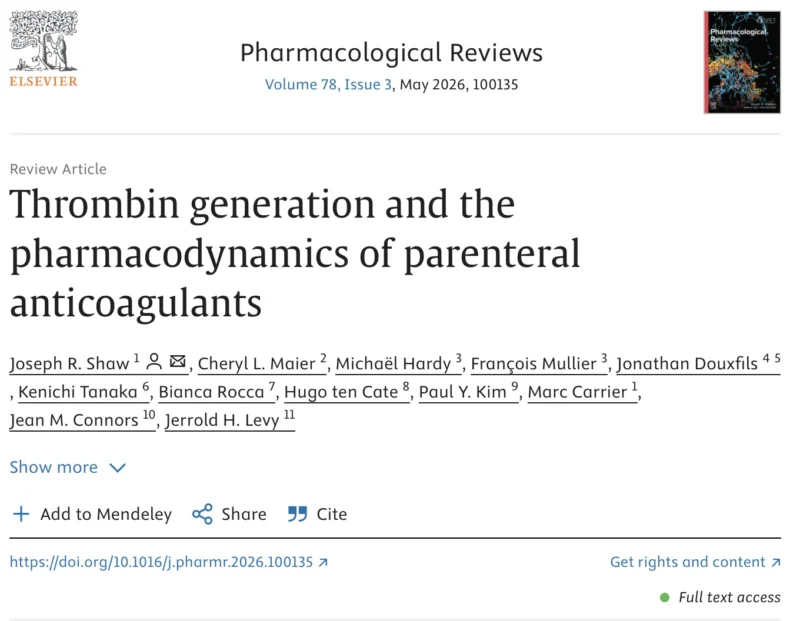
”I’m pleased to share that our review, ‘Thrombin Generation and the Pharmacodynamics of Parenteral Anticoagulants’, is now published in Pharmacological Reviews.
It is a privilege to contribute this work to a leading journal with a strong tradition in mechanistic pharmacology.
Our findings underscore that parenteral anticoagulants influence thrombin generation and suggest that their effects are more class-specific than clinicians often appreciate.
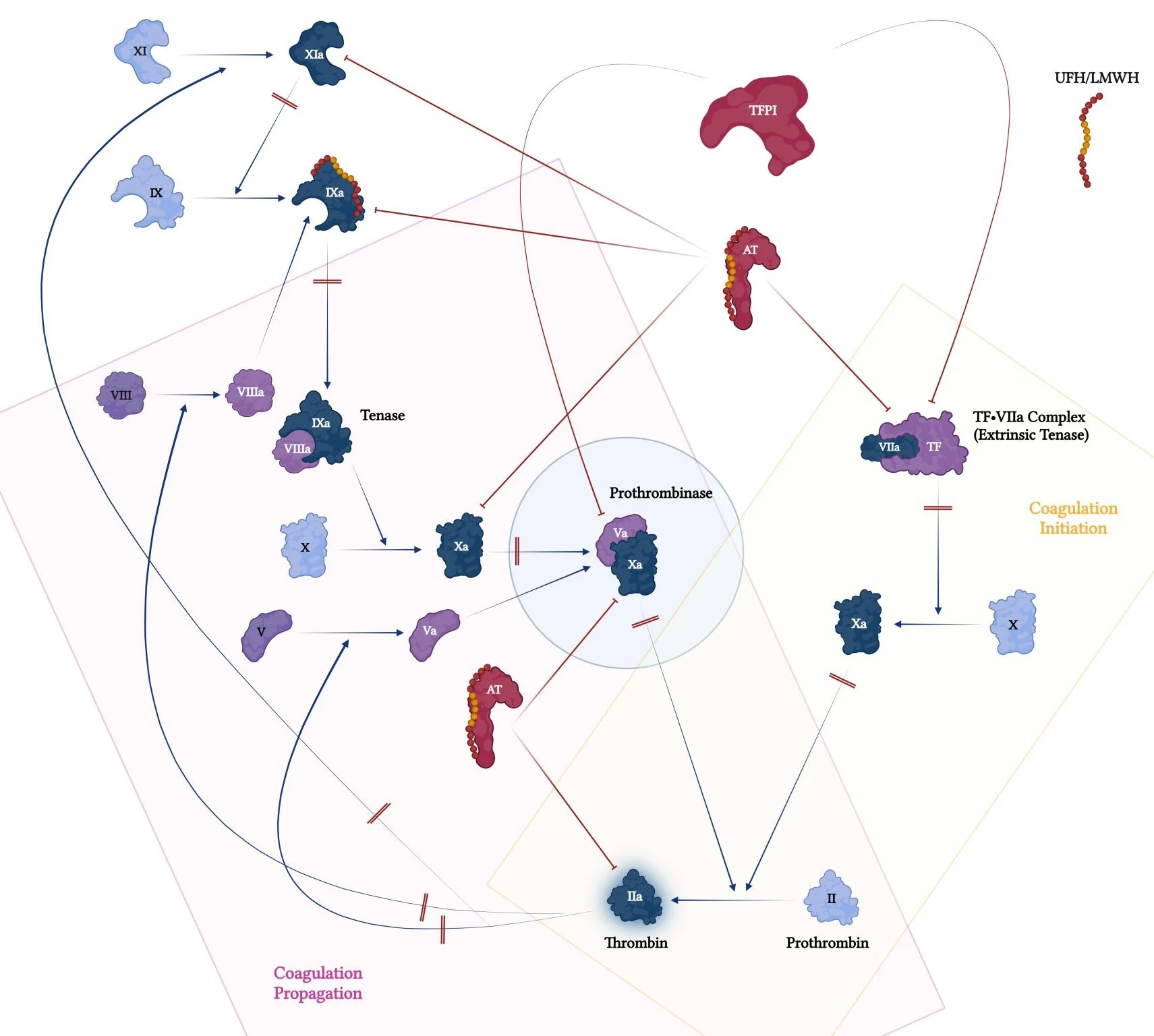
Unfractionated heparin, low-molecular-weight heparins (LMWHs), fondaparinux, and parenteral direct thrombin inhibitors (DTIs; e.g., argatroban, bivalirudin) don’t simply produce interchangeable forms of ‘anticoagulation.’
They vary in their influence on coagulation initiation, amplification, and propagation, which may help explain why some agents are more effective than others in particular high-risk scenarios.
This framework also has broader implications for how we think about anticoagulants across classes.
For example, more complete suppression of thrombin generation by warfarin or heparin-based strategies may help explain why these agents remain preferred, or appear more effective, in settings such as mechanical heart valves, antiphospholipid syndrome, catheter-associated thrombosis, or breakthrough thrombosis.
By contrast, more selective inhibitors may offer greater pharmacodynamic consistency and relative preservation of endogenous thrombin potential, supporting their safety and effectiveness in many average-risk patients, while potentially making them more prone to failure under highly prothrombotic conditions – for example, ‘breakthrough’ stroke or thromboembolism.
Our aim is not to replace clinical outcome data but to provide a mechanistic complement that aids in its interpretation.
Thrombin generation offers a common pharmacodynamic framework for comparing anticoagulants, contextualizing epidemiologic and probabilistic signals, and understanding why clinical outcomes may diverge across drug classes and patient populations.
We hope this work helps build a stronger foundation for future research in comparative anticoagulation pharmacology – integrating mechanistic understanding with clinical evidence to facilitate more personalized anticoagulation decisions.”
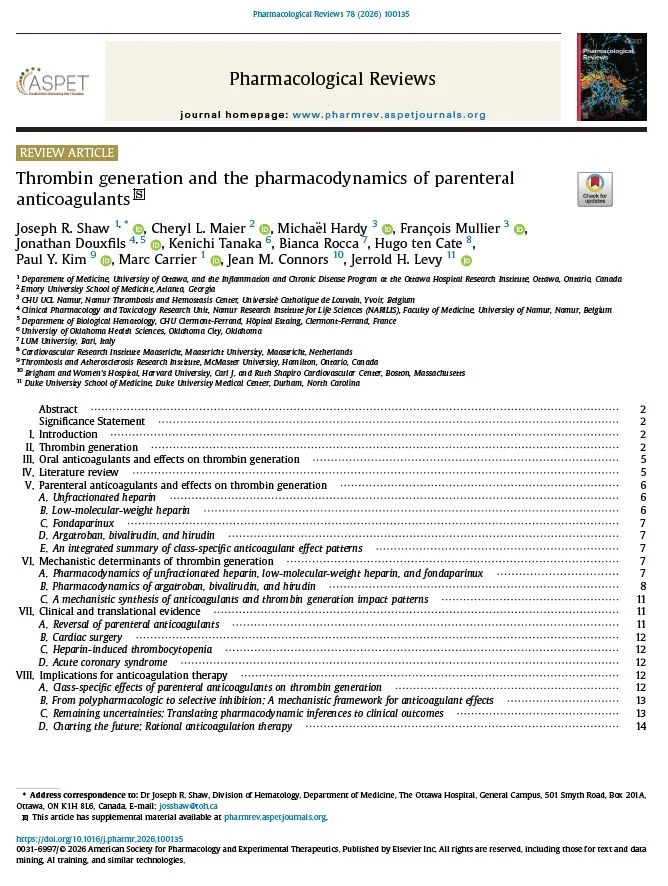
Title: Thrombin generation and the pharmacodynamics of parenteral anticoagulants
Authors: Joseph R. Shaw, Cheryl L. Maier, Michaël Hardy, François Mullier, Jonathan Douxfils, Kenichi Tanaka, Bianca Rocca, Hugo ten Cate, Paul Y. Kim, Marc Carrier, Jean M. Connors, Jerrold H. Levy
Stay updated on all scientific advances with Hemostasis Today.
-
Oct 9, 2026, 13:55Chandler Purser: AABB 2026 Focuses on Transfusion Safety and Audit-Driven Practice Improvement
-
Oct 9, 2026, 13:48Maxime Dely: Raising Awareness for Blood Donation
-
Oct 9, 2026, 13:48Vera Ghali: Anemia in Myelofibrosis and Its Impact on Treatment Outcomes and Overall Survival
-
Oct 9, 2026, 13:32W David Freeman։ The Mechanical Penumbra in Intracerebral Hemorrhage and Its Potential for Tissue Recovery
-
Oct 9, 2026, 13:11Ayshathul Noora։ Carbetocin vs Oxytocin in Preventing Postpartum Hemorrhage
-
Oct 9, 2026, 13:07The Rebalanced Patient: New Therapies and New Thrombotic Risks in Hemophilia
-
Oct 9, 2026, 12:48Santiago Cepeda Chafla: CereBleed Simplifies Brain Hemorrhage Assessment
-
Oct 9, 2026, 12:34Abdul Muqtadir Abbasi: Pancytopenia Is a Finding, Not a Diagnosis
-
Oct 9, 2026, 12:24Mercy Lung’aho: When Diet Quality and Nutritional Biomarkers Tell Different Stories