


Seema Dawood: Morphologic Differences Between Platelet Types
Seema Dawood, Medical Laboratory Technologist at The Aga Khan University Hospital, shared a post on LinkedIn:
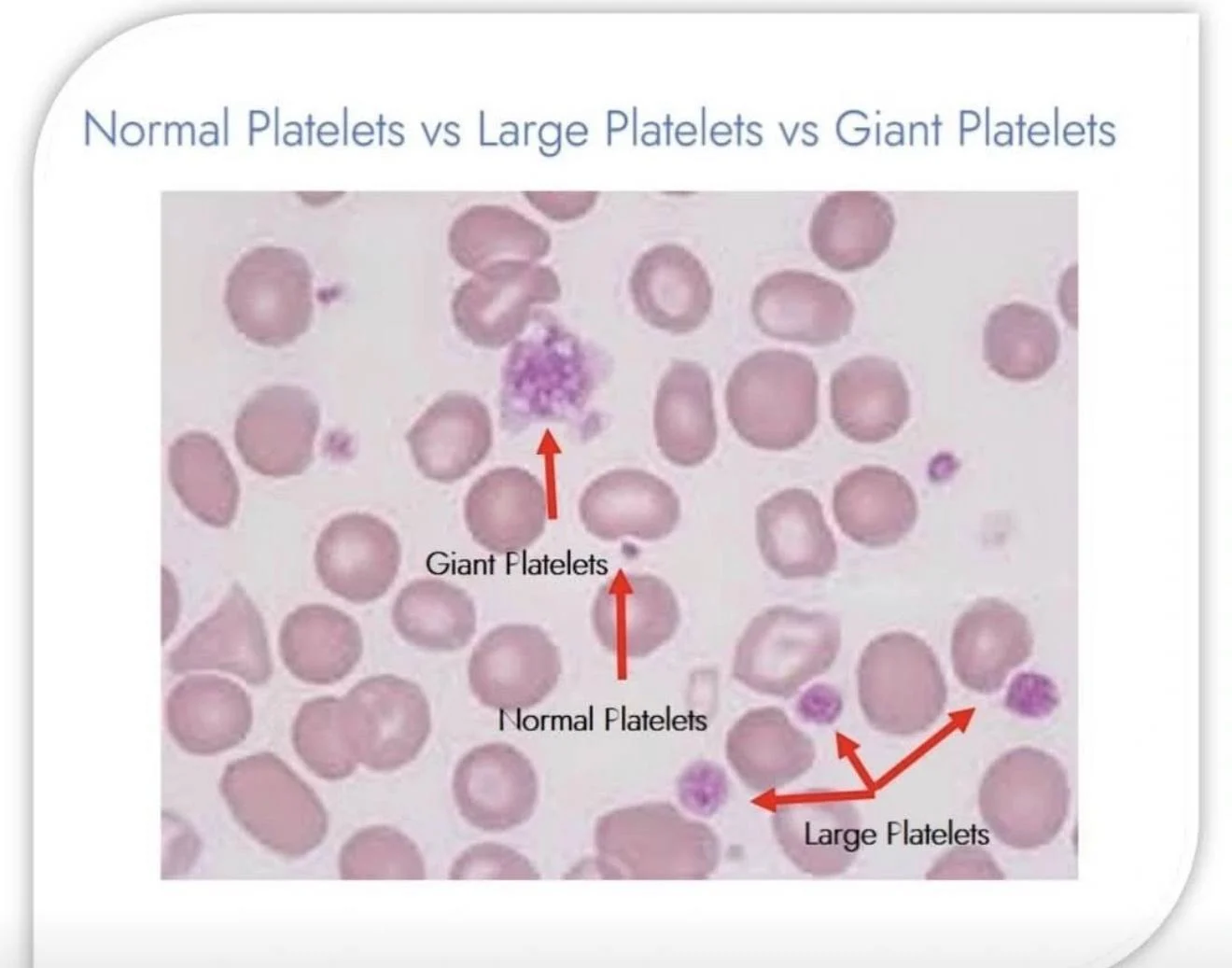
”Differences Between Normal Platelets, Large Platelets, and Giant Platelets
Platelets are essential components of blood that play a major role in blood clotting and hemostasis.
They can appear in various sizes and morphologic forms, as described below:
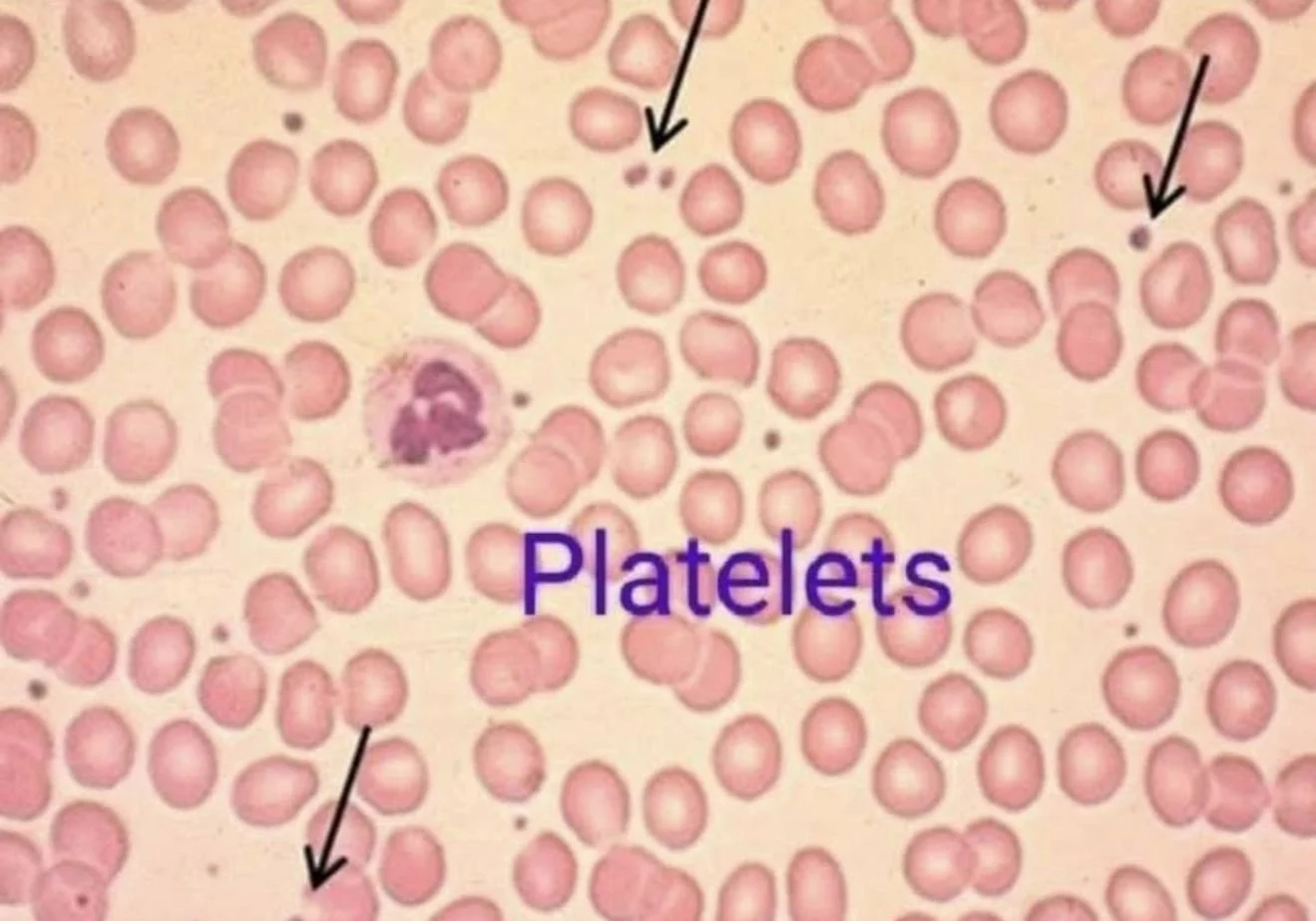
Normal Platelets
- Normal platelets are small, measuring approximately 2–3 micrometers in diameter.
- They are clearly smaller than red blood cells (RBCs).
- Morphologically, they are usually round to oval with evenly distributed purple granules within the cytoplasm.
- The presence of platelets with normal size and adequate numbers generally reflects balanced platelet production and normal bone marrow function.
Large Platelets
- Large platelets are bigger than normal platelets but are generally still smaller than red blood cells.
- They are commonly seen in conditions associated with increased platelet production, such as excessive platelet destruction in Immune Thrombocytopenia (ITP) or during recovery after blood loss.
- These platelets are often referred to as ‘young platelets’ because newly released platelets from the bone marrow tend to be larger and contain more prominent granules.
- Therefore, the presence of large platelets usually indicates an active and appropriate bone marrow response to platelet loss.
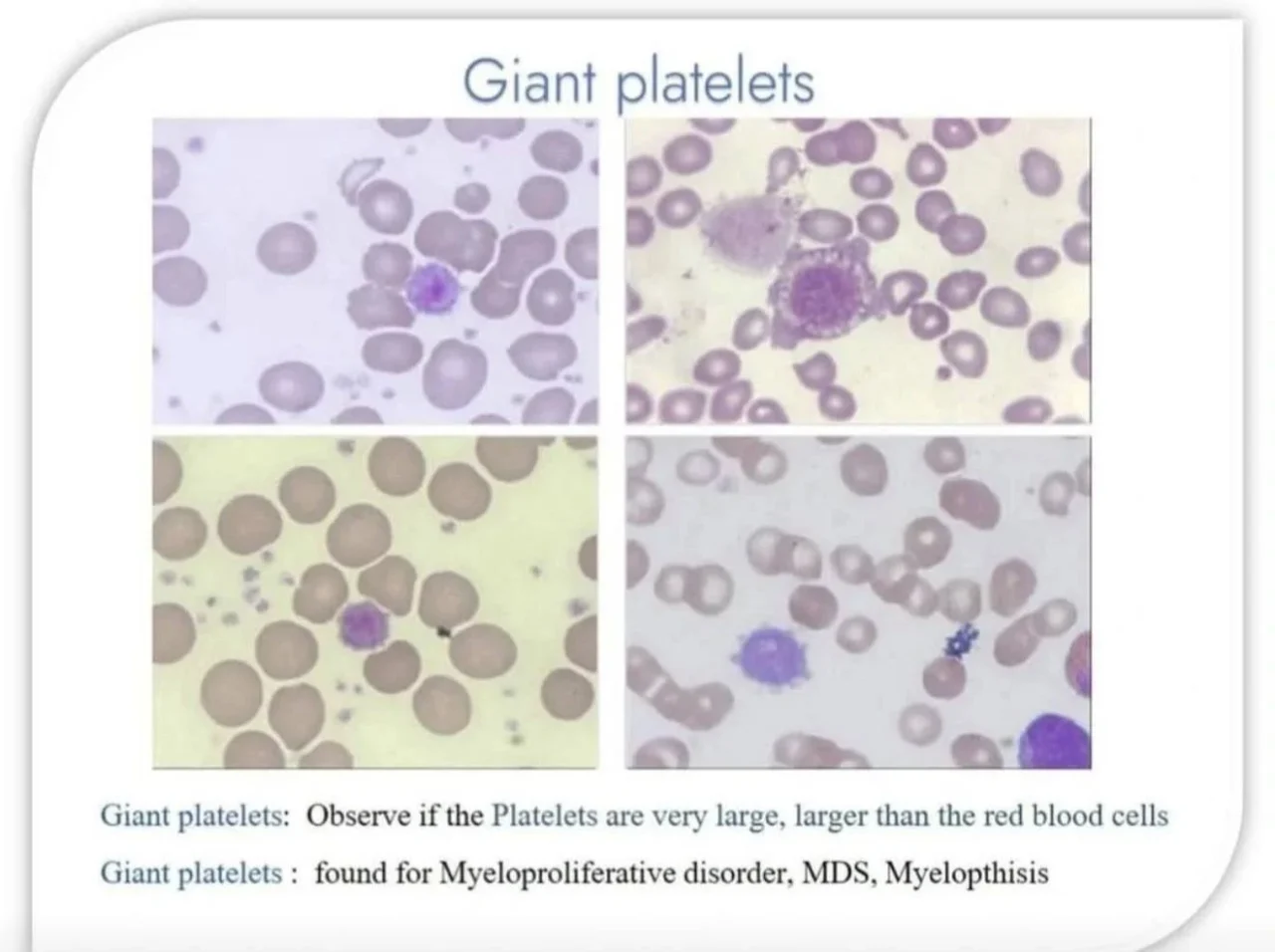
Giant Platelets
- Giant platelets are extremely large platelets that may approach or even exceed the size of red blood cells.
- They are considered clinically significant abnormalities and are often associated with inherited platelet disorders or abnormalities in megakaryocyte maturation.
Conditions associated with giant platelets include:
- Bernard–Soulier Syndrome
- May–Hegglin Anomaly
- Gray Platelet Syndrome
- Myeloproliferative disorders
- Severe platelet destruction or abnormal platelet production states
Laboratory Significance
The presence of large or giant platelets is highly important in hematology because automated hematology analyzers may mistakenly classify these oversized platelets as red blood cells. This can result in falsely low platelet counts or pseudothrombocytopenia.
Therefore, peripheral blood smear examination under the microscope remains essential for accurate platelet morphology assessment.
Summary
- Normal Platelets – Small, uniform in size, and clearly smaller than RBCs
- Large Platelets – Larger than normal, usually associated with increased platelet production
- Giant Platelets – Extremely large platelets, commonly associated with hematologic and inherited platelet disorders.”
Stay updated with Hemostasis Today.
-
Sep 28, 2026, 03:59Rahul Saha: JAMA The 49th Human Blood Group System
-
Sep 28, 2026, 01:51Ann Mullally: Expect to See Lots More Gene Therapy in Medicine in the Years Ahead
-
Sep 27, 2026, 15:49Rana Al-Hrout: Iron Deficency – Is Ferritin 15ng/mL or Less Still the Cutoff?
-
Sep 27, 2026, 15:49Ayushi Sharma: What I Thought Transfusion Medicine Would Be vs What It Actually Is
-
Sep 27, 2026, 15:48William Wallace: How Much Human Research Is Behind the Supplements We Take?
-
Sep 27, 2026, 15:46Franck Perraudin: Lp(a) Lowering Alone May Not Be Enough
-
Sep 27, 2026, 15:41Ahmed Hamandi: Sharing Real-World HSCT Experience at the Iraqi Society of Haematology Conference
-
Sep 27, 2026, 15:39Co-creating Digital Support With Young Stroke Survivors – European Stroke Organisation
-
Sep 27, 2026, 15:39Eleri Schiavone: Celebrating 80 Years of the Welsh Blood Service