


Tessa Jaspers and Colleagues on Current Evidence Not Supporting Routine Anti-Xa Monitoring in Use of LMWH
Journal of Thrombosis and Haemostasis (JTH) shared on LinkedIn:
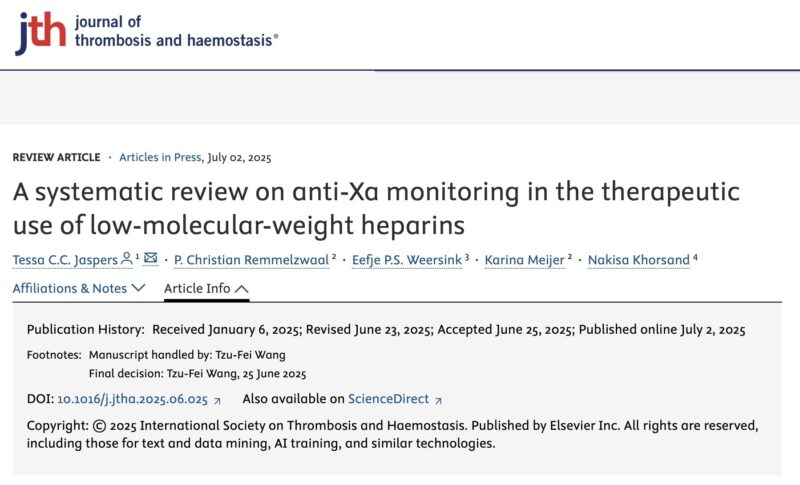
”A systematic review on anti-Xa monitoring in the therapeutic use of low-molecular-weight heparins
LMWHs are widely used in diverse patient groups (renal impairment, pregnancy, obesity), but the value of anti-Xa monitoring remains unclear.
This systematic review of 48 studies (RCTs and observational) found:
- Comparable bleeding and VTE rates in monitored vs. unmonitored patients.
- Frequent dose adjustments in monitored cohorts.
- Weak or absent correlation between anti-Xa levels and clinical outcomes.
Current evidence does not support routine anti-Xa monitoring for LMWH dose adjustment.”
Read the full paper in JTH.
Article: A systematic review on anti-Xa monitoring in the therapeutic use of low-molecular-weight heparins
Authors: Tessa C. C. Jaspers, P. Christian Remmelzwaal, Eefje P.S. Weersink, Karina Meijer, Nakisa Khorsand
Stay updated on all science in the field of anticoagulation with Hemostasis Today.
-
Oct 17, 2026, 09:33Robert Lookstein: Mechanical Thrombectomy Shows Functional Benefits in Intermediate-High-Risk PE
-
Oct 17, 2026, 09:18Sarra Hmidi: Tunisia Highlights Thrombosis Prevention on World Thrombosis Day
-
Oct 17, 2026, 09:05Addressing the Hidden Burden of Bleeding Disorders in Women – Hemophilia Society Mumbai Chapter
-
Oct 17, 2026, 08:49Maria Magnusson: Karolinska Experts Explore Gene Therapy in Sickle Cell Disease and Hemophilia
-
Oct 17, 2026, 04:07Weihao Li: Global HEPATIC Registry Findings on Post-Transplant Arterial Thrombosis
-
Oct 17, 2026, 03:56Ghaith Abu-Zeinah: ASH Publishes 2026 Guidelines for Myelofibrosis Management in Blood Advances
-
Oct 17, 2026, 03:48Tristan Siokos: Why Vascular Occlusion Is More Than Just Clots – Breakdown of the 8 Pathways
-
Oct 17, 2026, 02:36Archil Jaliashvili: Oxygen Transport in Capillaries
-
Oct 17, 2026, 02:35Carly Newton: Understanding Access to Red Blood Cell Exchange for People Living With SCD