


Luma Mahairi: AI and Digital Hematology Are Transforming Emergency Laboratory Care in 2026
Luma Mahairi, Clinical Research Coordinator III at DM Clinical Research, shared on LinkedIn about a recent article by Ganna Shestakova et al, published in International Journal of Laboratory Hematology, adding:
”One of the most important changes coming to hematology practice in 2026 is the way laboratories will manage hematologic emergencies faster, earlier, and more proactively through automation, digital hematology, and AI-supported workflows.
We are moving away from a purely reactive model of lab medicine toward real-time risk detection and integrated clinical decision support.
Key changes already emerging include:
- AI-assisted peripheral smear review and blast detection
- Earlier identification of acute leukemia, DIC, sepsis-associated coagulopathies, and thrombotic emergencies
- Automated flagging systems for critical CBC/coagulation abnormalities
- Digital hematopathology platforms that improve turnaround time and diagnostic consistency
- Smarter triaging of STAT specimens and emergency hematology workflows
- Integration of molecular, coagulation, and morphology data into unified laboratory dashboards
- Reduced manual review burden through intelligent automation and image analysis
This is especially important in hematology emergencies, where minutes matter.
Faster recognition of blasts, hemolysis, thrombocytopenia, coagulopathies, hyperleukocytosis, or transfusion-related complications can significantly improve patient outcomes.
The hematology laboratory of 2026 is becoming less of a passive testing center and more of an active clinical intelligence hub supporting emergency decision-making in real time.”
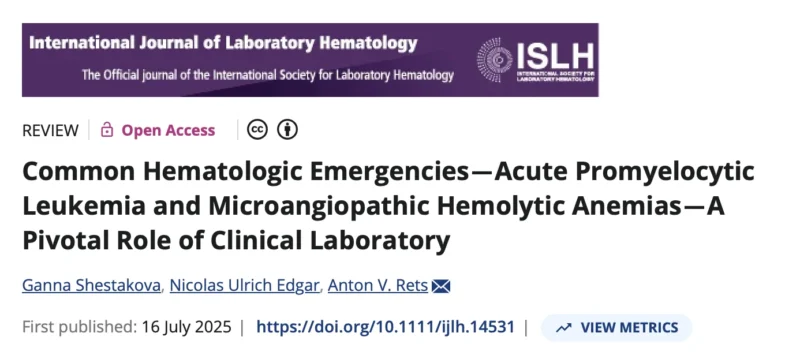
Title: Common Hematologic Emergencies – Acute Promyelocytic Leukemia and Microangiopathic Hemolytic Anemias – A Pivotal Role of Clinical Laboratory
Authors: Ganna Shestakova, Nicolas Ulrich Edgar, Anton V. Rets
Stay updated on all scientific advances with Hemostasis Today.
-
Sep 20, 2026, 09:05World Stroke Academy: Can Adjunct IAT Improve Tissue Reperfusion?
-
Sep 20, 2026, 06:46Neeraj Songara: From Donated Blood to Engineered Therapeutics
-
Sep 20, 2026, 06:24Louise St. Germain Bannon: Improving Awareness and Care for Women Across the Lifespan
-
Sep 20, 2026, 05:17Maxime Dely: When ABO Compatibility Isn’t Enough for Safe Transfusion
-
Sep 20, 2026, 04:54William Aird: What Does a Complete History and Physical Really Mean?
-
Sep 20, 2026, 04:34Hons Saurabh Kaushik: Why Uncontrolled LDL Can Be Harmful
-
Sep 20, 2026, 03:58Salih Ehsan: The Complexities of HbF and HbA2
-
Sep 20, 2026, 03:22The Voices of People Living With Bleeding Disorders – EHC
-
Sep 20, 2026, 01:18Sebastian Mafeld: Has 2026 Changed How We Treat Pulmonary Embolism?