


Marc Wittwer: SEER Sonorheometry in Detecting Hyperfibrinolysis Is Definitely Worth Putting Into Perspective
Marc Wittwer, Director Commercial Operations at APIRO Diagnostics Kft, reposted from HemoSonics on LinkedIn:
”Is this a prudent conclusion?
Definitely worth putting into perspective.”
Quoting HemoSonics‘ post about a recent article by Allen Todd W. et al, published in Blood Coagulation and Fibrinolysis, adding:
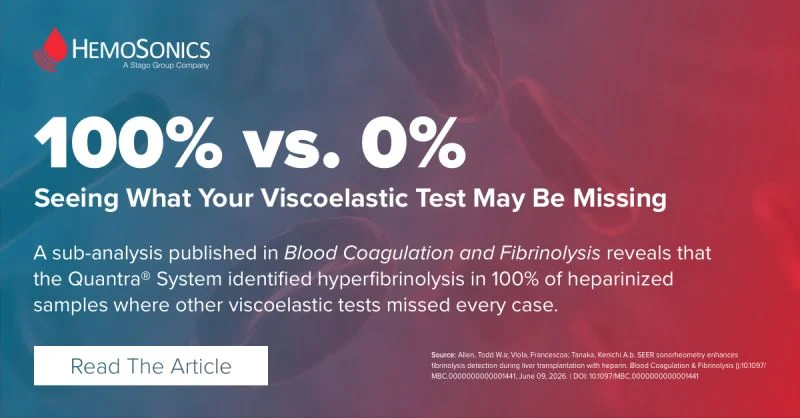
”A recent study published in Blood Coagulation and Fibrinolysis reveals that SEER sonorheometry (the technology utilized in the Quantra System) is more sensitive at detecting hyperfibrinolysis in heparinized liver transplant patient samples.
The key findings include:
- In a sub-analysis of samples containing heparin, the Quantra’s Clot Stability to Lysis (CSL) parameter identified fibrinolysis in every single case (13/13). In contrast, another VET assay missed 100% of those same cases.
- The Quantra system uses reagents that generate less thrombin. Because thrombin activates TAFI (an inhibitor of clot breakdown), lower thrombin levels allow the system to “see” fibrinolysis that other tests might hide.
- By using a dual-channel approach—comparing a sample with an antifibrinolytic to one without—the system provides a clearer picture of whether a patient has fibrinolysis.
This heightened sensitivity supports personalized coagulation strategies, ensuring surgical teams have the accurate, real-time data required to manage hyperfibrinolysis effectively during complex procedures.”
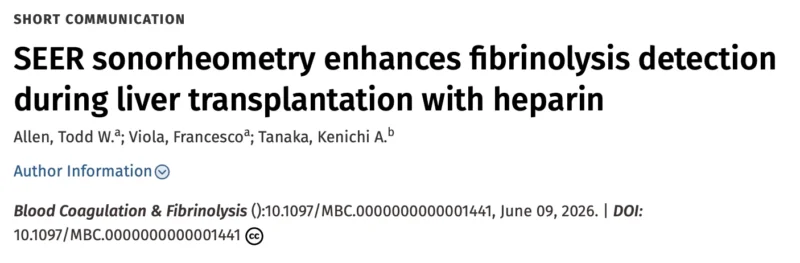
Title: SEER sonorheometry enhances fibrinolysis detection during liver transplantation with heparin
Authors: Allen Todd W., Viola Francesco, Tanaka Kenichi A.
Stay updated on all scientific advances with Hemostasis Today.
-
Sep 29, 2026, 13:12Wolfgang Miesbach: Teclistamab Targets the Source of Pathogenic Autoantibodies
-
Sep 29, 2026, 12:37Dan Milikovsky: Uncovering Cerebrovascular Injury in Sickle Cell Disease
-
Sep 29, 2026, 12:02Hajra Malik: Bridging Language Gaps in Hematology With AI
-
Sep 29, 2026, 11:57Joan Montaner: Can Blood Test Identify Intracerebral Hemorrhage Within Minutes?
-
Sep 29, 2026, 11:43From Years Without Answers to Life With Hemophilia Care – WFH
-
Sep 29, 2026, 11:32Sara Al Dallal: Transforming Hemophilia Care Across the Gulf
-
Sep 29, 2026, 11:21Richard Davis: Rapid Rescue in Massive Pulmonary Embolism
-
Sep 29, 2026, 11:14Nissan Brown: Every Step Counts for the Hemophilia Community
-
Sep 29, 2026, 11:03Zain Khalpey: SINGLE AF Adds New Evidence to the Anticoagulation Debate