


Maria Cherska: Composite Metabolic Markers Could Refine Stroke Prevention
Maria Cherska, The Head of Cardiology Department at The State Institution V.P. Komisarenko Institute of Endocrinology and Metabolism, shared a post on LinkedIn about a recent article by Yueyi He et al, published in Lipids in Health and Desease, adding:
“Can metabolic health markers improve stroke prediction?
Stroke prevention starts long before the first neurological symptom.
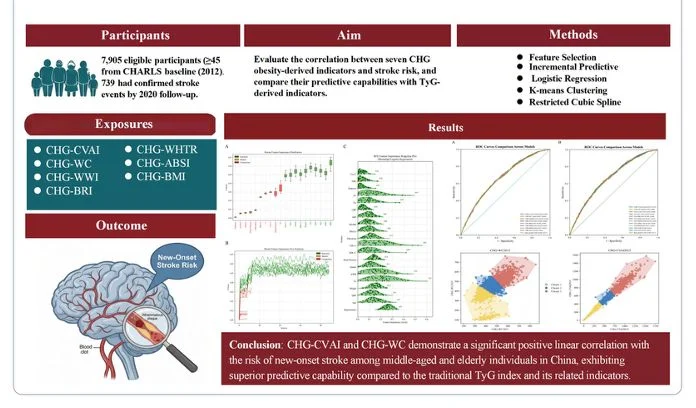
A newly published cohort study in Lipids in Health and Disease evaluated whether combining a novel metabolic index—CHG (cholesterol–HDL–glucose index)—with obesity measures could improve the prediction of future stroke compared with the widely used TyG index.
Key findings:
- 7,905 adults aged greater than or equal to 45 years were followed, with 739 incident stroke events recorded.
- Among seven CHG-derived obesity indices, CHG-CVAI and CHG-WC demonstrated the strongest predictive performance and outperformed TyG-derived indicators.
- Individuals in the highest quartile of CHG-CVAI had more than a 2-fold higher risk of stroke after adjustment for major confounders, and sustained high levels over time were associated with even greater risk.
These findings reinforce an important concept in preventive cardiology: integrating biochemical and anthropometric markers may identify high-risk individuals earlier than traditional metabolic indices alone.
As cardiovascular prevention evolves, composite metabolic markers could become valuable tools for more personalized risk stratification and earlier intervention.
Congratulations to the authors on this important contribution to the field.”
Title: Predictive value of cholesterol, high-density lipoprotein, and glucose index-obesity-derived index for stroke: a cohort study
Authors: Yueyi He, Chang Liu, Puhua Cao, Bixing Yan, Ling Zhao, Xiaolong Xie, Wei Fang
Other posts featuring Maria Cherska on Hemostasis Today.
-
Sep 20, 2026, 01:18Sebastian Mafeld: Has 2026 Changed How We Treat Pulmonary Embolism?
-
Sep 20, 2026, 01:16Pall T. Onundarson: DOACs – Monitoring, Tailoring Dose and Identifying Problems
-
Sep 20, 2026, 01:15Thierry Fumeaux: From Efficacy to Effectiveness – The Value of Real-World Evidence
-
Sep 20, 2026, 01:14Said El Shamieh: VEGFA Genetic Variants and Bleeding Risk During Warfarin Therapy
-
Sep 20, 2026, 01:04Omar Danoun: Levetiracetam May Increase Thromboembolic Risk With DOACs
-
Sep 20, 2026, 01:02Mohamed Abo-Aly: Which Antiseizure Medication is Safest for Patients on DOACs?
-
Sep 20, 2026, 00:58Hamza Rafiq: How Does a Deep Vein Thrombosis Become a PE?
-
Sep 20, 2026, 00:50A Shared Platelet Factor 4–Targeted Immune Mechanism in Adenovirus Infection – NEJM
-
Sep 20, 2026, 00:46Julia R. Coleman: Platelet Biology and Sex Differences in the Plasma Milieu at AAST 2026