


Martin Haluzík on Residual Cardiovascular Risk in Coronary Artery Disease
Martin Haluzík, Professor of Medicine at Institute for Clinical and Experimental Medicine, shared on LinkedIn:
”Residual cardiovascular risk in coronary artery disease: from pathophysiology to established and novel therapies
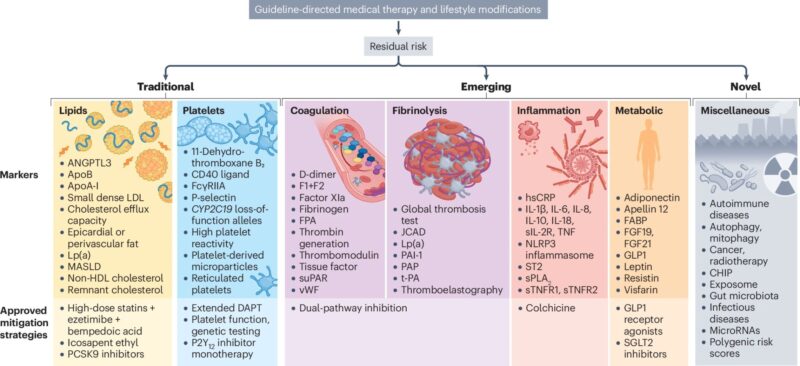
Excellent review on residual cardiovascular risk in coronary artery disease just published in Nature Reviews Cardiology by Mattia Galli and colleagues.
Despite substantial advances in the secondary prevention of cardiovascular disease, atherosclerosis of the coronary arteries and its consequences remain the leading cause of death worldwide.
Residual cardiovascular risk refers to the ongoing risk of recurrent cardiovascular events that persists in patients with coronary artery disease despite receiving optimal secondary prevention treatment and effective control of conventional risk factors.
Lifestyle modification and therapies modulating thrombosis, blood pressure and LDL-cholesterol levels represent the standard approach for the prevention of recurrent cardiovascular events in patients with coronary artery disease.
However, current evidence-based therapies and lifestyle modification strategies only partially modulate the pathophysiological pathways involved in the progression and destabilization of atherosclerotic disease, and other mechanisms might have an important role, accounting, at least in part, for the residual cardiovascular risk in these patients.
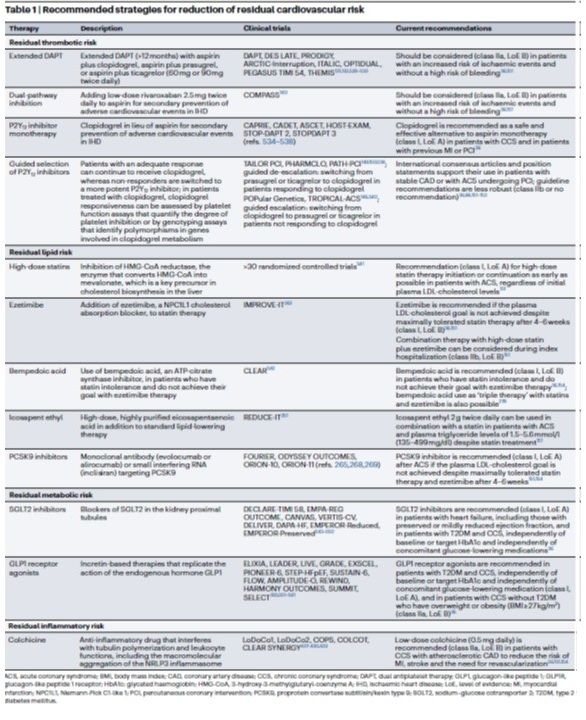
In this Review, the authors appraise the available evidence and latest insights into the mechanisms and associated biomarkers of recurrent adverse cardiovascular events and provide perspectives on strategies to reduce residual cardiovascular risk in patients with coronary artery disease.
- Very well-written and comprehensive paper
- Great overview of traditional, emerging and novel CV risk markers
- Perfect description of subtypes of residual risks such as thrombotic, lipid, metabolic and inflammatory and the strategies for their mitigation
- Final subchapter on emerging factors such as exposome, microbiota and much more
A must read paper! Congratulations to the authors!”
Read the full article here.
Article: Residual cardiovascular risk in coronary artery disease: from pathophysiology to established and novel therapies
Authors: Mattia Galli, Antonio Abbate, Marc P. Bonaca, Filippo Crea, Maurizio Forte, Giacomo Frati, Mario Gaudino, C. Michael Gibson, Diana A. Gorog, Roxana Mehran, Rocco A. Montone, Michelle L. O’Donoghue, P. Gabriel Steg, Sebastiano Sciarretta, Dominick J. Angiolillo
Stay updated on all scientific advances with Hemostasis Today.
-
Sep 24, 2026, 08:55Andres Gudino: Clot Characterization Through Hounsfield Units in Ischemic Stroke
-
Sep 24, 2026, 06:52Gina Sado: Screening-Detected Atrial Fibrillation Carries High Risk of Heart Failure
-
Sep 24, 2026, 06:33Benjamin Vipler: Optimal Oral Anticoagulation Choice in Atrial Fibrillation and Advanced CKD
-
Sep 24, 2026, 06:08Christopher Salerno: AI-Powered At-Home Anemia Screening Advances Telehealth Access
-
Sep 24, 2026, 05:38Aya Qattan: When a Normal CBC Does Not Mean Normal Iron Status
-
Sep 24, 2026, 05:11Mastering Warm Autoimmune Hemolytic Anemia Diagnosis and Practice – ASH Education
-
Sep 23, 2026, 16:04Monia Ezzalfani: Advancing Patient-Centered Care in Hemophilia A and B
-
Sep 23, 2026, 15:49Bilge Başak: How Activated PRP Modulates Osteoarthritic Chondrocyte Function
-
Sep 23, 2026, 14:50Mbonjo Bitsie Dora: Strengthening Sickle Cell Care Through Education, Awareness and Innovation