

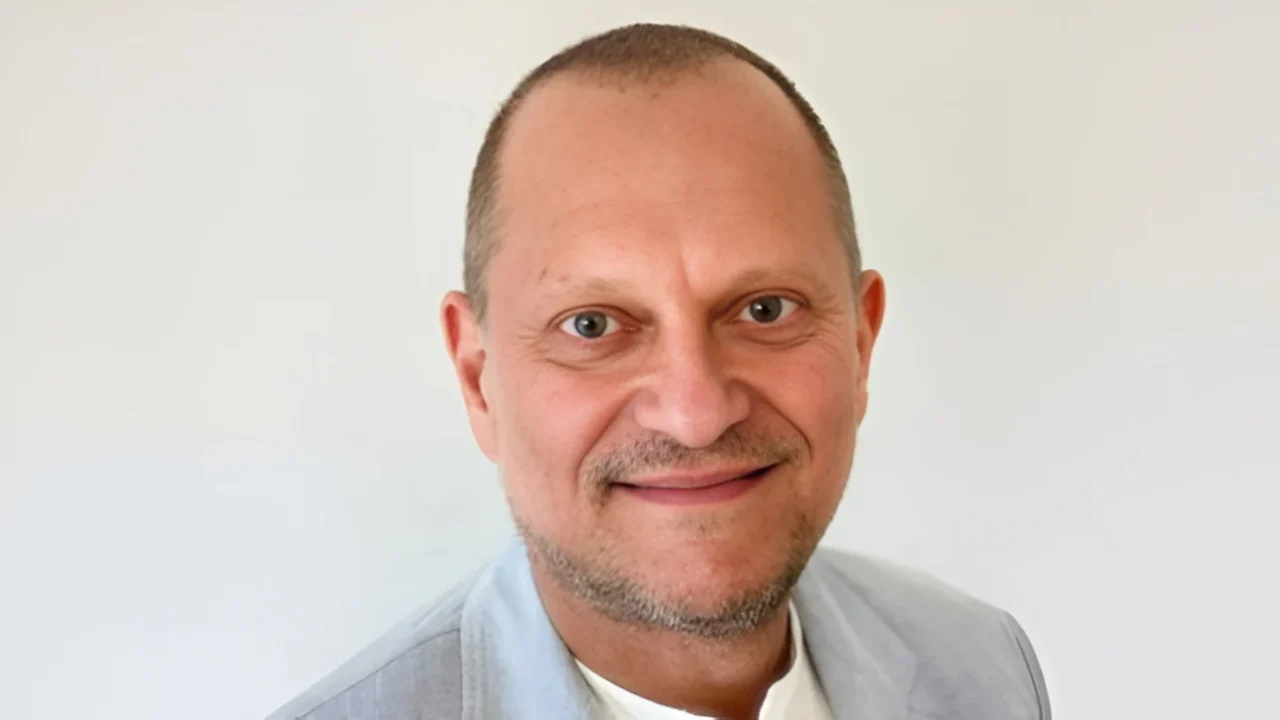
Miroslaw Bober: New 10-Year Dynamic Risk Prediction Models for rVTE and Bleeding
Miroslaw Bober, Professor of Video Processing and Machine Learning at University of Surrey, shared a post on LinkedIn about a recent article, he and his colleagues co-authored published in JTH, adding:
“I am delighted that our two complementary studies on recurrent venous thromboembolism (rVTE) and clinically significant bleeding (CSB) have now been published in the Journal of Thrombosis and Haemostasis.
A central challenge in thrombosis care is determining how long anticoagulation treatment should continue after a VTE event.
The decision requires balancing the risk of recurrent thrombosis against the risk of bleeding, both of which can change substantially over time.
In these studies, we developed two dynamic and clinically interpretable risk prediction models that quantify these competing risks and support more personalised assessment of anticoagulation benefit and risk.
The analyses drew on more than 20 years of CPRD data covering approximately 16 million patient records, from which a cohort of over 50,000 VTE patients was identified and followed longitudinally.
What struck me most was the durability of the models.
While we expected dynamic risk assessment to improve prediction by updating patient risk profiles over time, it was still remarkable to observe reliable prediction of both recurrence and bleeding risk extending up to 10 years after the index VTE event.
The findings reinforce how heterogeneous VTE patients are and highlight the need to move beyond simple ‘low-risk’ and ‘high-risk’ classifications towards truly individualised risk assessment.
Many thanks to all co-authors and collaborators from the NHS, academia, industry, and ForecomAI who made this work possible.”
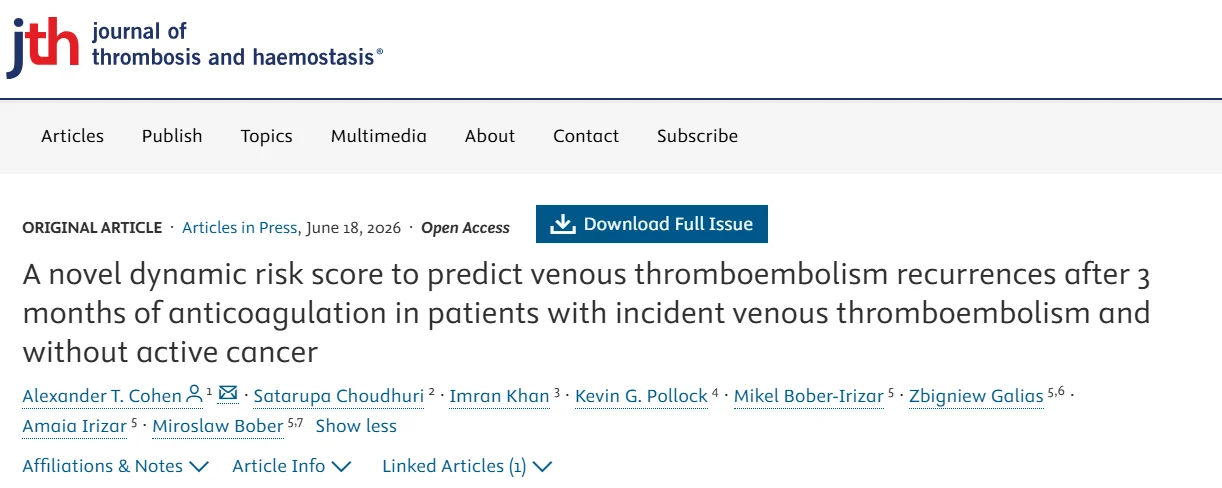
Title: A novel dynamic risk score to predict venous thromboembolism recurrences after 3 months of anticoagulation in patients with incident venous thromboembolism and without active cancer
Authors: Alexander T. Cohen, Satarupa Choudhuri, Imran Khan, Kevin G. Pollock, Mikel Bober-Irizar, Zbigniew Galias, Amaia Irizar, Miroslaw Bober
Stay updated on all scientific advances with Hemostasis Today.
-
Sep 28, 2026, 19:02William Wallace: Your Cholesterol Test is Missing a Particle that May Matter More than the One it Measures
-
Sep 28, 2026, 18:57Indu Thakur: Honoring Sickle Warriors and Advancing Diverse Blood Donation at Sickle Ball 2026
-
Sep 28, 2026, 18:48Orly Leiva: Rethinking JAK Inhibitor Cardiovascular Safety in MPNs
-
Sep 28, 2026, 18:42Wael Saad: Honored to Be Part of Portal and Mesenteric Vein Thrombosis Session at CIRSE 2026
-
Sep 28, 2026, 18:35Alejandro González Veliz: The Unbroken Connection Between Heart and Brain
-
Sep 28, 2026, 16:43Scott Sutton: Community and Connection in Immune Thrombocytopenia
-
Sep 28, 2026, 16:24Pankti Solanki: ISBT Recognized JAMA as the 49th Human Blood Group System
-
Sep 28, 2026, 15:52Kassa Tameru: Antithrombotic Management in GI Bleeding and Elective Endoscopy
-
Sep 28, 2026, 15:51Chengappa Kavadichanda: How Do aPLs Change Over Time in Early Lupus?