

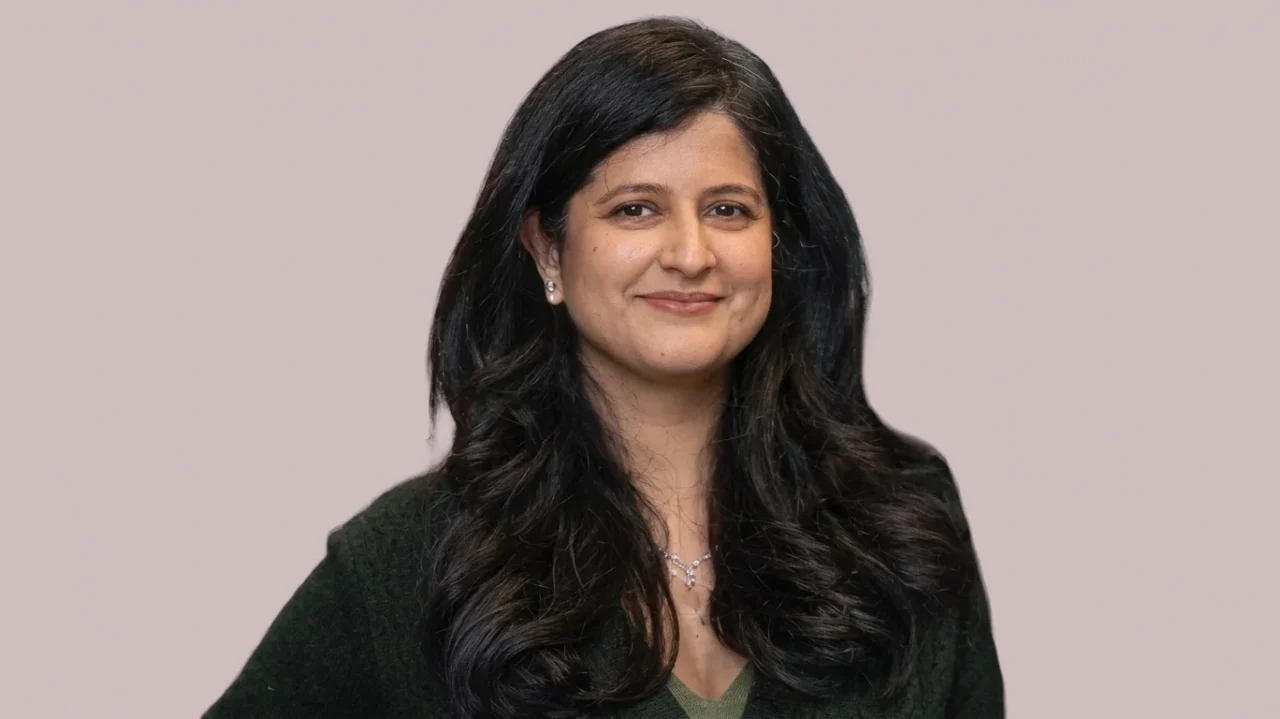
Mital Jhaveri: The Promise of Factor XI Inhibitors in Chronic Kidney Disease
Mital Jhaveri, Clinical Anticoagulation, Heart Failure Pharmacist at NYC HHC Queens Hospital Center, shared on LinkedIn about a recent article by Daniel Steiner et al, published in KIREPORTS, adding:
”Factor XI Inhibitors and Kidney Disease: A Game-Changer for a Forgotten Population?
One of the most underappreciated aspects of the FXI inhibitor story isn’t atrial fibrillation or VTE – it’s kidney disease.
The challenge we face includes:
- Patients with chronic kidney disease (CKD) and end-stage kidney disease (ESKD) are at high risk for both thrombosis and bleeding.
- Most direct oral anticoagulants (DOACs) have significant renal clearance, making them unsafe or contraindicated in severe CKD.
- Warfarin is notoriously difficult to manage in this population.
- Clinically relevant bleeding in anticoagulated dialysis patients can exceed 30%.
This situation leaves us hesitant to treat patients who need anticoagulation the most.
Factor XI inhibitors offer a different approach:
- Many FXI inhibitors have minimal to no renal clearance.
- FXI plays a greater role in pathological thrombosis than in normal hemostasis, making it safer for fragile patients.
- FXI is activated by artificial surfaces such as dialysis circuits and catheters, making it a mechanistically ideal target.
Phase II trials are already showing promise:
- The CONVERT trial with osocimab in hemodialysis showed no increase in bleeding compared to placebo.
- The RE-THINc ESRD trial with fesomersen was well-tolerated, with pharmacokinetics unchanged before or after dialysis.
- The EMERALD trial with FXI-ASO in ESRD demonstrated reduced FXI activity without a major increase in bleeding.
Phase III (LILAC-TIMI 76) is now enrolling ESKD patients.
For the nephrology and hematology community, this may represent the most clinically impactful application of FXI inhibition yet.”
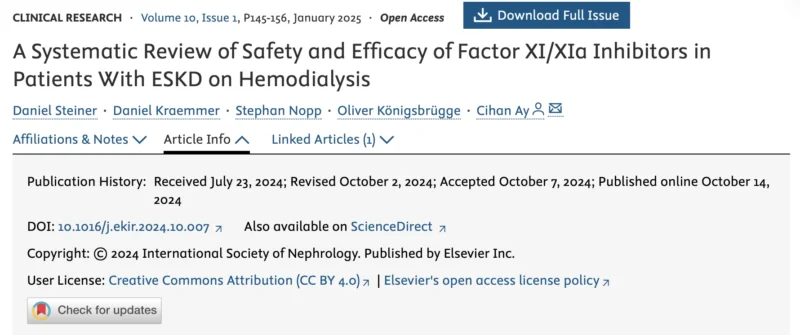
Title: A Systematic Review of Safety and Efficacy of Factor XI/XIa Inhibitors in Patients With ESKD on Hemodialysis
Authors: Daniel Steiner, Daniel Kraemmer, Stephan Nopp, Oliver Königsbrügge, Cihan Ay
Stay updated on all scientific advances with Hemostasis Today.
-
Sep 8, 2026, 08:23Khaled Musallam: A Masterclass on Thalassemia Care in the MENA Region
-
Sep 8, 2026, 08:23Atoosa Salimi: The Role of Platelet-Derived Serotonin in Severe COVID-19
-
Sep 8, 2026, 07:59Mohammedsefa Arusi Dari: Iron-Deficiency Anemia and Obstructive Sleep Apnea – What Does the Evidence Show?
-
Sep 8, 2026, 07:50Isabelle Ducellier: LP299V and Iron Absorption – The Science Behind Better Iron Uptake
-
Sep 8, 2026, 07:32Abdulelah Alhazmi: Ischemic Stroke After LV Thrombus Resolution
-
Sep 8, 2026, 07:24Damilola Olowe: Heavy Periods Aren’t Something to ‘Push Through’
-
Sep 8, 2026, 07:16An Easy Guide for Families Managing Hemophilia, VWD, SCD – CIBD
-
Sep 8, 2026, 07:07Andrew Jackson: Retrospective Comparison of PICC and CICC
-
Sep 8, 2026, 07:02Emerging Therapies in Thrombosis – Factor XI/XIa Inhibitor Trials – ISTH