

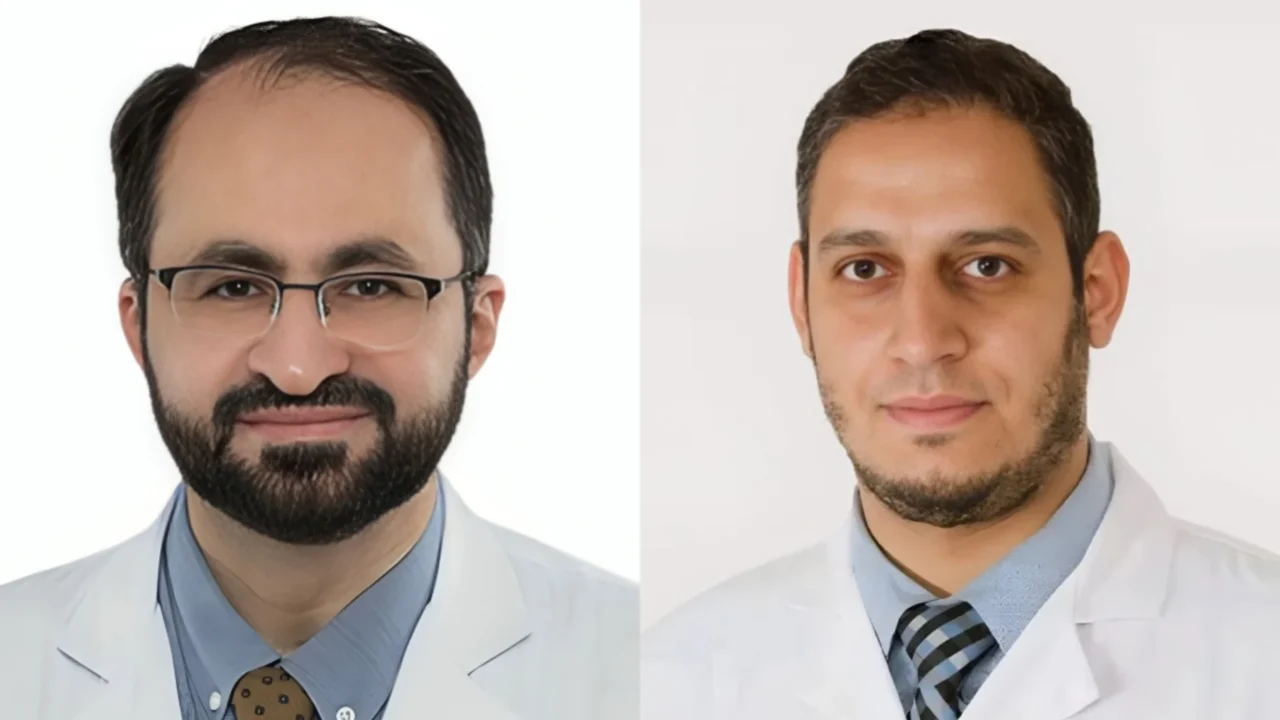
Mostafa Faisal Mohammed Saleh: Evidence-Based Recommendations for Hodgkin Lymphoma Management in LMICs
Mostafa Faisal Mohammed Saleh, Associate professor of Clinical Hematology and HSCT at Assiut University, shared a post on LinkedIn about a recent article he and his colleagues co-authored, adding:
“I’m honored to be part of this important publication alongside Prof. Mahmoud Aljurf and an outstanding group of colleagues, focusing on improving the management of classical Hodgkin lymphoma in resource-limited settings.
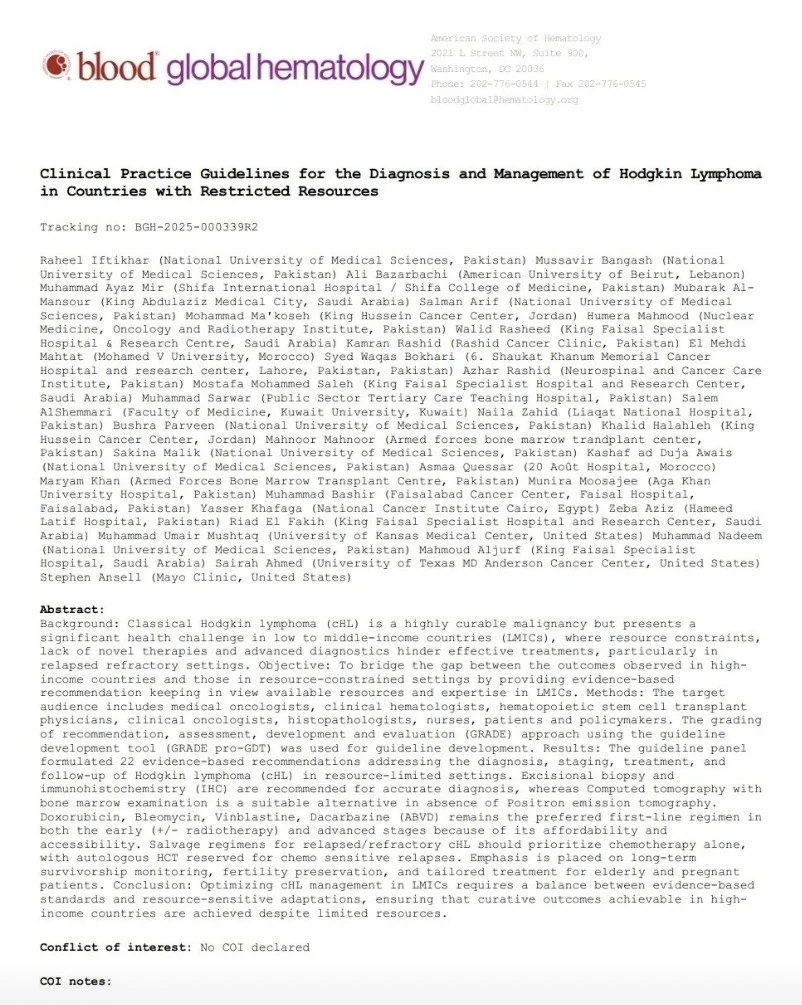
This work addresses a critical global challenge: while classical Hodgkin lymphoma is highly curable, outcomes in low- and middle-income countries (LMICs) often lag behind due to limited access to advanced diagnostics, novel therapies, and transplant resources.
Using the GRADE methodology, the panel developed 22 practical, evidence-based recommendations covering diagnosis, staging, treatment, and long-term follow-up.
Key highlights:
- Accurate diagnosis with excisional biopsy and immunohistochemistry
- CT with bone marrow examination as an alternative when PET-CT is unavailable
- ABVD remains the preferred first-line regimen for both early and advanced disease due to its accessibility and affordability
- Chemotherapy-based salvage strategies for relapsed/refractory disease, with autologous transplantation reserved for chemosensitive relapse
- Strong emphasis on survivorship care, fertility preservation, and tailored management for elderly and pregnant patients
This guideline aims to bridge the gap between outcomes in high-income countries and those achievable in resource-constrained environments, ensuring that curative treatment remains within reach for patients worldwide.”
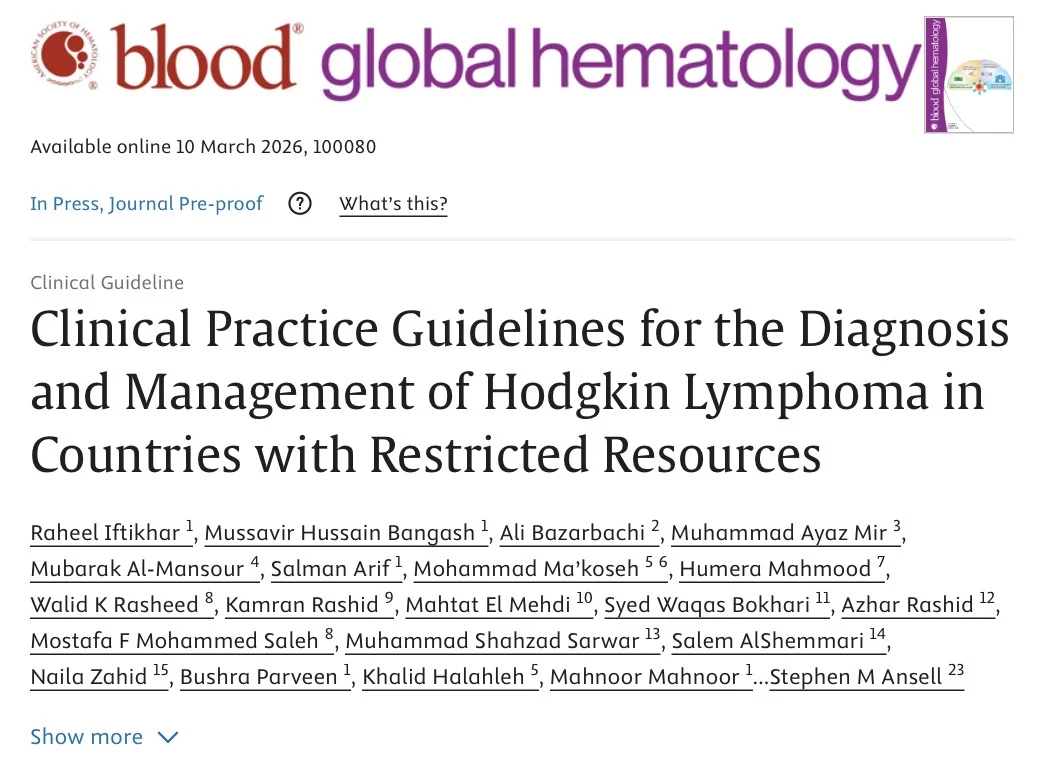
Title: Clinical Practice Guidelines for the Diagnosis and Management of Hodgkin Lymphoma in Countries with Restricted Resources
Authors: Raheel Iftikhar, Mussavir Hussain Bangash, Ali Bazarbachi, Muhammad Ayaz Mir, Mubarak Al-Mansour, Salman Arif, Mohammad Ma’koseh, Humera Mahmood, Walid K Rasheed, Kamran Rashid, Mahtat El Mehdi, Syed Waqas Bokhari, Azhar Rashid, Mostafa F Mohammed Saleh, Muhammad Shahzad Sarwar, Salem AlShemmari, Naila Zahid, Bushra Parveen, Khalid Halahleh, Mahnoor Mahnoor, Sakina Sadiq Malik, Kashaf ad Duja Awais, Asmaa Quessar, Maryam Khan, Munira Moosajee, Tahir Bashir, Yasser Khafaga, Zeba Aziz, Riad El Fakih, Muhammad Umair Mushtaq, Muhammad Nadeem, Mahmoud Aljurf, Sairah Ahmed, Stephen M Ansell
Read the Full Article on Blood Global Hematology
Stay updated on all scientific advances with Hemostasis Today.
-
Sep 19, 2026, 00:48Mahmoud Mehawed: Heparin vs Warfarin vs DOACs Understanding the Key Differences
-
Sep 18, 2026, 17:48Ronak H. Mistry: Updated ASH Guidelines Bring New Focus to Iron Deficiency
-
Sep 18, 2026, 17:32Hassan Kawtharany: New Ferritin Cutoffs for the Diagnosis of Iron Deficiency With or Without Anemia
-
Sep 18, 2026, 17:20Abhishek G P: GAVE as an Important Cause of Chronic Gastrointestinal Blood Loss
-
Sep 18, 2026, 17:08Irem Karaman Sebin: ASH 2026 Changes a Key Concept in Iron Deficiency
-
Sep 18, 2026, 16:51Adarsh Krishnan Sundara Rajan: Is VTE the Most Underdiagnosed Critical Threat in Modern Healthcare?
-
Sep 18, 2026, 16:19CRISPR and Hemophilia: The Next Frontier of In Vivo Gene Editing
-
Sep 18, 2026, 16:13Christian Irsara: PF4 Immunothrombosis Following Natural Adenovirus Infection
-
Sep 18, 2026, 16:10Leo Nicolai։ The Spleen Emerges as a Key Regulator of Thromboinflammation