


Ramina Fazeli: Highlighting the Emerging Role of Neutrophil Extracellular Traps in Ovarian Cancer
Ramina Fazeli, Medical Doctor at Alborz University of Medical sciences, shared a post on LinkedIn about a recent article she and her collegues co-authored, published in adding:
“This review highlights the emerging role of neutrophil extracellular traps (NETs) in ovarian cancer progression, tumor microenvironment remodeling, immune evasion, angiogenesis, and therapeutic resistance.
We also discussed the molecular pathways involved in NETosis and explored the potential of NET-targeted therapies as promising strategies to improve treatment response and patient outcomes in ovarian cancer.
I am grateful to all co-authors and collaborators for their valuable contributions to this work.
I hope this article adds to the growing understanding of the complex interactions between inflammation, immunity, and cancer biology.”
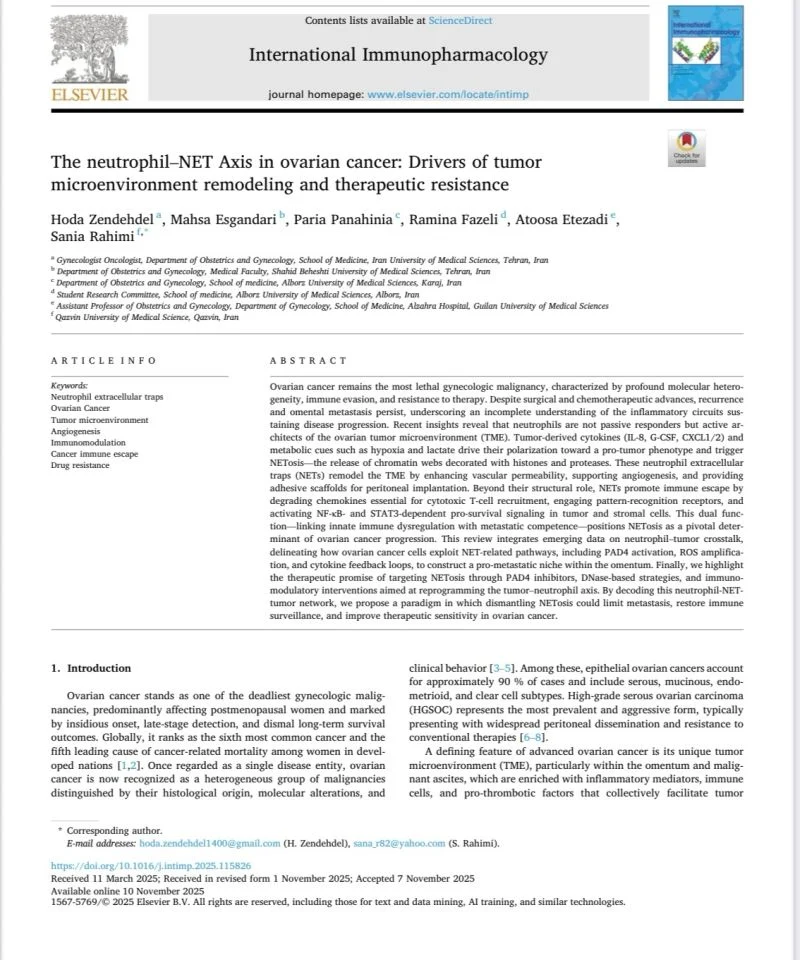
Title: The neutrophil–NET Axis in ovarian cancer: Drivers of tumor microenvironment remodeling and therapeutic resistance
Authors: Hoda Zendehdel, Mahsa Esgandari, Paria Panahinia, Ramina Fazeli, Atoosa Etezadi, Sania Rahimi
Stay updated on all scientific advances with Hemostasis Today.
-
Oct 8, 2026, 04:28Jeff Molter: Electrophysiological PIEZO1 Analysis Advances Diagnosis in Hereditary Xerocytosis
-
Oct 8, 2026, 04:23Barbara Adams Krolak: Women and Blood Clots Are We Missing the Warning Signs
-
Oct 8, 2026, 04:10Rutendo Muzambi: Hospital Admission Patterns and Care Disparities in Sickle Cell Disease
-
Oct 8, 2026, 03:50Olfat Berro: Redefining the Future of Haemophilia A
-
Oct 8, 2026, 03:35Tasnia Tarana: Heavy Menstrual Bleeding When the Cause Is Not in the Uterus
-
Oct 8, 2026, 03:28Kian Haseli: Electrophysiological PIEZO1 Analysis Advances Diagnosis in Hereditary Xerocytosis
-
Oct 8, 2026, 03:20Sthanu Subramanian: Leukopenia in Sepsis A Marker of Severe Disease
-
Oct 7, 2026, 16:44Amor Salah: 2026 NCS/SCCM Guidelines for Managing Antithrombotic-Associated ICH
-
Oct 7, 2026, 16:04NETs in Thrombosis: From Mechanism to Therapeutic Target