


Sathya Narayanan: The Critical Sequence of Stroke Pharmacologic Care
Sathya Narayanan, Clinical Pharmacist, shared on LinkedIn:
”’Time is critical in stroke care’ , but the exact sequence of pharmacological steps matters just as much.
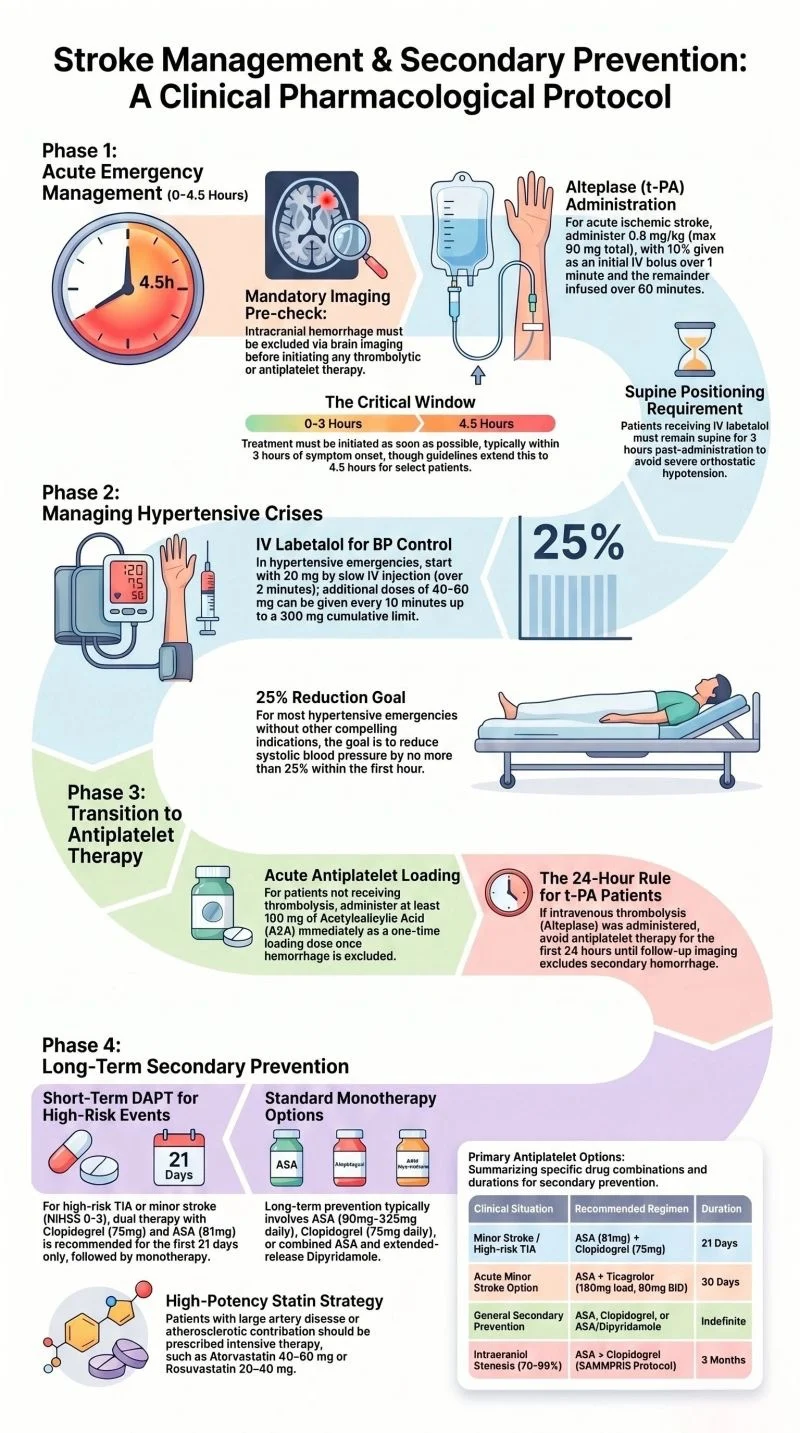
This visual protocol breaks down the process into four essential phases:
- Phase 1: The Race Against Time (0-4.5 Hours): Mandatory imaging first. Thrombolytics (like Alteplase/t-PA) are powerful, but only after hemorrhage is ruled out. Precision dosage is key.
- Phase 2: Managing the Surge: High blood pressure is dangerous, but crashing it too quickly is also risky. The goal is a controlled 25% reduction within the first hour using IV Labetalol.
- Phase 3: The Transition: Knowing when to start long-term antiplatelets. Following thrombolysis, a strict ’24-Hour Rule’ applies before starting therapy to ensure safety.
- Phase 4: Continuous Protection: Customizing the long-term plan – from short-term Dual Antiplatelet Therapy (DAPT) for minor events to aggressive high-potency statins to prevent the next stroke.
Understanding this synchronized flow is foundational to optimizing patient outcomes.
Read the guidelines.”
Guideline 1: 2018 Guidelines for the Early Management of Patients With Acute Ischemic Stroke: A Guideline for Healthcare Professionals From the American Heart Association/American Stroke Association
Authors: William J. Powers, Alejandro A. Rabinstein, Teri Ackerson, Opeolu M. Adeoye, Nicholas C. Bambakidis, Kyra Becker, José Biller, Michael Brown, Bart M. Demaerschalk, Brian Hoh, Edward C. Jauch, Chelsea S. Kidwell, Thabele M. Leslie-Mazwi, Bruce Ovbiagele, Phillip A. Scott, Kevin N. Sheth, Andrew M. Southerland, Deborah V. Summers, David L. Tirschwell
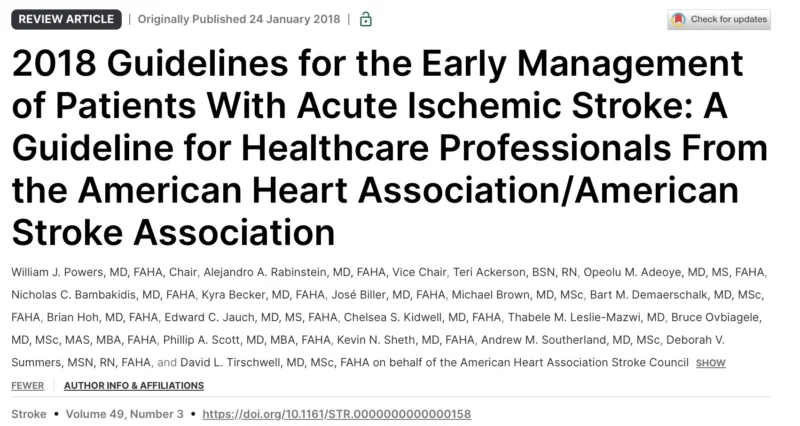
Guideline 2: 2021 Guideline for the Prevention of Stroke in Patients With Stroke and Transient Ischemic Attack: A Guideline From the American Heart Association/American Stroke Association
Authors: Dawn O. Kleindorfer, Amytis Towfighi, Seemant Chaturvedi, Kevin M. Cockroft, Jose Gutierrez, Debbie Lombardi-Hill, Hooman Kamel, Walter N. Kernan, Steven J. Kittner, Enrique C. Leira, Olive Lennon, James F. Meschia, Thanh N. Nguyen, Peter M. Pollak, Pasquale Santangeli, Anjail Z. Sharrief, Sidney C. Smith Jr, Tanya N. Turan, Linda S. Williams
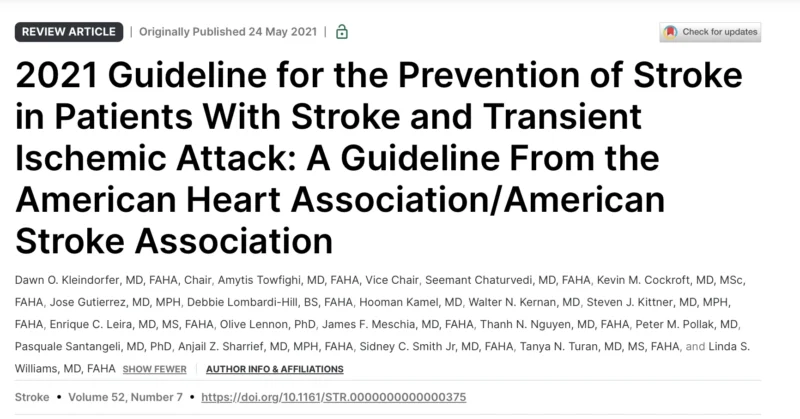
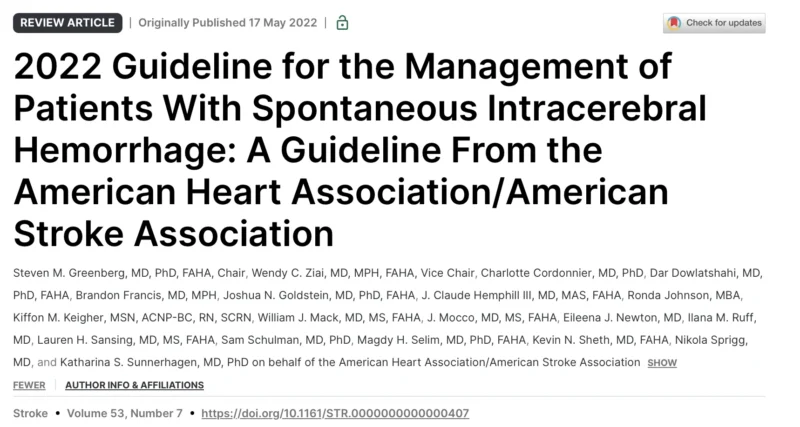
Guideline 3: 2022 Guideline for the Management of Patients With Spontaneous Intracerebral Hemorrhage: A Guideline From the American Heart Association/American Stroke Association
Authors: Steven M. Greenberg, Wendy C. Ziai, Charlotte Cordonnier, Dar Dowlatshahi, Brandon Francis, Joshua N. Goldstein, J. Claude Hemphill III, Ronda Johnson, Kiffon M. Keigher, William J. Mack, J. Mocco, Eileena J. Newton, Ilana M. Ruff, Lauren H. Sansing, Sam Schulman, Magdy H. Selim, Kevin N. Sheth, Nikola Sprigg, Katharina S. Sunnerhagen
Stay updated on all scientific advances with Hemostasis Today.
-
Sep 23, 2026, 16:04Monia Ezzalfani: Advancing Patient-Centered Care in Hemophilia A and B
-
Sep 23, 2026, 15:49Bilge Başak: How Activated PRP Modulates Osteoarthritic Chondrocyte Function
-
Sep 23, 2026, 14:50Mbonjo Bitsie Dora: Strengthening Sickle Cell Care Through Education, Awareness and Innovation
-
Sep 23, 2026, 13:58The New B12 Diagnostic Algorithm: From Serum Cobalamin to Functional Deficiency
-
Sep 23, 2026, 13:56Noha Soror: Preparing for Hematology and Medical Oncology Board Certification
-
Sep 23, 2026, 13:46Ugochi Ogu: What Can Platelet Proteomics Reveal about Pain and Neurocognitive Vulnerability in Sickle Cell Disease?
-
Sep 23, 2026, 13:42Melissa Hollo: Connecting Obesity and Anemia for Earlier Maternal Risk Intervention
-
Sep 23, 2026, 13:16Beverley Hunt: Advances in Haemostatic Management of Postpartum Haemorrhage
-
Sep 23, 2026, 13:13Ioanna Mela: Recruiting a Research Associate on DNA nanotechnology