


Wolfgang Miesbach: A New Genetic Perspective on the Worldwide Burden of von Willebrand Disease
Wolfgang Miesbach, Professor of Medicine at Frankfurt University Hospital, shared on LinkedIn about a recent article by Omid Seidizadeh et al, published in Nature Scientific Reports, adding:
”How common is von Willebrand disease?
Far more prevalent than registries indicate.
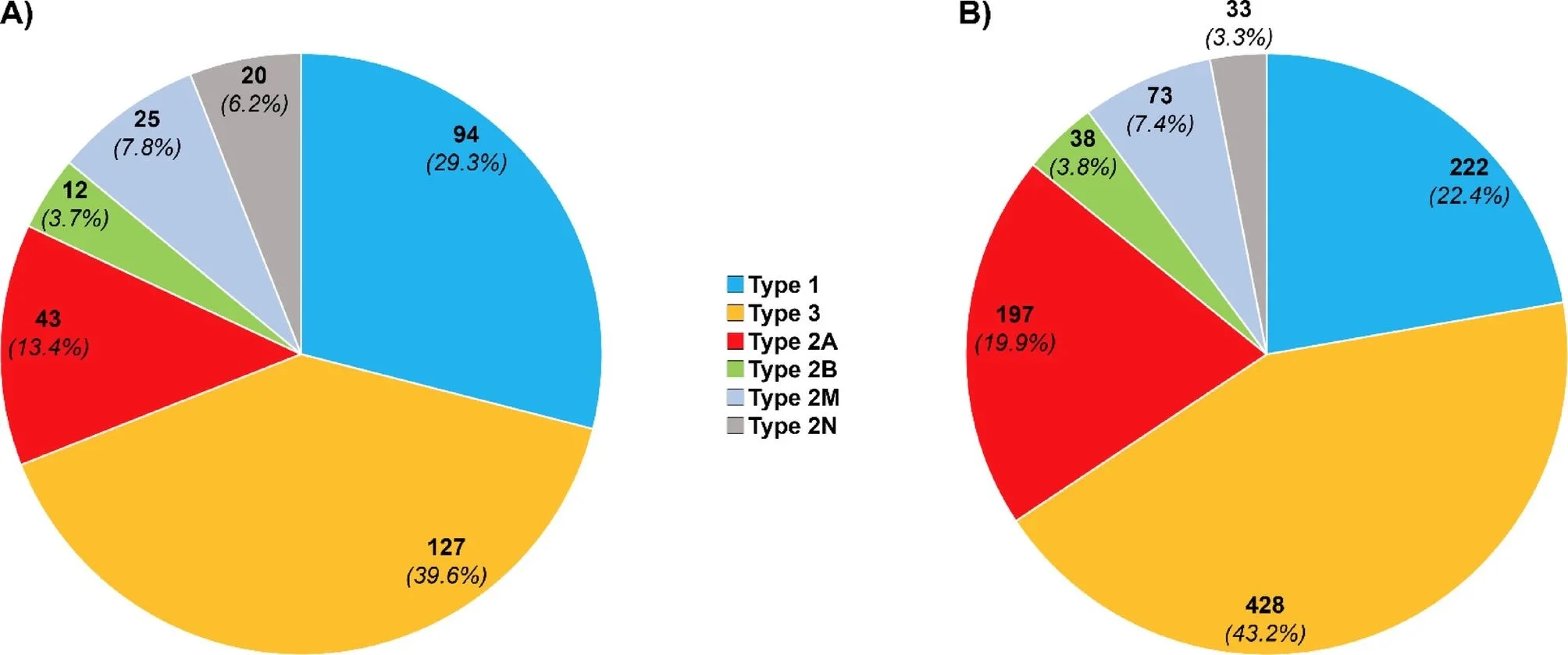
A new Nature study uses gnomAD v4.1 (807,000+ sequenced individuals) and Hardy–Weinberg genetic modeling on 321 pathogenic/likely pathogenic VWF variants to refine the global genetic prevalence of von Willebrand disease (VWD).
By filtering 10,397 VWF variants down to this high‑confidence pathogenic set and applying Hardy–Weinberg models, the authors report a strikingly high global prevalence:
- approximately 11 per 1,000 for type 1 (≈1.1% of the population)
- 1.3–1.7 per 1,000 for dominant type 2 variants (2A, 2B, 2M)
- Tens per million for recessive forms (≈34 per million for 2N and ≈1–2 per million for type 3)
- Altogether, this translates into tens of millions of affected individuals worldwide.
The study further maps pathogenic variant clustering across functional VWF domains and highlights ancestry‑specific distributions of key alleles, underscoring both shared VWF biology and population‑specific risk patterns.
For clinical and research practice, these data provide a valuable reference for variant interpretation, support more realistic registry and screening strategies, and reinforce that VWD—particularly mild and qualitative forms—remains substantially underdiagnosed and undertreated.
Congratulations to Omid Seidizadeh, Andrea Cairo, Camilla Oriani and Flora Peyvandi.”
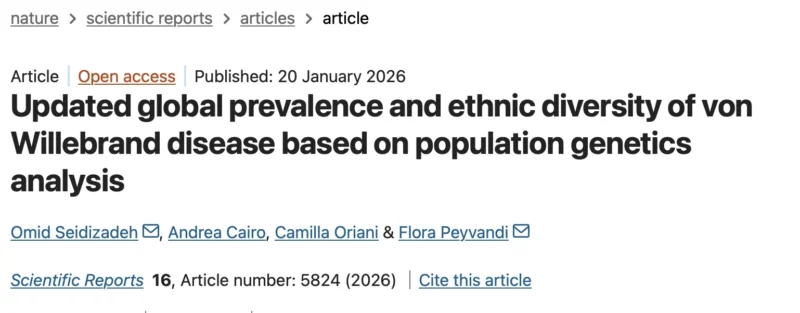
Title: Updated global prevalence and ethnic diversity of von Willebrand disease based on population genetics analysis
Authors: Omid Seidizadeh, Andrea Cairo, Camilla Oriani, Flora Peyvandi
Stay updated on all scientific advances with Hemostasis Today.
-
Sep 23, 2026, 12:16Apurva Popat: When Heparin Triggers Thrombosis
-
Sep 23, 2026, 12:14Zahra Ghasemi: The Power of Voluntary Blood Donation
-
Sep 23, 2026, 12:04Leo Nicolai: Activated Platelets Get Trapped in the Spleen During Thrombosis
-
Sep 23, 2026, 12:01Francisco Chacón-Lozsán: Rethinking PE Risk in 2026
-
Sep 23, 2026, 11:58Ifeanyichukwu Ifechidere: Factor V Leiden Requires Context Beyond the Genetic Result
-
Sep 23, 2026, 11:35Martina Wolff: How Platelet Membrane Protrusions Shape Hemostasis and Thrombosis
-
Sep 23, 2026, 11:28Alejandro González Veliz: Ultrashort DAPT After PCI May Reduce Bleeding Without Increasing Overall Ischemic Events
-
Sep 23, 2026, 11:17High DOAC Adherence After Stroke – International Journal of Stroke
-
Sep 23, 2026, 11:08John Cush: Do JAK Inhibitors Increase VTE Risk After Joint Replacement?