


Zahra Ghasemi: Plasma Self-Sufficiency – Are We Measuring Supply or Actual Need?
Zahra Ghasemi, Pharmacoeconomist, Member of Health Technology Assessment international and Cochrane, shared a post on LinkedIn about a recent article by Ping Yang et al., published in Transfusion, adding:
“The self-sufficiency illusion!
A country can report 100% plasma self-sufficiency and still have patients going without immunoglobulin. How? It comes down to the denominator!
Most self-sufficiency rates compare domestic supply with current consumption, but consumption is not the same as need. It is shaped by diagnosis rates, clinical practice, reimbursement and, above all, by what is available!
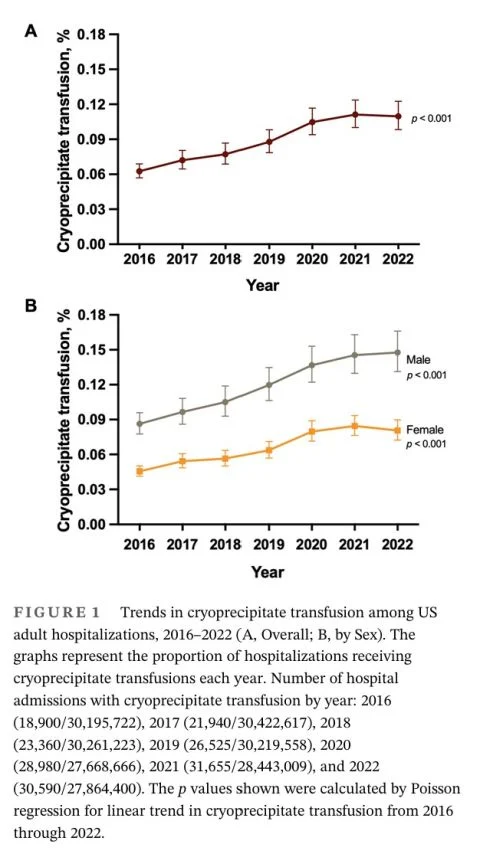
A recent study in Transfusion (AABB) shows this clearly. Analyzing more than 205 million US hospitalizations, The Johns Hopkins University School of Medicine team found that cryoprecipitate use rose from 0.063% of admissions in 2016 to 0.110% in 2022, an increase of roughly 75% in six years.
The authors link this to growing recognition of fibrinogen’s role, evolving clinical guidelines, and a regulatory change that made the product easier to produce. Patient need didn’t jump by 75%; pactice and availability did!
Need also shifts from the other direction. In August, the FDA approved an oral targeted therapy for dermatomyositis, a condition long treated with IVIG among other options. As targeted alternatives arrive, immunoglobulin demand can shift indication by indication.
That’s why a high self-sufficiency rate built on consumption can be misleading. it may reflect strong supply, or it may reflect patients who are undiagnosed, untreated, or not yet counted.
The more useful starting question is not ‘How much do we produce?’ but ‘How many patients should be on treatment?’ ”
Title: Trends in cryoprecipitate transfusion in the United States
Authors: Ping Yang, Xianming Zhu, Eshan U. Patel, Ruchika Goel, Steven M. Frank, Herleen Rai, Evan M. Bloch, M. Kate Grabowski, David Daniel, Elizabeth P. Crowe, Aaron A. R. Tobian
Stay updated with Hemostasis Today.
-
Nov 7, 2026, 06:11Bruno Matos Santos: Gastric and Oesophageal Necrosis Due to Extensive Venous Thrombosis
-
Nov 7, 2026, 05:57Nawsherwan Mohammad: Hypercoagulability and Pulmonary Hypertension in Beta Thalassemia
-
Nov 7, 2026, 05:45Andrew Davies: HIDDEN 2 Rethinking Thromboprophylaxis in Hospice Care
-
Nov 7, 2026, 05:32Cancer, Catheters and Outcomes in Upper Extremity DVT – JTH
-
Nov 7, 2026, 02:57Abdelghani Mazouzi: SMIM1 Links Hemoglobin Internalization to Cellular Iron Metabolism
-
Nov 7, 2026, 02:34Ali Moradi: Two Network Meta-Analyses on Cardiovascular Therapies to Be Presented at AHA 2026
-
Nov 7, 2026, 02:21Amit Mohan: Microfluidic Technology Advances the Assessment of Biomaterial-Induced Thrombosis
-
Nov 7, 2026, 02:06Chaza Alaji: The Prothrombotic and Hemorrhagic Spectrum of Tuberculosis
-
Nov 6, 2026, 22:54Vincenzo De Angelis: Presenting Trends and Challenges in Blood and Plasma Collection and Use in Europe