

Pall T. Onundarson on Correlation Between Plasma Levels of DOACs and Both Thromboembolic and Bleeding Events
Pall T. Onundarson, Professor Emeritus at Landspitali University Hospital, shared on LinkedIn:
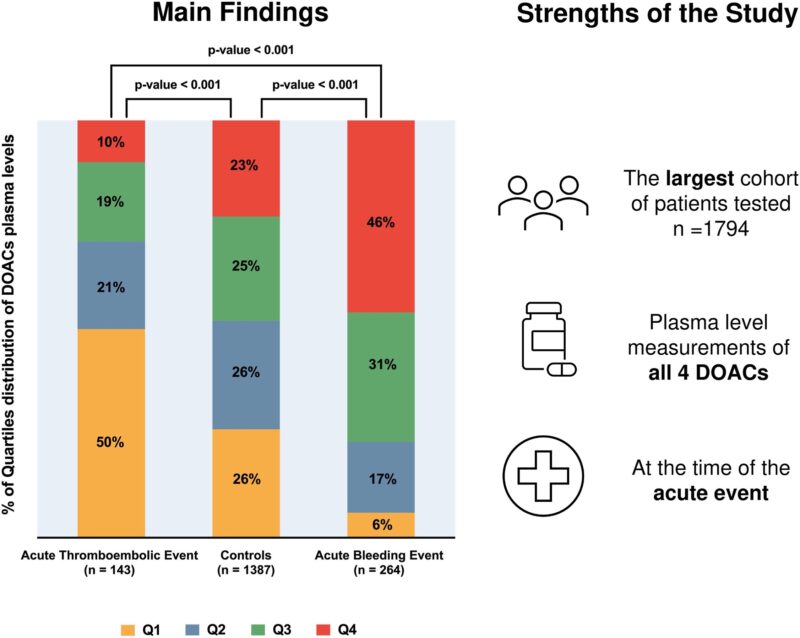
”In the May 2025 issue of JTH, Cosmo Godino and colleagues from Milan report a strong correlation between plasma levels of four DOACs and both thromboembolic and bleeding events.
Their findings reveal a U-shaped relationship, reminiscent of what older physicians recall from the warfarin era.
The authors conclude that monitoring DOAC levels and adjusting doses could improve outcomes for at least some patients.
When DOACs were introduced about 20 years ago, many in the thrombosis community were skeptical of the “no monitoring” strategy.
Nevertheless, manufacturers advanced this approach to emphasize the convenience of DOACs over low-cost, PT-monitored warfarin and other VKAs.
The new data suggest that outcomes with DOACs might improve if doses were tailored to individual patients – something current fixed tablet sizes largely prevent.
But tailoring of DOACs would effectively reintroduce the hallmarks of warfarin therapy: monitoring, dose adjustment by professionals, or self-management with point-of-care devices.
While such a shift might be beneficial, it would also add cost and inconvenience to DOAC use, potentially making warfarin more competitive again!
Importantly, warfarin monitoring and dosing has itself improved although rarely mentioned.
As an example, three clinical studies have shown that Fiix-monitored warfarin reduces thromboembolism by about 50%, along with reduced monitoring frequency and dose adjustments, compared with conventional PT-based warfarin management. Emerging evidence further suggests that Fiix-warfarin achieves similar outcome advantages when compared with apixaban, rivaroxaban, and dabigatran.
The next step must be be independent studies directly comparing tailored DOAC therapy against standard fixed-dose DOAC regimens and prefarably against the improved Fiix-monitored warfarin as well. The results could reshape how these drugs are positioned relative to warfarin.
In short: Bringing monitoring and improved dose tailoring back is good for patients.”
Stay updated on all scientific advances with Hemostasis Today.
-
Oct 6, 2026, 04:33Hessam Kakavand: Rethinking Thrombotic Risk in Modern Cancer Therapy
-
Oct 6, 2026, 04:07Moussa Zein Aldine: Acute Coronary Syndrome Every Minute Matters
-
Oct 6, 2026, 03:13Patrick Taylor: Glow Stack Trend What the Evidence Really Shows
-
Oct 6, 2026, 02:59Preventing Hospital Associated Venous Thromboembolism – Thrombosis Canada
-
Oct 6, 2026, 02:42Treatment of Iron Deficiency With and Without Anemia – American Society of Hematology
-
Oct 6, 2026, 02:36Mouna Sassi: When Clinical and Laboratory Perspectives Meet in Thrombosis Care
-
Oct 6, 2026, 02:35Lucia Stefanini: Platelet Dysfunction and Oxidized Phospholipids in MASLD
-
Oct 6, 2026, 02:18Pablo Corral: Association of Lp(a) With Coronary Atherosclerosis and CV Events
-
Oct 5, 2026, 22:55Steve Humphreys: A Big Thank You to BSHT for Providing Me With a Recent Skills Exchange Award