


Jan Sloves: Understanding Iliofemoral DVT – What You Can’t Afford to Miss
Jan Sloves, President and Consultant at Vascular Imaging Professionals LLC, shared on LinkedIn:
”Understanding Iliofemoral DVT: What You Can’t Afford to Miss
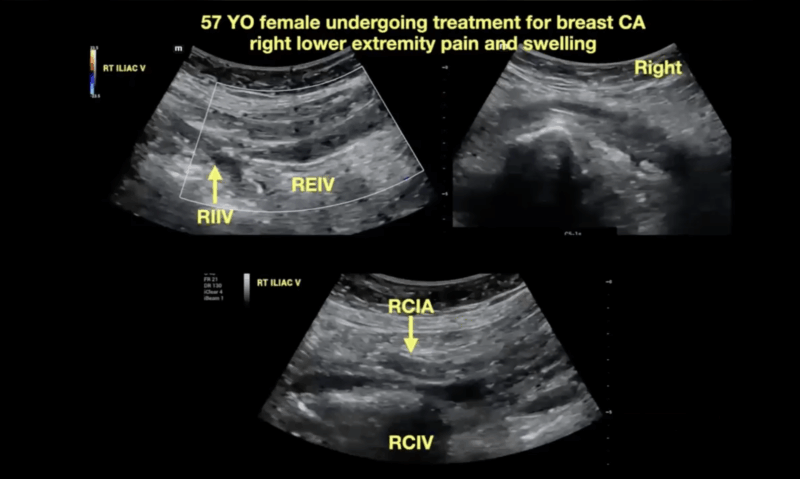
Here’s an excellent real-world example — a symptomatic 57-year-old female being treated for breast CA who presented to the ER with an iliofemoral DVT.
On duplex, you can clearly see the thrombus wrapping around the femoral head and extending up toward the confluence.
What’s really important to remember is that in about 80% of patients with iliofemoral DVT, there’s an underlying proximal stenosis — often masked by overlying arterial structures.
When you take a closer look at the posterior wall, you can actually appreciate the intraluminal changes that have developed over time.
These subtle findings tell a bigger story about chronicity and hemodynamic impact — and they’re key to guiding the right treatment decisions.
If you’re passionate about understanding these nuances and improving your scan interpretation, join our growing community at Ultrasound Unlocked — a place where sonographers and physicians learn, share, and refine their craft together.”
Stay updated with Hemostasis Today.
-
Oct 16, 2026, 12:40Edward Lee Carter: How Factor XI Inhibition Could Transform Anticoagulation Therapy
-
Oct 16, 2026, 12:40Marc Carrier: Looking Ahead to ISTH 2027 in Vancouver
-
Oct 16, 2026, 12:30Bob Lempke: How One Blood Donation Can Save Up to Three Lives
-
Oct 16, 2026, 12:30Why VWF Therapies Belong on the EU Critical Medicines List – EHC
-
Oct 16, 2026, 12:17Exploring Endothelial Cells, Genetic Fate Mapping, and Revascularization – ISTH
-
Oct 16, 2026, 10:07Habib Bennaceur: Building a Stronger Care Pathway for Sickle Cell Disease in India
-
Oct 16, 2026, 09:59Tareq Abadl: A Simple Guide to Blood Collection Tubes
-
Oct 16, 2026, 09:50Mona Alfaraj: Distinguishing HCL from SMZL in Bone Marrow
-
Oct 16, 2026, 09:44New International Consensus on Covert Brain Infarction – International Journal of Stroke